Nana Banana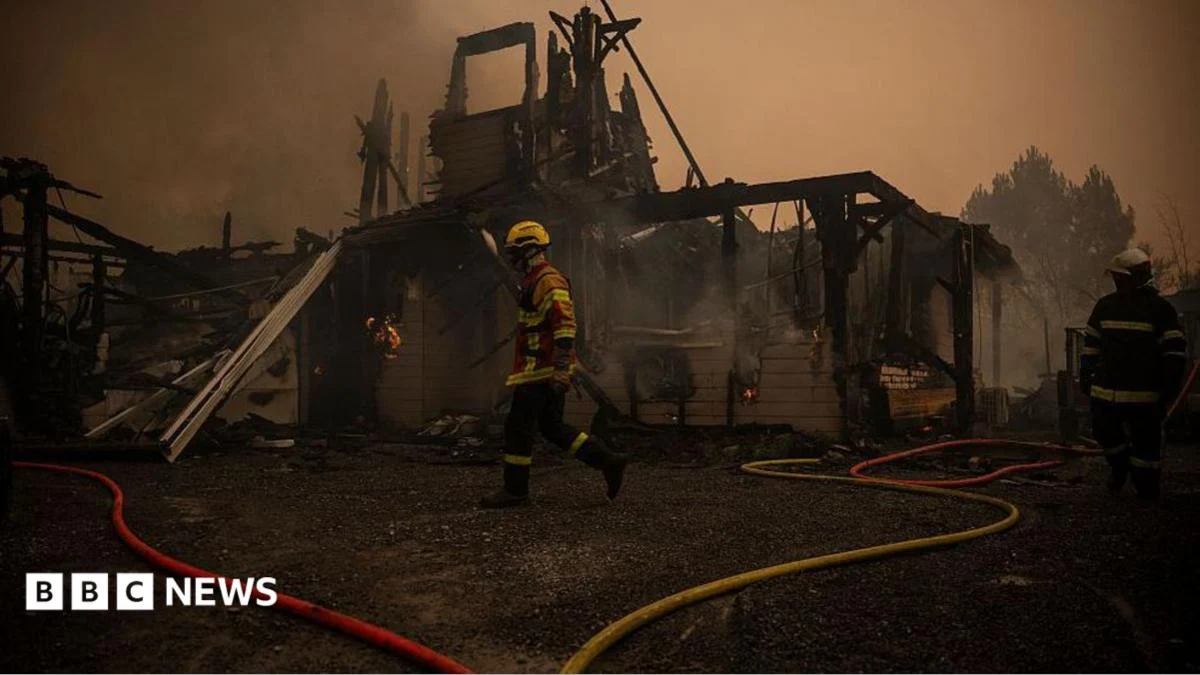
Authorities in France have initiated the comprehensive evacuation of the entire Cap Ferret peninsula, a celebrated strip of land often referred to as Lège-Cap Ferret, nestled in the sun-drenched south-west of France. The urgent directive saw hundreds of residents and holidaymakers scrambling to escape the area, many resorting to boats as the most viable means of departure. This picturesque peninsula, renowned for its pristine beaches, luxurious villas, quaint oyster farming villages, and dense pine forests, has been declared a danger zone as an inferno of unprecedented scale continues to rage across the Gironde region.
The Cap Ferret peninsula, a slender finger of land separating the Atlantic Ocean from the tranquil Arcachon Bay, represents a significant tourism hot spot, attracting visitors from across France and beyond. Its unique charm lies in its blend of rustic elegance and natural beauty, making the evacuation not just a logistical challenge but also a profound shock to a community deeply connected to its land and sea. The "final phase" of the evacuation was ordered early on Friday morning by Sophie Brocas, the region’s prefect, underscoring the escalating severity and imminent threat posed by the advancing flames. People were primarily directed to leave via the main road, a single arterial route connecting the peninsula to the wider Bordeaux metropolitan area. However, with the potential for congestion and the speed of the fire’s progression, maritime evacuation became a critical alternative. Boats were made available from four designated piers between 07:00 and 10:00 local time (06:00 BST and 09:00 BST), offering a desperate but vital escape route across the waters of Arcachon Bay. The sight of hundreds of individuals, some carrying only essential belongings, boarding vessels to flee their homes and holiday rentals painted a stark picture of the unfolding disaster.
This forced exodus is a direct consequence of a massive wildfire that ignited on Tuesday in Saumos, a commune within the Gironde department. Despite relentless efforts from thousands of firefighters, the blaze has shown an alarming progression, consuming an estimated 8,700 hectares (approximately 21,500 acres) of land by Friday morning. To put this figure into perspective, this area is roughly equivalent to several times the size of central Paris, or more than 40,000 football pitches, obliterated by the flames in a matter of days. The fire, fueled by an ongoing and intense heatwave, tinder-dry vegetation, and unpredictable winds, has created a devastating landscape of charred earth and smoldering pine forests. The dense, resinous pine trees that characterize much of the Gironde landscape act as highly flammable fuel, making the fires exceptionally difficult to contain and extinguish. The inferno has not only destroyed vast swathes of forest but has also threatened numerous towns and villages, necessitating widespread evacuations across the region even before the order for Cap Ferret.
The human toll of this disaster has also been tragic. Two firefighters tragically lost their lives on Tuesday while valiantly battling the blaze near Bordeaux’s airport, a stark reminder of the extreme dangers faced by those on the front lines. Their sacrifice underscores the immense risks involved in containing such formidable wildfires, which often burn with ferocious intensity and unpredictable behavior. Officials provided a small glimmer of reassurance on Friday morning, reporting that no new injuries had been reported among civilians or emergency personnel, a testament to the effectiveness of evacuation efforts but a fragile comfort amidst the widespread destruction.
The crisis has garnered the highest levels of national attention. French President Emmanuel Macron addressed the nation on Thursday night, acknowledging the wildfire situation across the country as "very tense," with a specific emphasis on the perilous conditions in the Gironde region. Recognizing the overwhelming scale of the challenge, President Macron appealed for international assistance, leveraging the European Union’s robust Civil Protection Mechanism. This plea swiftly bore fruit, with support pledged by several EU member states. The country is soon to be bolstered by specialized firefighting aircraft from Croatia, Portugal, the Czech Republic, and Slovakia, demonstrating the vital role of cross-border solidarity in confronting large-scale environmental emergencies. These air tankers, capable of dropping thousands of liters of water or fire retardant in a single pass, are crucial assets in fighting blazes in inaccessible terrain and creating firebreaks.
The wildfires in France are not an isolated incident but rather symptomatic of a broader climate crisis gripping Europe. An unprecedented heatwave has been baking the continent for weeks, shattering temperature records across multiple countries. France, in particular, has experienced scorching temperatures, with parts of the south-west regularly exceeding 40 degrees Celsius (104 degrees Fahrenheit). This prolonged period of extreme heat, coupled with severe drought conditions, has transformed forests and scrubland into highly combustible landscapes, creating ideal conditions for wildfires to ignite and spread rapidly. Scientists and climate experts have repeatedly warned that such extreme weather events will become more frequent and intense as a direct consequence of climate change, making wildfire prevention and management an increasingly critical priority. The environmental impact extends beyond immediate destruction, affecting biodiversity, air quality across vast regions, and contributing to long-term soil degradation.
The crisis is not confined to France’s borders. Simultaneously, Spain, a nation frequently battling summer wildfires, has declared a national emergency as multiple blazes burn out of control in areas alarmingly close to its capital, Madrid. Interior Minister Fernando Grande-Marlaska made the declaration, signifying a significant escalation in the government’s response and allowing for the mobilization of all available state resources, potentially including military personnel. Fires have been reported and are being fiercely tackled in Villa del Prado and San Martín de Valdeiglesias within the Madrid region, as well as at Burgohondo in the province of Ávila. These Spanish fires share many characteristics with their French counterparts: fueled by relentless heat, parched landscapes, and strong winds, posing immense challenges for firefighters and necessitating mass evacuations of local communities. The smoke plumes from these fires are visible for many kilometers, casting an eerie pall over the affected regions and serving as a grim visual reminder of the continent-wide struggle against nature’s fury.
The long-term consequences of these catastrophic wildfires will be profound, extending far beyond the immediate damage. For the residents of Cap Ferret and other affected communities in Gironde, the road to recovery will be arduous. Beyond the immediate loss of homes and livelihoods, the environmental devastation will take decades to heal. Reforestation efforts will be crucial, but the ecological balance of these unique pine forests, home to diverse flora and fauna, will be severely disrupted. The economic impact on tourism, a vital sector for the region, will also be significant. As Europe grapples with increasingly severe and frequent extreme weather events, the imperative for robust climate action, enhanced wildfire prevention strategies, and improved international cooperation becomes ever more urgent. The scenes of mass evacuation and widespread destruction serve as a powerful and somber warning of the escalating climate crisis, demanding immediate and sustained global attention.



 Roy Suryo

 Nakalama John
 atisusanti
 Ramos Leo