Nana Banana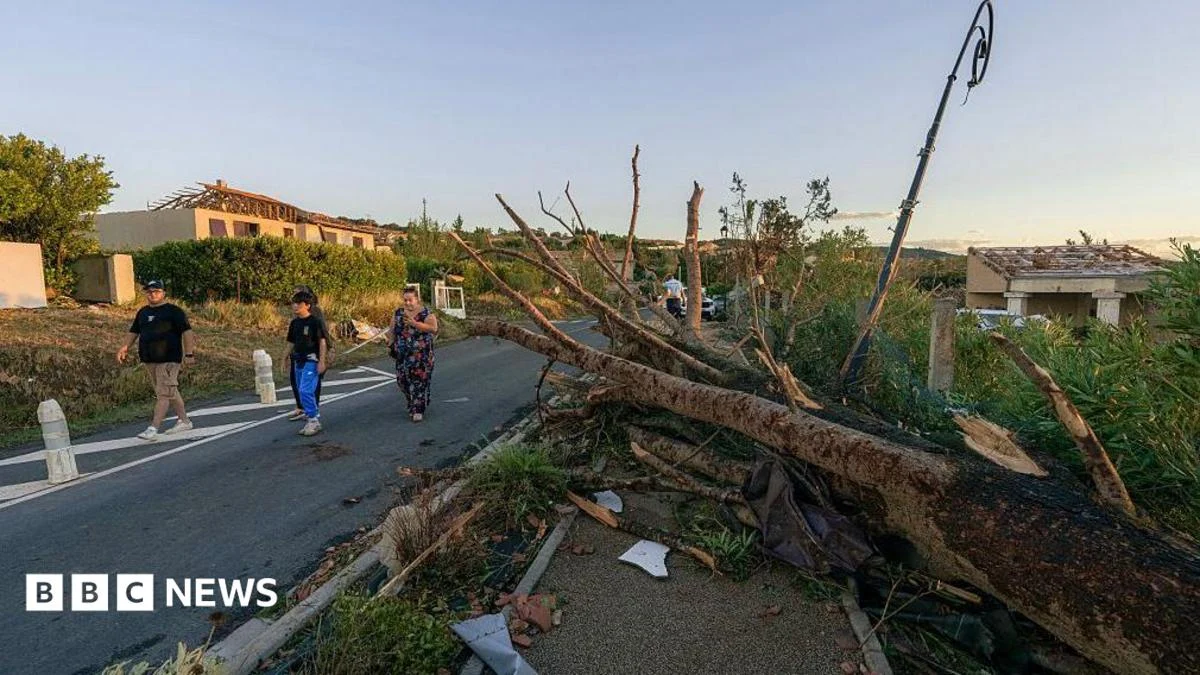
The Aude department, a region renowned for its picturesque landscapes and historical significance, bore the brunt of the meteorological fury. The severe weather system, which spawned the destructive tornado, also unleashed a ferocious hailstorm in the French Pyrenees, a contiguous mountain range. This secondary meteorological assault had significant repercussions for a major international sporting event: authorities in the Aude department were compelled to cancel the third stage of the Vuelta a España cycling race. Riders, caught off guard by the sudden and intense hailstorm, were forced to seek immediate shelter, their competitive aspirations momentarily forgotten amidst the pelting ice and treacherous conditions. The decision to cancel, made with the paramount concern for rider safety, underscored the exceptional severity of the weather system that had gripped the region, disrupting not only local life but also an event of global sporting prominence.
Eyewitness footage, rapidly shared across social media platforms and local news outlets, provided chilling glimpses into the heart of the storm. Videos captured the terrifying spectacle of a massive, swirling vortex of the tornado, ominously looming on the horizon above houses and trees, a dark, churning column connecting the turbulent sky to the unsuspecting earth. Residents described the harrowing experience of seeing the funnel cloud descend, the roar of the wind, and the terrifying speed with which destruction unfolded. Many recounted seeking refuge in basements or interior rooms, listening to the cacophony of breaking glass, splintering wood, and collapsing structures, emerging later to a landscape irrevocably altered.
The small village of Pomas, nestled within the Aude department, emerged as the hardest-hit locale. Images from Pomas painted a stark picture of catastrophic damage. What was once a tranquil rural settlement, characterized by its charming stone buildings and lush greenery, was transformed into a scene of utter chaos. Uprooted trees lay strewn across roads and gardens, their mighty trunks snapped like twigs. Cars were mangled and overturned, their metal bodies twisted beyond recognition. The most devastating impact, however, was on residential properties, with homes reduced to rubble, their roofs ripped off, walls caved in, and personal belongings scattered far and wide. The sheer force of the wind had effectively peeled away layers of habitation, exposing the vulnerability of human structures to nature’s most extreme manifestations. Local emergency services, including firefighters and gendarmerie, swiftly converged on Pomas, initiating search and rescue operations, clearing debris, and providing immediate assistance to residents, many of whom were left homeless and in a state of profound shock. Temporary shelters were established in community halls to accommodate those displaced, offering warmth, food, and psychological support.
Beyond the immediate impact zone of the tornado, the broader extreme weather system triggered widespread disruptions across a significant portion of France. Transport Minister Philippe Tabarot confirmed significant flight delays and cancellations at several major airports, including Bordeaux, Marseille, Nice, Toulouse, and even those located north of Paris. The extensive geographical spread of these disruptions indicated a pervasive atmospheric instability affecting air travel across large swathes of the country. Passengers faced prolonged waits, missed connections, and the frustration of disrupted travel plans, underscoring the ripple effect of the severe weather on national infrastructure and economy. The impact was not limited to air travel; local road networks were also affected by fallen trees, debris, and localized flooding from intense rainfall accompanying the storm cells, further complicating recovery efforts and restricting movement for several days.
While the intensity of this particular tornado was exceptional, France is no stranger to such phenomena. According to Météo-France, the country’s national weather service, France experiences, on average, several dozen tornadoes per year. However, most of these are relatively weak, often brief, and typically cause localized, minor damage. The tornado that struck the Aude department was distinct in its destructive power and the scale of the damage inflicted, prompting meteorologists to analyze its characteristics and potential classification on scales such as the Enhanced Fujita (EF) scale, which rates tornadoes based on wind speed and associated damage. Such events, while not unheard of, rarely reach the level of widespread destruction witnessed in Pomas and surrounding villages, making this a particularly significant and alarming occurrence for the region. Météo-France had issued severe weather warnings, highlighting the risk of intense thunderstorms and strong winds, but the precise path and ferocity of the tornado remained challenging to predict with absolute certainty.
This latest episode of extreme weather arrived on the heels of Europe’s summer of unprecedented heatwaves and devastating wildfires, painting a grim picture of a continent increasingly vulnerable to the impacts of climate change. France’s south-west region, ironically the same area now grappling with the tornado’s aftermath, was among the worst affected by the summer infernos. In one of the largest forest fires since World War Two, an staggering area of 42,000 hectares was incinerated, destroying vast tracts of ancient woodland, agricultural land, and threatening countless communities. The prolonged periods of intense heat and drought had created tinderbox conditions, allowing fires to spread with alarming speed and intensity, requiring massive firefighting efforts and the evacuation of tens of thousands of residents.
Scientists and climatologists are increasingly linking the frequency and intensity of such extreme weather events – from heatwaves and wildfires to intense storms and tornadoes – to the broader phenomenon of anthropogenic climate change. A warming planet is understood to inject more energy into atmospheric systems, potentially leading to more volatile and destructive weather patterns. The unusual sequence of these events in France, moving from scorching heat and devastating fires to a destructive tornado within a relatively short period, serves as a stark reminder of the escalating challenges posed by a changing climate. It highlights the urgent need for enhanced disaster preparedness, more resilient infrastructure, and robust climate adaptation strategies across all levels of government and society to protect vulnerable communities from an increasingly unpredictable future. The long road to recovery for the affected villages, particularly Pomas, will involve not only rebuilding homes but also addressing the psychological trauma endured by residents and strengthening local resilience against future climatic threats.



 Roy Suryo

 George Anjay
 Nakalama John
 Ramos Leo