Nana Banana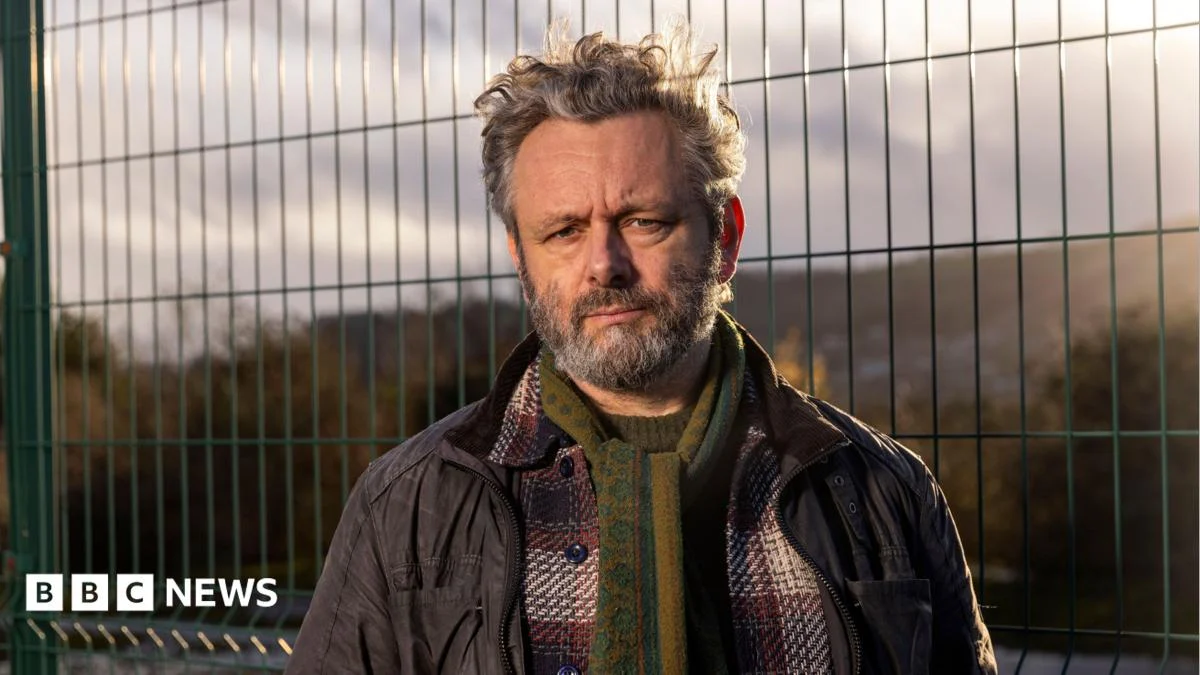
The recent BBC documentary, "Buried with Michael Sheen," has unveiled a chilling legacy of toxic waste across Wales, but its findings are merely scratching the surface of a nationwide environmental crisis. Stephen Constance, a former Monsanto worker, has come forward following the programme’s broadcast, revealing his deeply disturbing experiences from the 1990s at the chemical giant’s Newport factory. For three years, Constance was involved in sealing vast quantities of toxic waste underground, a task he performed with what he describes as "cheap" protective equipment, and crucially, without being informed of the nature of the hazardous materials he was burying. This profound lack of transparency and inadequate safety measures highlight a systemic disregard for worker safety and environmental responsibility that characterised industrial practices decades ago, the repercussions of which are now coming to light.
Dr. David Megson, a leading scientist featured in the documentary, echoes Constance’s concerns, warning that the 14 sites identified in "Buried" represent just "the tip of the iceberg." Dr. Megson, a reader in chemistry and environmental forensics at Manchester Metropolitan University, led the extensive scientific data collection for the programme, and his research indicates a far more pervasive problem: an estimated 20,000 high-concern sites across the entire United Kingdom. This staggering figure underscores the monumental scale of the environmental challenge confronting the nation, suggesting a hidden landscape of contamination that poses long-term threats to public health and ecosystems. The documentary’s focus on Wales serves as a microcosm for a much broader, urgent issue that demands immediate and comprehensive attention.
The revelations have prompted a significant public response, with dozens of individuals, including Constance, contacting BBC Wales after coverage of Sheen’s investigation into Monsanto’s historical practices, particularly the widespread dumping of polychlorinated biphenyls (PCBs). These synthetic organic compounds were once ubiquitous in industrial applications throughout the 20th Century, finding their way into everything from electrical equipment and hydraulic fluids to surprising consumer products like lipstick and white goods. However, their extreme toxicity and persistence in the environment led to their ban in the UK in the 1970s, a prohibition subsequently adopted by 151 countries globally.
Researcher and whistleblower Douglas Gowan has dedicated five decades to compelling authorities to investigate what he believed was widespread dumping of industrial chemicals. He starkly refers to PCBs as "some of the worst contaminants known to man," a characterisation strongly supported by scientific understanding of their dangers. PCBs are highly stable, resistant to degradation, and bioaccumulate in the food chain, meaning they can build up in living organisms over time, reaching higher concentrations at successive trophic levels. Exposure to PCBs is linked to a range of severe health problems, including developmental issues, immune system dysfunction, neurological disorders, and critically, they are suspected carcinogens, meaning they are believed to cause cancer.
Dr. Megson’s scientific findings have provided alarming validation for Gowan’s long-standing warnings and the anxieties of affected communities. He states, "The country is in a really dire place," describing the documented sites as not merely contaminated, but actively "leaking" a "chemical cocktail" into the surrounding environment. While PCBs are a significant concern, the mixture of other unknown or partially identified substances only compounds the potential risks. Dr. Megson was particularly stunned by the levels of contamination he encountered, especially after meeting individuals who had worried about PCB levels near their homes for over 30 years. He discovered concentrations that were "pretty much the highest I’ve ever seen in anything we’ve tested," a finding that has left him deeply disturbed. "It’s made me feel quite uncomfortable about some of those sites and what could have happened to all of those people’s friends and loved ones," he admitted, lamenting that "The polluter just keeps getting away with stuff left, right and centre."
One particularly stark example highlighted in the documentary is the acid tar lagoon, a site whose contamination was known as early as 1979, according to a 2006 report by an environmental engineering consultancy seen by BBC Wales. This report detailed the dumping of 93,100 tonnes of acid sludge from Burmah Castrol, alongside barrels of unknown substances strongly suspected to originate from Monsanto. Despite the clear evidence of severe pollution and the passage of decades, the acid tar lagoon remains a persistent environmental hazard. Over a period of 27 years, there were 18 investigations, two remediation proposals, and five treatment trials, yet as of 2026, the lagoon endures, a testament to the inertia and complexity surrounding such historical sites. The 2006 report chillingly identified 105 possible pathways through which contamination from the site could impact people, wildlife, property, or vital water supplies. Among the most concerning revelations were three uncapped mine shafts located directly beneath the lagoon, suggested as potential conduits for the movement of contaminants into deeper geological strata and groundwater. Adding another layer of complexity and controversy, in the 1980s, Clwyd County Council acquired the site and, in a legally binding agreement, committed to protecting the previous owner from any past, present, or future claims, costs, or liabilities arising from the "escape or nuisance of noxious wastes." This agreement effectively shielded the original polluter from accountability, leaving local authorities and taxpayers to manage the fallout. Both Eastman Chemical Company, responsible for Monsanto’s legacy production in the UK, and BP, responsible for Burmah Castrol, declined to comment on the matter when approached.
The legal ramifications of such historical contamination present formidable challenges, as highlighted by John Browne, a lawyer specialising in industrial disease claims at Slater and Gordon. He explains that cases involving historical contamination are notoriously difficult to investigate due to the passage of time. "Witnesses’ memories fade and locating [eye]witnesses becomes increasingly challenging and difficult," he notes. However, Browne stresses that such cases are not impossible to pursue, particularly with the advent of advanced scientific, medical, and forensic evidence. These modern tools can be instrumental in establishing what occurred and whether exposure to hazardous substances contributed to illness. He emphasises that the crucial legal question is not simply what the law permitted at the time of the dumping, but what was known about the risks posed by these substances. Browne firmly asserts that "Communities affected by contamination deserve transparency and clear answers," advocating for a robust approach to accountability.
In response to these concerns, various public bodies have issued statements that reflect the complex, and sometimes conflicting, perspectives on the issue. Public Health Wales stated that its Welsh cancer intelligence and surveillance unit has meticulously collected and analysed "every single case of cancer" since the 1970s. Based on the evidence currently available, they maintain there is "no indication that historical environmental pollution is responsible for an increased risk of cancer, or any other disease or illness, in these areas." This statement, while reassuring in its intent, clashes sharply with the palpable anxieties of affected communities and the scientific findings presented in the documentary regarding suspected carcinogens like PCBs.
Natural Resources Wales recounted that its predecessor, the Environment Agency, investigated the acid tar lake in 2006 and 2008. However, their tests concluded that the site "did not meet the legal definition of contaminated land." Consequently, responsibility for the site reverted to and remains with Wrexham County Council as the regulator. Wrexham Council, for its part, affirmed that since these investigations two decades ago, ongoing monitoring has not identified any significant changes, and therefore, there is no statutory requirement for remediation. These official positions underscore a critical disconnect between the legal definitions and regulatory frameworks, and the lived experience and scientific warnings of ongoing environmental threats.
The Welsh government acknowledges the gravity of the situation, stating that addressing contaminated land is one of its key priorities. A 2015 survey of local authorities by Natural Resources Wales identified over 9,000 potential sites requiring further investigation across Wales. While not all of these sites may pose an immediate risk to human health or the environment, this figure undeniably "demonstrates the scale of the issue facing regulators in Wales." The government has announced its intention to develop a Wales-wide strategy aimed at progressively restoring post-industrial land, with the explicit goal of ensuring "communities are no longer exposed to potential risks." When asked for comment, the UK government referred the BBC to the Welsh government, indicating the devolved nature of environmental responsibility in this area.
However, Dr. Megson remains resolute that official action will only truly materialise under sustained external pressure. "Public pressure is the only thing that’s going to make this action happen," he declared. "This is our only chance, if I’m being brutally honest." The documentary and the subsequent testimonies have ignited a crucial public conversation, exposing not only a pervasive environmental threat but also a systemic failure of corporate responsibility, regulatory oversight, and legal accountability over many decades. The sheer number of potentially hazardous sites, the persistence of highly toxic chemicals, and the long-term health implications demand a far more proactive, transparent, and robust response than has been seen to date. Without public pressure, the "tip of the iceberg" may remain the only visible sign of a much larger, buried catastrophe.



 Roy Suryo

 George Anjay
 Nakalama John
 Ramos Leo