George Anjay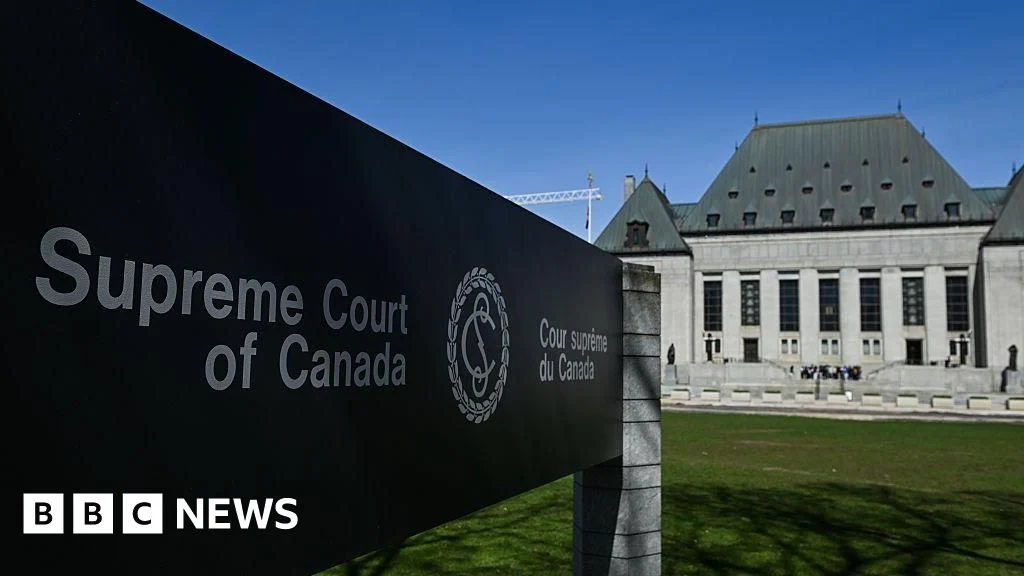
At the core of this legal battle is Bill 21, enacted in 2019 by the Coalition Avenir Quebec (CAQ) government. The law explicitly prohibits certain public servants, including judges, police officers, and teachers, from wearing religious symbols while on duty. To shield this legislation from inevitable legal challenges, the Quebec government ingeniously, and controversially, invoked Section 33 of the Constitution Act, 1982 – the so-called "notwithstanding clause." This seldom-used provision grants provincial and federal governments the extraordinary power to override certain Charter rights, specifically those pertaining to fundamental freedoms, legal rights, and equality rights, for a renewable period of five years.
The inclusion of the notwithstanding clause has drawn sharp criticism from civil liberties advocates. The Canadian Civil Liberties Association (CCLA) has described Quebec’s arguments as "chilling," posing a stark hypothetical: "Could a government invoke [the clause] to ban abortion? To criminalise political speech critical of the government? To legalise torture?" The CCLA argues that under Quebec’s interpretation, courts would be rendered powerless to intervene even in such extreme scenarios. This week, the Supreme Court of Canada will dedicate four days to hearings on the constitutional challenge to Bill 21, with an unprecedented number of over 50 interveners, including the federal government, participating in the proceedings.
Understanding Bill 21 and Quebec’s Conception of Secularism
Quebec’s approach to secularism, or "laïcité," is deeply intertwined with its provincial identity, drawing parallels to the French model of strict state neutrality in religious matters. Proponents of "laïcité" assert that public institutions must remain free from religious influence to ensure equality and a shared civic space. However, the practical application of this principle has become a flashpoint for societal division. Supporters of Bill 21 maintain that it is a necessary measure to uphold the separation of church and state in Quebec. Conversely, critics contend that the law is inherently discriminatory, hinders the integration of religious minorities, and disproportionately impacts Muslim women, despite not explicitly naming any particular faith.
The CAQ government’s strategic deployment of the notwithstanding clause was a deliberate attempt to preemptively fortify Bill 21 against legal scrutiny. Section 33 of the Canadian Constitution, introduced during the patriation of the constitution in the early 1980s, emerged as a crucial compromise to secure provincial agreement for a new constitutional framework that included a Charter of Rights and Freedoms. It was envisioned as a legislative override mechanism, allowing elected bodies to reassert their will in specific circumstances, subject to democratic accountability over time. While certain fundamental rights, such as democratic and language rights, are beyond the purview of this clause, its application to freedom of religion and equality rights is particularly significant in the context of Bill 21.
Historically, the notwithstanding clause has been invoked sporadically, with Quebec being a notable user over the decades. However, in recent years, its application has become more widespread across other provinces, leading to concerns that it is being used more frequently than originally intended. Examples include Ontario’s use of the clause to reduce the size of Toronto’s city council, Alberta’s invocation to mandate striking teachers back to work, and Saskatchewan’s use to require parental consent for students under 16 to change their names or pronouns at school. This trend has prompted legal scholars like Errol Mendes, a law professor at the University of Ottawa and an intervener in the case, to warn that the clause’s broad scope and increasing use could lead to its misuse, a prediction he feels is now materializing. This week’s Supreme Court hearing marks the first time the highest court in Canada has grappled with the implications of the notwithstanding clause since a landmark case in 1988.
Arguments from Opposing Sides
The legal challenge to Bill 21 is spearheaded by organizations such as the Canadian Civil Liberties Association and individuals directly affected by the law, like Ichrak Nourel Hak, a Muslim teacher in Quebec who wears a hijab. In their submissions, they argue that Bill 21 infringes upon the dignity, rights, and freedoms of individuals aspiring to or currently working in Quebec’s public service. They further emphasize the law’s disproportionate impact on minority religious groups, including Muslim, Sikh, and Jewish communities.
Quebec, on the other hand, contends that the central issue is not whether Bill 21 infringes upon freedoms, but rather that the notwithstanding clause renders such infringement permissible. In their legal filings, the province asserts that Section 33 is a foundational element of the Canadian Charter, designed to safeguard parliamentary sovereignty. Quebec argues that the bill’s objective is to preserve the religious neutrality of the state and foster a cohesive civic identity. They maintain that the notwithstanding clause can be invoked proactively and that its use aligns with established Supreme Court precedent.
Testing the Fabric of National Unity
The implications of this case extend to the very heart of Canadian federalism and national unity. Many, including the federal government, are advocating for limitations on the notwithstanding clause’s application. Federal Justice Minister Sean Fraser has stated that the Supreme Court’s decision will significantly shape the future use of the notwithstanding clause by both federal and provincial governments. He underscored the Charter of Rights and Freedoms as a cornerstone of Canadian democracy and a reflection of shared values.
While Ottawa has refrained from commenting on the merits of Bill 21 itself, its legal arguments urge the court to establish boundaries for the clause’s invocation. The federal government contends that the notwithstanding clause was not intended to be a "blank cheque" that could be used to "distort or annihilate" Charter rights or reduce them to insignificance. This position, however, has been met with strong resistance from several provinces, who are also interveners in the case.
Quebec has accused the federal government of launching an "attack on the parliamentary sovereignty" of all Canadian legislative assemblies. Five provincial premiers issued a joint statement arguing that Ottawa’s legal stance "threatens national unity by seeking to undermine the sovereignty of provincial legislatures." They further asserted that the federal government’s position constitutes a "direct attack on the foundational constitutional principles of federalism and democracy." Alberta, in its own filings, has characterized the notwithstanding clause as a "hard-fought and hard-won compromise" intended to uphold "parliamentary sovereignty." The Supreme Court’s forthcoming ruling will undoubtedly have profound and lasting consequences for the intricate relationship between individual rights, legislative power, and the very definition of Canadian identity.


 Nakalama John
 Ramos Leo
 Nana Banana