Nana Banana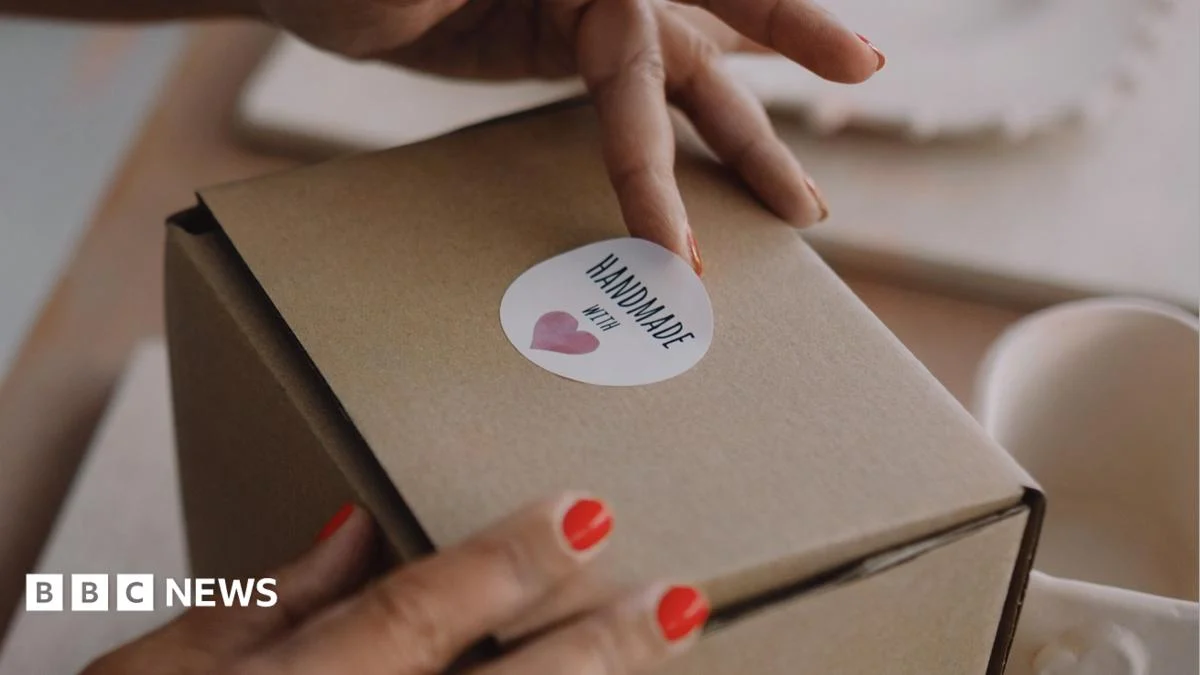
It’s quite literally a sticking point for the global recycling industry. While the very idea of paper or cardboard packaging evokes images of sustainable, easily recyclable materials, the reality is often far more complex. The seemingly innocuous presence of a label, a protective seal, or a specialized coating can fundamentally compromise the recyclability of paper, turning a green aspiration into a significant industrial hurdle.
The core of this problem lies with non-recyclable adhesives, affectionately (or perhaps not so affectionately) known as "stickies" within the industry. These tenacious materials, often made from synthetic polymers, waxes, or hot melts, cling to paper fibers even during the pulping process. Their impact is multi-faceted and damaging. According to scientists at NC State University, stickies can cause significant damage to expensive recycling machinery, leading to costly downtime and increased maintenance. Furthermore, they degrade the quality of the resulting batch of recycled paper, making it inferior in strength, appearance, and printability. In the worst-case scenarios, a contaminated batch of paper can be entirely rejected, sending valuable resources to landfill rather than back into the circular economy.
This predicament is particularly disheartening given paper’s impressive recycling track record. In Europe, for example, paper is one of the most successfully recycled materials, with approximately 74% of all paper and board consumed in 2024 being collected and processed for recycling. This high rate underscores the existing infrastructure and consumer willingness to recycle paper, making the "stickies" problem an even more frustrating bottleneck.
European authorities are keenly aware of these challenges and are actively spurring firms to innovate and improve. August will see the implementation of a new, ambitious Europe-wide Packaging and Packaging Waste Regulation (PPWR). This landmark legislation mandates that all packaging placed on the market must be a minimum of 70% recyclable by 2030, with this target rising to a demanding 80% from 2038. These regulations are not merely guidelines; they carry significant weight. In addition, national laws, such as those in Germany, are imposing stricter reporting requirements and escalating licensing fees for packaging materials, creating a powerful economic incentive for companies to seek truly recyclable solutions.
Against this backdrop of tightening regulation and environmental imperative, tackling the problem of stickies has become a priority. One promising avenue has been the development of water-soluble adhesives. These innovative glues are designed to dissolve or disperse easily during the paper recycling process, preventing them from contaminating the pulp or machinery. While a significant step forward, some water-soluble adhesives still leave behind residues or require specific conditions for optimal dissolution, leading researchers to ponder a more radical solution: what if you could skip the adhesive altogether?
This audacious idea is precisely what three pioneering firms from Germany – Fraunhofer, Hermann Ultraschall, and Henkel – have been pursuing. It’s no mere coincidence that these innovators hail from Germany, a nation renowned for its "Packaging Valley," a vibrant hub of research and development for the global packaging industry. Their collective efforts are a direct response to the ever-tightening regulatory framework around commercial recycling and the escalating fines faced by those who fail to comply.
In 2023, the German research organization Fraunhofer launched the PAPURE project, dedicated to developing a revolutionary laser-based heating process that can seal paper packaging without the need for any adhesive whatsoever. As the project officially concludes in September, Fraunhofer is actively seeking an industry partner to bring this groundbreaking technology to market. Researchers showcased their work at the prestigious Interpack packaging trade show in Düsseldorf in May, where they attracted considerable interest. Fabian Kayatz, a researcher group leader at Fraunhofer, expresses strong optimism: "There are not really many paper sealing technologies without any foreign materials, so it’s a great technology and we feel it’s likely that we can bring it to market. If we are optimistic, we will have the first solution out in two years." The laser sealing process essentially uses precisely focused heat to melt and fuse the paper fibers themselves, creating a strong, pure paper-to-paper bond.
Also in 2023, engineering firm Hermann Ultraschall acquired the rights to develop a patented ultrasonic paper sealing technology. This process is likened to welding, where high-frequency ultrasonic vibrations generate localized heat through friction, causing the paper fibers to bond directly without any external material. Michael Baumann, the company’s head of business development packaging, reports significant industry interest: "We are really actively at the moment in discussion with several really big players in the market with the focus of bringing this technology into mass production. One customer told me this is an innovation they have never seen before."
Yet, these seemingly simple, elegant solutions stem from complex technology, and naturally, they come with their own set of challenges. Firstly, the adoption of these new sealing methods is not as straightforward as simply swapping out one packaging material for another. It necessitates significant updates, and in some cases, the complete replacement of existing manufacturing machinery. This can involve substantial capital expenditure, lengthy installation times, and production disruptions, making it a difficult proposition for many manufacturers. "The packaging industry has existing machines which are all designed for glue materials. Some kind of redesign is probably necessary, and this is our biggest challenge," acknowledges Hermann Ultraschall’s Baumann. However, Volker Franke, another research group leader at Fraunhofer, offers a more optimistic outlook, confident that existing machines can be modified by integrating the modular laser sealing unit developed by PAPURE.
Another acknowledged hurdle is the current production rate, which is often much slower than that achieved with traditional adhesive-based paper packaging. Nevertheless, Franke highlights a key benefit of the PAPURE system: its fully automated production capability, which he believes can be continuously optimized for speed and efficiency.
The material itself also presents limitations. "It’s not possible to bond every paper material," Baumann confirms. This issue is being proactively addressed through active discussions with paper manufacturers, exploring how they can produce raw materials specifically engineered for easier bonding with these new technologies.
A particularly complex challenge for PAPURE’s laser sealing technology is its application to food-grade packaging. Such packaging typically requires a barrier coating to protect the contents from moisture, oxygen, or grease, and to prevent interaction between the food and the paper. These coatings often interfere with direct laser bonding and can be sensitive to heat. This is precisely why plastic has historically been favored for food packaging, given its inherent barrier properties.
However, this is where Henkel, a global leader with both a consumer brand division and a powerful adhesive technologies division, has made a significant breakthrough. In February, Henkel announced the launch of the first cold seal solution specifically designed to work with barrier-coated paper. This innovation is both fully recyclable and suitable for direct food contact. Barrier paper presents a notoriously difficult surface to bond, and using heat is often unsuitable for heat-sensitive food products like ice cream or chocolate. Henkel’s cold seal solution overcomes this by applying sufficient pressure for the barrier-coated paper to bond securely against itself, without the need for heat. This technology is already available for packaging manufacturers and is being used in snack and confectionery products, though specific brand names could not be disclosed.
Henkel had previously developed a highly effective heat seal solution for paper that is fully recyclable. This enabled Italian brand Regina, for instance, to successfully transition from plastic to paper packaging for its hygiene products, including toilet rolls, kitchen paper, and napkins, demonstrating the practical viability of such innovations. Dr. Arianna Savini, Market Strategy Manager for Paper Packaging Europe at Henkel’s adhesive technologies division, emphasizes the systemic nature of this shift: "Since paper is already very established in the recycling infrastructure, it’s a very obvious solution when we think about how we can improve the sustainability and recyclability of our packaging. This is really a system shift. You need to engage with all the players in the supply chain to enable this change. But there is good momentum in the industry now because of the PPWR deadline, so everyone is very active at the moment, trying to make this change." She also adds that improving the recyclability of paper is generally more straightforward than attempting to achieve the same with complex plastic structures.
Jamie Stone, a packaging expert at global innovation consultancy PA Consulting, highlights the intricate dance involved in marrying recyclable paper packaging with compatible sealants. "For example, take a yoghurt pot made from folded paper fiber. You need a barrier layer between the paper fiber and the yoghurt to protect the shelf life, and you also need a secure lid. So, you’re immediately dealing with multiple surfaces that all have to work together," explains London-based Stone. "If the barrier layer is a liner, which is best for recycling, it needs to be very thin. It also needs to bond really well to the paper fiber part. If it doesn’t stick well enough, you risk pulling out the lining with the lid still attached – leaving a messy, partially sealed pot of yoghurt, which is clearly not a good consumer experience."
However, a broader perspective is offered by Ambarish Mitra, co-founder of Greyparrot, a waste analytics platform used by major waste collection companies and local authorities. Mitra argues that while adhesives are a problem, a more significant reason for paper not being recycled often lies in poor collection and sorting methods. "A lot of paper and card doesn’t get recycled because it gets dirty or mixed in with other rubbish before it even reaches a recycling plant, not because of the glue holding it together," says Mitra. Contamination at the source, such as food waste on cardboard or mixing with non-recyclables, frequently leads to rejection even before the "stickies" become an issue.
Despite these broader challenges, PA Consulting’s Stone agrees that new paper sealing technologies are "a smart place to start." He concludes with an optimistic outlook: "We’ll see the real sustainability benefits start to scale as technologies like these mature and begin to handle more complex, high-barrier paper-based packaging, while matching the speed and cost of plastic packaging lines." The convergence of regulatory pressure, innovative engineering, and a holistic approach across the supply chain suggests that the era of truly recyclable, adhesive-free paper packaging is not just a distant dream, but a rapidly approaching reality. The sticky point, it seems, is finally being addressed with ingenuity and determination.



 Roy Suryo
 Nakalama John
 atisusanti
 Ramos Leo