
 Nana Banana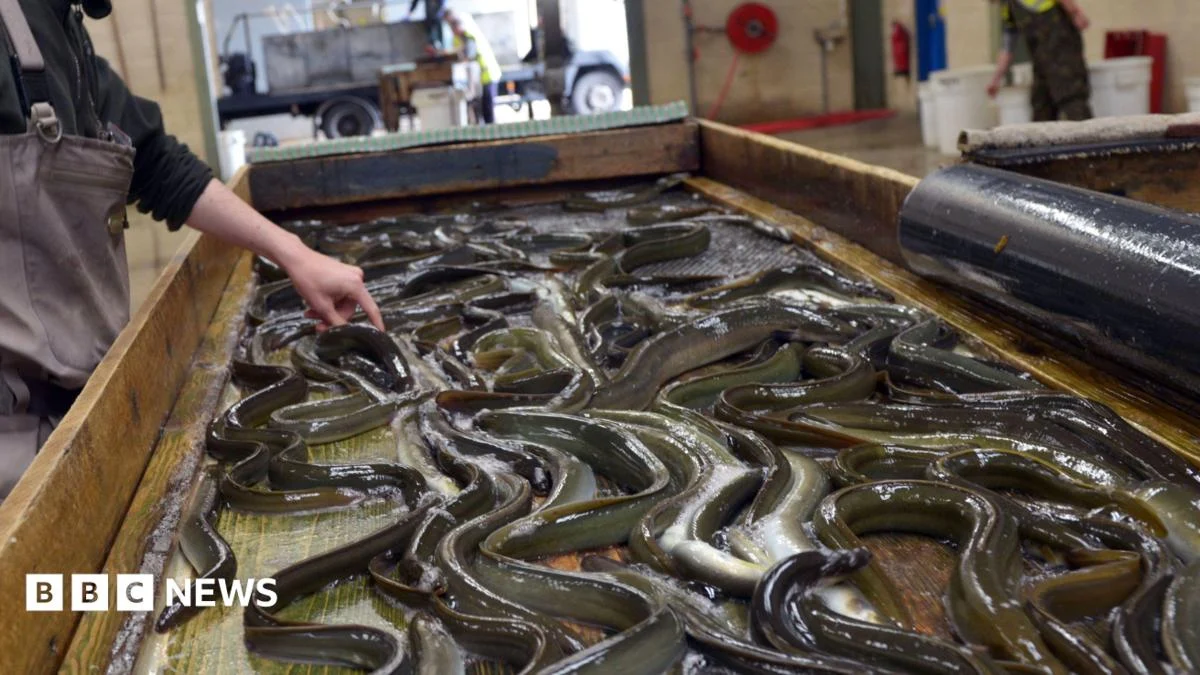
Professor Evans highlights the extraordinary metamorphosis eels undergo as they transition from their yellow, freshwater-dwelling phase to the silver, migratory stage. This isn’t merely a change in hue; it’s a complete physiological overhaul. "It is only recently we have come to realise that as part of their process of changing from yellow to silver eels, they go through a range of really incredible metamorphic changes," he explained. Their appearance shifts dramatically: their backs darken to a deep, oceanic blue-black, providing camouflage against predators from above in the open sea, while their undersides become stark white, blending with the lighter surface when viewed from below. Their eyes expand significantly, adapting to the dim light of the deep ocean, enhancing their vision for the arduous journey ahead. Fins become more rounded and paddle-like, optimized for sustained, long-distance swimming. Perhaps most remarkably, their digestive systems effectively seal off, rendering them unable to feed. "Even their backsides disappear – they become sealed almost like a biological submarine, I guess you could say," Evans mused, illustrating their complete reliance on stored fat reserves for the monumental voyage.
This profound transformation prepares them for their singular, awe-inspiring migration back to the Sargasso Sea, a vast, current-bound expanse in the western Atlantic Ocean, south-east of Bermuda. This is the fabled spawning ground, the only place on Earth where European eels are known to reproduce. For thousands of miles, these biological submarines navigate the vast ocean depths, fueled only by the fat reserves accumulated during their freshwater lives. During this non-feeding transit, their reproductive organs mature, developing sperm and eggs essential for the continuation of their species. The precision of their navigation across such immense distances without visual cues has long baffled scientists. Recent breakthroughs, however, shed light on this incredible feat. "We now know from work by colleagues in Norway that there seems to be some kind of magnetic superpower, what are called magnetophores in the retinas in the back of their eyes, that can detect the Earth’s magnetic field and help them find their way back to the Sargasso," Professor Evans revealed. This innate ability to sense and utilize the planet’s geomagnetic field acts as an internal compass, guiding them unerringly to their ancestral breeding grounds.
The journey culminates in a poignant, ultimate sacrifice. "And it’s a one-time journey," Professor Evans added. "They go back, they spawn and they die. We never see adults again. The only thing we see are the little, finger-long glass eels coming back sometime within the following year." These translucent, delicate "glass eels," or elvers, are the next generation, carried by ocean currents back towards the European and North African coasts, instinctively seeking out the freshwater rivers and lakes where their parents once matured, including Lough Neagh.
However, the continuity of this ancient cycle has been severely threatened. The 1980s marked a catastrophic turning point for European eel populations. Scientists observed a dramatic collapse in recruitment – the number of juvenile eels arriving at freshwater bodies across Europe. Professor Evans detailed the alarming statistics: "It fell from 14-16 million juveniles a year, to a little more than 200,000." The year 1983 stands out as the "pain point," the moment the precipitous decline was first unequivocally noticed. Crucially, this wasn’t a temporary fluctuation; "It wasn’t just a blip – it was something that continued and has continued right up to the current time," he stressed, indicating a systemic, persistent crisis.
Marine biologists and fisheries scientists worldwide now largely agree that human influence is the primary driver behind this devastating decline. A complex web of anthropogenic factors has conspired against the species. Climate change, with its profound impact on ocean currents, water temperatures, and ecosystem dynamics, is believed to disrupt migration patterns and the availability of food sources. Hydropower systems, ubiquitous across European rivers, pose a direct and often lethal barrier to migrating eels. Dams block their upstream journeys, while turbines can fatally injure or disorient silver eels attempting to migrate downstream to the sea. Pollution and contamination, stemming from industrial discharges, agricultural runoff, and microplastics, degrade freshwater and marine habitats, impairing eel health, reproductive capacity, and survival rates. The introduction of exotic parasites, such as the swimbladder nematode Anguillicola crassus, inadvertently spread through eel transfers, has wreaked havoc on wild populations, debilitating their ability to undertake the strenuous trans-Atlantic migration. Historically, overfishing also contributed significantly to stock depletion before the full extent of the crisis was understood.
Adding another layer of threat is the insidious rise in illegal smuggling of glass eels. These tiny, finger-long juveniles command exceptionally high prices in Asian markets, where they are grown for food. Investigations, such as those highlighted by BBC Eye, have exposed sophisticated international organized crime networks involved in this illicit trade, further depleting critically endangered stocks despite bans and conservation efforts. The immense profits generated by this black market fuel a relentless pressure on the remaining populations, undermining legitimate conservation initiatives.
In response to the escalating crisis, eel management plans were implemented across Europe starting in 2009. These coordinated efforts aimed to support the recovery of the species, which is now classified as critically endangered by the International Union for Conservation of Nature (IUCN). Measures included an EU-wide export ban on eels, designed to curb the illegal trade, and increasingly stringent fishing restrictions. Recreational and commercial fishing of eels has been completely halted in several European countries, a stark reflection of the species’ dire situation.
Yet, despite the global decline, the eel continues its tenacious return to places like Lough Neagh, where a long-standing fishing tradition is deeply intertwined with the species’ fate. For licensed fishermen such as Gary McErlain, eel fishing can account for up to 80% of their annual income, highlighting the profound economic and cultural impact of the crisis on local communities.
Last year, the Lough Neagh eel fishery faced a particularly grim reality when fishing was entirely stopped because the quality of the eels fell short of market requirements, a direct consequence of the deteriorating health of the Lough. This unprecedented closure underscored the urgency of intervention. In response, last month, Agriculture Minister Andrew Muir announced a series of targeted measures for the Lough Neagh eel fishery, explicitly designed to ensure the long-term recovery of eel stocks. The Department for Agriculture, Environment and Rural Affairs (DAERA) confirmed that these new measures are firmly rooted in scientific advice and uphold the department’s statutory responsibilities to protect the critically endangered European eel. Recognizing the immediate economic hardship faced by fishermen, Minister Muir emphasized that work is being progressed "as a priority" to develop a temporary cessation scheme, offering vital support to permit holders affected by the closure of the yellow eel fishery.
Gary McErlain, a seventh-generation eel fisherman, harbors his own insights and concerns regarding the collapse in the eel population, deeply rooted in his intimate knowledge of Lough Neagh. He sees a confluence of factors at play, extending beyond the broad scientific consensus. "You can point to a whole host of factors such as zebra mussel, climate change, whatever else. We can see very clearly our Lough Neagh fly is down, the pollution is up," the eel fisherman asserted. He points to the invasive zebra mussel, which, while clearing water, can disrupt the food web and alter the ecosystem in ways detrimental to other species. The decline of the Lough Neagh fly (Chironomidae), a key indicator species for water quality, signals a deeper malaise within the ecosystem.
McErlain’s most pressing concern revolves around the alarming succession of algae blooms that have plagued Lough Neagh in recent years. "You had the algae bloom of 2023, ’24 and ’25, and I would say last year was worse than any," he recounted, linking the severe blooms to nutrient runoff from agricultural land exacerbated by warming temperatures due to climate change. These blooms deplete oxygen, create toxic conditions, and fundamentally alter the habitat, making it increasingly inhospitable for eels and other aquatic life. He expressed a chilling premonition, suspecting "it’s going to happen again" following two periods of intense heatwave conditions in Northern Ireland, which provide ideal circumstances for further algal proliferation.
For McErlain, the potential loss of eel fishing is more than just an economic blow; it’s an existential crisis. As the latest in a long lineage of Lough Neagh fishermen, he struggles with the emotional weight of potentially being the last. "I’m blessed that I’ve come from a long line of commercial fishing, and I’m blessed that I had the opportunity to do it," he said, his voice tinged with emotion. "So to ask me how I feel in relation to that not continuing into the future – that’s devastating." His words underscore the profound cultural heritage and generational identity intrinsically linked to the fate of the Lough Neagh eel.
Ultimately, increasing the chances of adult eels successfully breeding through comprehensive management plans, strict fishing bans, and the establishment of protected migratory routes to the sea are seen as paramount to restoring the species. Despite the daunting challenges, Professor Evans maintains a stance of cautious optimism. "The eel is a very resilient species, it’s been here millions of years," he reminds us. "It’s seen itself through many ice ages. It’s a survivor." This inherent tenacity and evolutionary robustness offer a glimmer of hope. "Given the right chances, it will continue to survive." The critical question remains whether humanity can provide those chances, reversing the damage of decades and allowing this prehistoric marvel to continue its extraordinary journey for millennia to come.



 Roy Suryo

 Nakalama John
 atisusanti
 Ramos Leo
