Nana Banana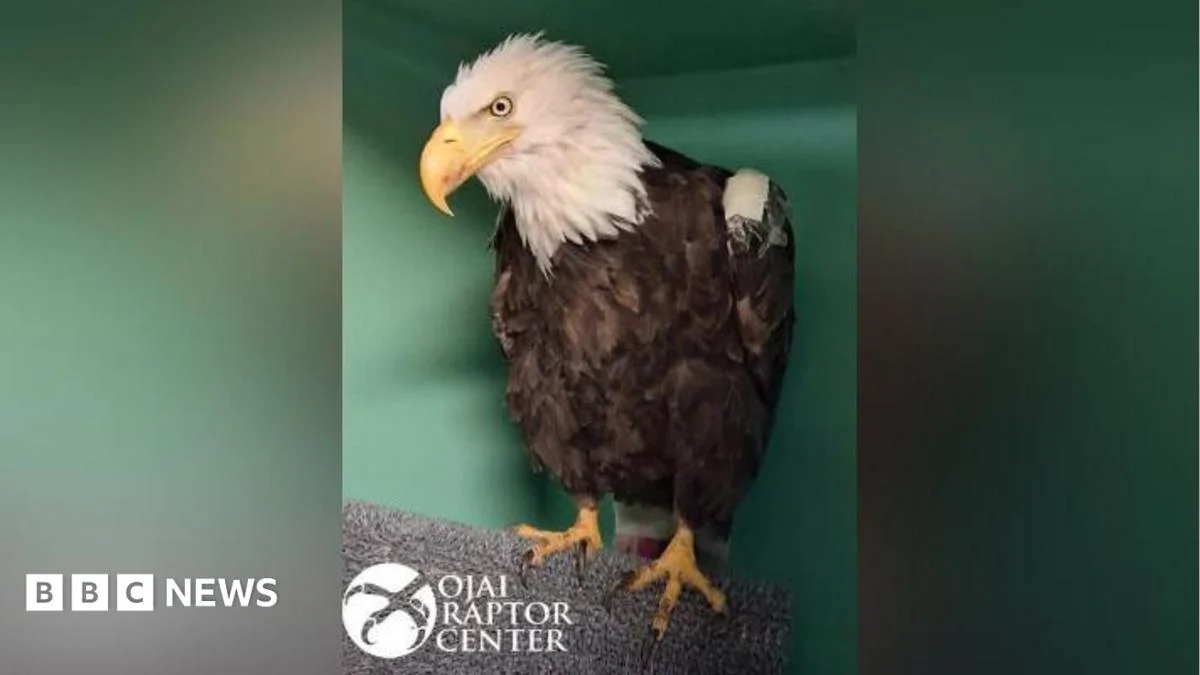
Jackie, a majestic bald eagle who soared into the hearts of hundreds of thousands worldwide through a captivating online livestream, passed away on Monday after an arduous battle for her life following weeks of intensive veterinary treatment. Her death marks a profound loss for the wildlife conservation community and the legions of devoted fans who had followed her journey in California’s Big Bear Valley.
The beloved raptor had been under the diligent and compassionate care of the Ojai Raptor Center, a renowned wildlife rehabilitation organization dedicated to the rescue, rehabilitation, and release of birds of prey. Jackie’s ordeal began when she sustained injuries from an attack by other eagles, a common, albeit brutal, occurrence in the territorial world of wild raptors vying for resources or nesting sites. However, beyond the immediate trauma of the attack, veterinary examinations revealed that Jackie was also contending with significant underlying health issues, including severe anaemia and substantial weight loss, which critically compromised her ability to recover.
In a somber statement released by the Ojai Raptor Center, the organization conveyed the heartbreaking news: "Over the past several days, her condition continued to deteriorate despite intensive treatment and the combined efforts of our veterinary team and consulting specialists." The statement underscored the relentless efforts made to save her, highlighting the complexity of treating a wild animal with pre-existing conditions and severe injuries. The center’s team expressed profound sorrow, acknowledging the deep emotional investment of both staff and the global community.
Jackie’s fame transcended the typical boundaries of wildlife observation, largely thanks to the Big Bear Eagle Nest Cam. This remarkable livestream, operated by the non-profit Friends of Big Bear Valley in California, had amassed hundreds of thousands of subscribers and an even larger casual viewership. For years, this cam offered an unparalleled, intimate window into the daily lives of Jackie and her long-term mate, Shadow, providing an extraordinary educational and emotional connection between humans and the wild.
Jackie, identifiable by her striking white head and tail, had been a fixture in the Big Bear Valley since she hatched in the spring of 2012. Her presence in the area was consistently noted, her regal flights and diligent parenting often captured by the cam. In 2018, she found her enduring partner in Shadow, and together, they formed a formidable and beloved pair. Their nesting attempts, the anticipation of new eaglets, and the challenges they faced from weather, predators, and even failed eggs, became a shared experience for their global audience. The Friends of Big Bear Valley website meticulously documented their history, detailing their pairing and the subsequent seasons of their shared life.
The Big Bear Eagle Nest Cam itself served as more than just entertainment; it was a powerful tool for citizen science and conservation education. Viewers learned about bald eagle biology, hunting techniques, nesting behaviors, and the precarious balance of life in the wild. The cam fostered a unique sense of community, with viewers from diverse backgrounds uniting in their shared fascination and concern for Jackie and Shadow. Online forums and social media groups buzzed with discussions, observations, and expressions of hope, particularly during times of stress for the eagle pair, such as during severe storms or challenging nesting periods.
The initial attack that led to Jackie’s rescue was a stark reminder of the harsh realities of the wild. While the exact details of the altercation remain unconfirmed, territorial disputes are common among raptors, especially during breeding season or when prime hunting grounds are contested. Such encounters can result in serious injuries, and for a bird already weakened by underlying health issues, the prognosis becomes even more challenging.
Upon her rescue, Jackie was transported to the Ojai Raptor Center, a facility renowned for its state-of-the-art medical care for birds of prey. The weeks that followed were a testament to the dedication of the center’s staff. Intensive care for a bald eagle involves a complex regimen of treatments: stabilizing the animal, assessing injuries, administering medications (such as antibiotics for potential infections and pain relief), providing nutritional support through assisted feeding, and conducting diagnostic tests like blood work and imaging to understand the full scope of her health challenges. The discovery of severe anaemia and weight loss indicated a systemic problem, likely predating the attack, making her recovery an uphill battle from the start. These conditions can be caused by various factors in wild animals, including parasites, chronic infections, nutritional deficiencies, or underlying organ dysfunction, all of which are difficult to manage in a stress-sensitive wild bird.
Despite the comprehensive efforts of the veterinary team, which included consultations with avian specialists to ensure every possible avenue of treatment was explored, Jackie’s condition progressively worsened. The Ojai Raptor Center’s statement reflected the profound emotional toll this process took on the caregivers: "Our team is heartbroken. It has been an extraordinary privilege to care for her." This sentiment resonated deeply with the vast online community that had formed around Jackie. The news of her passing elicited an outpouring of grief and condolences from around the globe, demonstrating the powerful bond that can form between humans and individual wild animals, particularly those whose lives are shared through such vivid, real-time observation.
The center acknowledged this widespread emotional impact: "We know this news will be deeply felt by the many thousands of people around the world who have followed her journey, hoped alongside us, prayed for her, and supported the people caring for her." This collective grief underscores the critical role that individual animals like Jackie play in fostering empathy, promoting conservation awareness, and inspiring action to protect wildlife habitats.
In the wake of her death, the Ojai Raptor Center has confirmed that Jackie’s remains have been transferred to the California Department of Fish and Wildlife. This is a standard and crucial procedure in wildlife management. Collaborating closely with both the U.S. Fish and Wildlife Service and the California Department of Fish and Wildlife, the center plans to provide a more comprehensive statement in due course. This statement is expected to include additional information on her treatments and, importantly, the results of post-mortem examinations. Such examinations are vital for understanding the precise cause of death, identifying any underlying pathologies, and contributing valuable data to ongoing research on bald eagle health, population dynamics, and conservation strategies. This information can help inform future wildlife rehabilitation efforts and broader conservation initiatives.
Jackie’s legacy will undoubtedly endure. She was more than just a bald eagle; she was an ambassador for her species, a teacher, and a source of daily wonder for countless individuals. Her life, meticulously documented and widely shared, highlighted the beauty, resilience, and fragility of wild nature. While her physical presence in the Big Bear Valley nest will be deeply missed, the memories of her powerful flights, her dedicated parenting alongside Shadow, and the global community she fostered will continue to inspire a deeper appreciation for the natural world and a renewed commitment to its preservation.



 George Anjay
 Nakalama John
 atisusanti
 Ramos Leo