Roy Suryo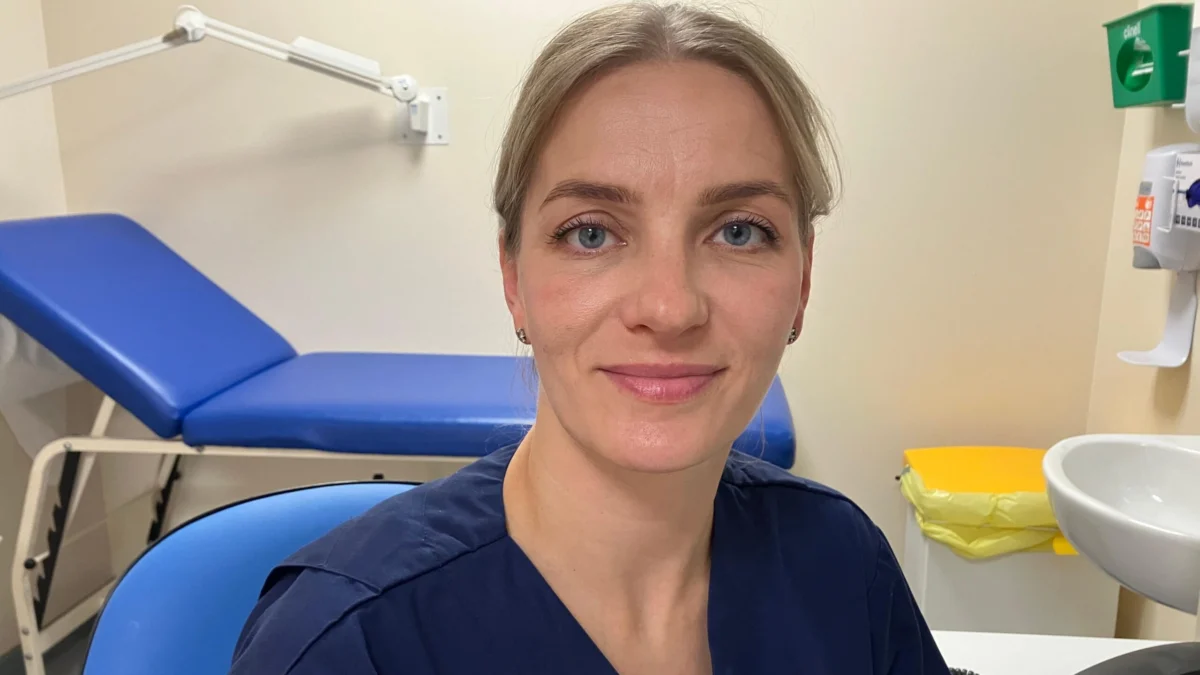
Sara Kahsai, originally from Sudan, found herself in Birmingham, England, in 2022, a move prompted by her marriage to a local bus driver. As she began to navigate her new life and settle into her adopted home, a deeply personal and life-altering revelation began to surface. Sara came to the profound and painful understanding that she was a victim-survivor of Female Genital Mutilation (FGM), a procedure she had undergone as a young girl. This realisation was not only a shock but also brought a sharper, more agonizing awareness of the excruciating pain she had endured.
"The shock was massive," Sara recounted, her voice tinged with the weight of past trauma. The physical and emotional impact was immediate, creating significant challenges in her intimate relationship with her husband. "It made it difficult with my physical relationship with my husband – but he was very kind and very patient with me," she added, a note of gratitude in her tone.

Driven by a need for answers, Sara turned to the one person she believed was responsible for this profound violation of her bodily autonomy: her mother. She confronted her mother, who still resided in Africa, asking for an explanation. Her mother’s response, delivered with a heavy heart, was steeped in the traditions of their homeland. "I was a baby. It was the culture to do it for everybody," Sara recalled her mother saying. The conversation, however, was not solely about justification. "When I spoke to my mum she was really upset and she apologised to me," Sara shared, highlighting a moment of remorse that, while significant, could not erase the past.
Female Genital Mutilation (FGM) encompasses the partial or total removal of external female genitalia for non-medical reasons. This deeply rooted practice persists in various regions across Africa, the Middle East, and Asia. It also continues within certain migrant communities in the United Kingdom, where it is unequivocally illegal and classified as child abuse. Furthermore, the act of taking a girl abroad for the purpose of FGM is also a criminal offense. The motivations behind FGM are multifaceted, often stemming from a desire for social acceptance, religious interpretations, misguided beliefs about hygiene, and the perceived necessity of preserving a girl’s or woman’s virginity. Statistics from the Home Office, citing figures from the World Health Organisation, reveal a staggering reality: approximately three million girls undergo some form of FGM annually in Africa alone.
Sara’s journey toward understanding and healing accelerated when she discovered she was pregnant. It was during this period that she felt compelled to disclose her history of FGM to healthcare professionals. This courageous act led to her immediate referral to the specialist FGM Clinic at Birmingham Women’s Hospital, staffed by dedicated midwives. Renata Hanif, a midwife at the clinic, handles approximately 200 FGM-related cases each year. Her primary focus is ensuring the well-being of women and safeguarding the health of unborn children.

"Some types of female circumcision can affect the vaginal delivery," Hanif explained, underscoring the medical implications of FGM. The clinic offers deinfibulation, a procedure that can be performed during pregnancy to surgically separate fused tissue, thereby facilitating safer vaginal births.
Beyond childbirth complications, victim-survivors of FGM can also experience significant difficulties with urination and menstruation, according to Hanif. They are at a heightened risk of infections and sepsis, and may suffer from severe, persistent pain. The psychological toll is equally profound, often manifesting as trauma, anxiety, and depression. Hanif acknowledged the immense difficulty many women face in opening up about their experiences. "It is very difficult, very emotional. It’s very difficult for the woman to actually come forward and to come to the clinic, attend the clinic, and have a conversation with me as well," she stated. "I explain to them that I’m here to help and I try to explain to them what happened to them when they were a child."
The clinic aims to empower women by providing them with a comprehensive understanding of how FGM has affected them and how they can reclaim agency over their bodies. "We talk about every part, what that part is there for and what’s been removed and what cause for concern and what effect this will have for the rest of her life," Hanif elaborated. The support offered extends to counselling and vital information for partners and husbands, equipping them with the knowledge to provide effective support.

In 2015, the children’s charity Barnardo’s established the National FGM Centre, a crucial initiative dedicated to enhancing the protection of women and girls. The centre plays a pivotal role in preventing FGM, raising public awareness, and providing essential support to those who have been affected. Schools in the UK are legally mandated to educate pupils about FGM and its legal ramifications as part of their relationships and sex education curriculum. However, the consistency and depth of this education can vary significantly between institutions. Furthermore, FGM education is not a mandatory component of primary school curricula, a point the centre advocates for change on.
"For us, a huge part of tackling FGM is prevention," stated Rohma Ullah from the National FGM Centre. "Yes, a conviction, a prosecution, can provide justice, accountability and send strong messages into communities, but by then the harm has already happened."
Recognizing the urgency and scale of the issue, the UK government convened its first dedicated FGM Summit in a decade in April. The summit aimed to collaboratively develop strategies for more robust protection of women and girls. Among the anticipated improvements are new guidelines designed to better identify girls at risk of being taken abroad for FGM.

Sara’s message to other women who have experienced FGM is one of urgent encouragement. "I have a message to all ladies who’ve had FGM," she implored. "When they come to the UK it is different. There’s help here – go to their GP, seek help, ask for help. If I knew I could seek help I would not have waited until I was expecting… because I did suffer a lot before." Her words underscore the critical importance of seeking support and highlight the availability of resources for survivors in the UK.



 George Anjay
 Nakalama John
 atisusanti
 Ramos Leo