
 atisusanti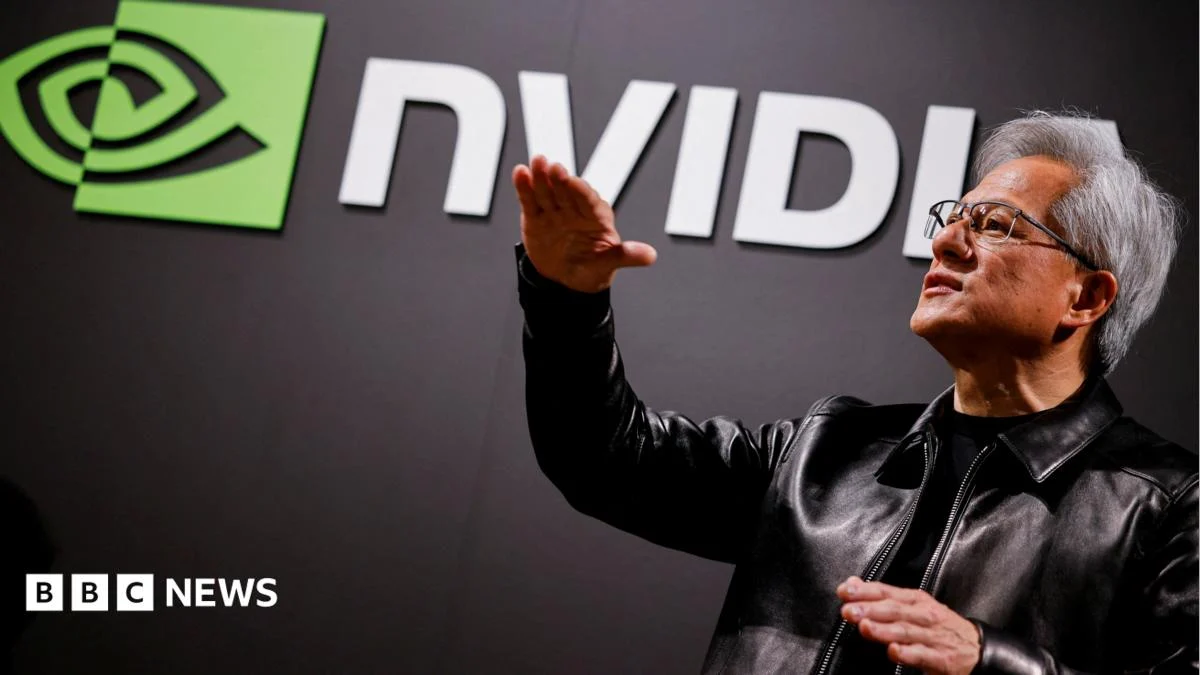
In a seismic shift for the technology and finance industries, Nvidia, the undisputed titan of AI chip manufacturing, has announced a landmark $500 billion (approximately £370 billion) capital raise from a consortium of Wall Street’s most influential financial institutions and investment firms. This monumental funding injection, set to fuel the expansion of artificial intelligence infrastructure, marks a pivotal moment where major investors are beginning to view AI hardware and the underlying "compute" resources as a distinct and highly valuable asset class. The groundbreaking deals were struck with titans of finance including Apollo, BlackRock, Blackstone, Brookfield, Goldman Sachs, and KKR, signaling a profound confidence in the future of AI development and the critical role Nvidia plays within it.
Jensen Huang, the visionary chief executive of Nvidia, articulated the significance of this development with a powerful declaration: "In AI, compute is revenue." He further elaborated on the strategic intent behind this initiative, stating, "We are bringing the world’s leading long-term capital providers together to independently underwrite AI infrastructure." This capital will be strategically deployed to bolster both Nvidia’s proprietary AI projects and the ambitious ventures undertaken by its extensive network of partners. The immediate beneficiaries of this financing will be the construction of new, state-of-the-art data centers. These facilities are designed to house, operate, and meticulously cool the vast arrays of stacked computer chips that form the backbone of AI processing, enabling the complex computations and actions required for advanced artificial intelligence.
Beyond data center expansion, the funding will also be instrumental in scaling up the manufacturing capabilities for the very AI chips that power these burgeoning systems. This will involve the establishment of new, highly specialized factories aimed at increasing the production volume of Nvidia’s cutting-edge GPUs and other AI accelerators. By boosting manufacturing capacity, Nvidia and its partners aim to meet the insatiable global demand for AI hardware and ensure greater availability for a rapidly growing customer base.
The strategic importance of AI infrastructure as a critical asset was underscored by Joe Bae and Scott Nuttall, the co-chief executives of KKR, in a joint statement. They observed, "Compute has become a critical infrastructure asset." Their experience in scaling digital infrastructure ventures provided them with a unique perspective, leading them to conclude that "delivery, not ambition, is the hard part." This sentiment highlights the operational complexities and capital-intensive nature of building and maintaining the physical infrastructure required for AI, reinforcing the need for substantial and sustained investment.
The pervasive influence of Nvidia’s technology is evident across the entire AI landscape. Virtually every major technology company and leading AI developer relies on Nvidia’s sophisticated computer chips, specifically its Graphics Processing Units (GPUs), to power their diverse range of services, sophisticated AI platforms, and increasingly ubiquitous AI chatbots. Prominent examples of companies that depend on Nvidia’s hardware include tech giants like Google, Meta, Amazon, and Microsoft, as well as innovative players such as SpaceX, Tesla, OpenAI, and Anthropic. This widespread adoption underscores Nvidia’s de facto standard status in the AI hardware market.
The financial commitment from these leading investors reflects a clear understanding of the immense economic potential of AI. Collectively, these technology and AI leaders have already invested over an astounding $1 trillion in just the past three years on AI projects and infrastructure. Projections indicate that this spending will continue to escalate significantly in the coming years. The relentless demand for Nvidia’s chips and associated services has been a primary driver behind the company’s meteoric rise in market valuation, with its stock price experiencing a five-fold increase over the last three years alone.
In a statement released on Monday, Jensen Huang reflected on Nvidia’s journey, characterizing its origins as a chip manufacturer as merely the company’s foundational stage. He stated, "Today, we are helping create a new class of productive, investable infrastructure: AI factories." This framing elevates the concept of AI development beyond mere technological innovation to a tangible, scalable, and financially attractive industrial sector. By enabling Nvidia to tap into new sources of funding from its banking and investment partners, this initiative is poised to accelerate and amplify the ongoing AI boom.
Jim Zelter, president of Apollo, a formidable lender managing over $1 trillion in assets, echoed the sentiment of AI infrastructure’s growing importance. He declared, "Modern compute has emerged as a scarce, mission-critical asset class." Furthermore, Zelter highlighted the profound economic implications of this trend, noting that it is "positioned to drive significant long-term economic growth and productivity gains." This perspective underscores the view that AI infrastructure is not just a technological enabler but a fundamental driver of future economic prosperity.
The trend of major asset managers directly investing in AI infrastructure is already gaining momentum. Just last month, BlackRock, another key partner in the $500 billion raise, entered into a separate, significant deal with Meta. This individual agreement involves financing and taking a majority ownership stake in a new data center being developed in El Paso, Texas, demonstrating a clear appetite for direct investment in the physical assets underpinning AI.
Similarly, Anthropic, a leading AI safety and research company, has recently secured substantial investment in its AI infrastructure. The company entered into a deal with Macquarie Asset Management and GIC, Singapore’s sovereign wealth fund, to finance its expansion. While the specific financial details of Anthropic’s deal were not disclosed, the company explicitly stated that further financing is necessary due to the overwhelming popularity of its AI chatbot, Claude. The soaring demand for Claude has created a significant need for more "compute" resources, illustrating the direct correlation between AI service adoption and the requirement for underlying infrastructure. This series of strategic alliances and substantial capital infusions underscores a new era where AI infrastructure is not only recognized as a critical technological component but also as a powerful and investable asset class with the potential to reshape the global economy.



 Nana Banana
 George Anjay
 Nakalama John
 Ramos Leo