
 Nakalama John
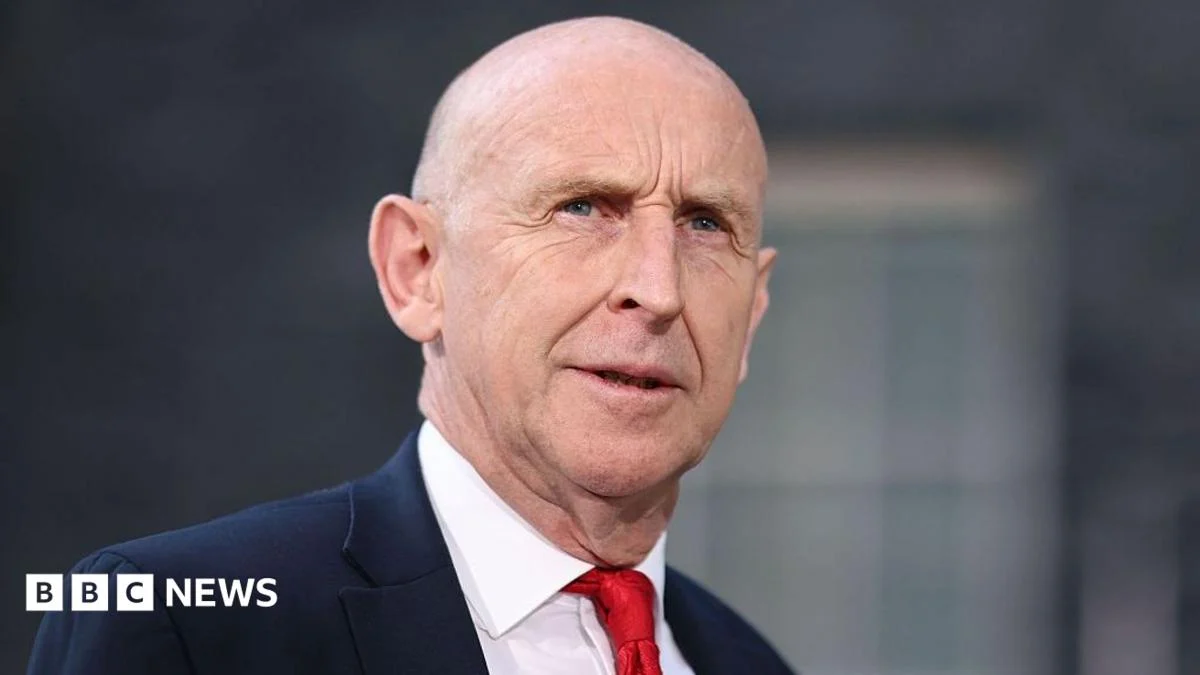
The annual Budget is a pivotal moment in the UK’s economic calendar, a comprehensive statement outlining the government’s financial plans for the coming year and beyond. Delivered by the Chancellor of the Exchequer, currently Healey, to Members of Parliament in the House of Commons, it details how the government intends to raise revenue through taxation and allocate spending across various public services and policy initiatives. This statement is more than just a financial report; it’s a political declaration of priorities, reflecting the government’s vision for the economy and society.
Accompanying the Chancellor’s speech, the Treasury meticulously publishes a raft of documents, providing granular details about every proposed measure, its expected costs, and its anticipated impact on different sectors and demographics. These documents offer transparency and allow for detailed scrutiny of the government’s fiscal strategy. An equally crucial element of the Budget process is the independent Office for Budget Responsibility (OBR). This non-departmental public body, established to provide independent economic forecasts and analysis of the public finances, publishes its own assessment of the health of the UK economy. The OBR’s forecast includes projections for GDP growth, inflation, employment, and the national debt, offering an impartial benchmark against which the government’s plans can be judged. Its role is to ensure credibility and provide a reality check on the government’s economic outlook.
The period leading up to the Budget is traditionally rife with speculation, as political commentators, economists, and the public attempt to predict the Chancellor’s moves. This year, however, the government has actively sought to minimise such pre-Budget leaks and speculation, aiming for a more controlled announcement. Chancellor Healey and Prime Minister Andy Burnham find themselves navigating a particularly challenging economic landscape, demanding a delicate balancing act. They face the twin pressures of needing to provide more support to households struggling with the cost of living crisis and meeting crucial commitments on defence spending, all while adhering strictly to Labour’s long-standing manifesto pledges on taxation and the government’s self-imposed fiscal rules.
The framework for these fiscal rules was set out by the previous Chancellor, Rachel Reeves, and the new leadership has explicitly committed to upholding them. These rules typically aim to ensure long-term fiscal sustainability. While not explicitly detailed in the original text, standard UK fiscal rules often include commitments such as:
- To have debt falling as a share of GDP in five years’ time. This rule aims to ensure that the national debt is on a sustainable trajectory, not growing indefinitely relative to the size of the economy.
- To balance the current budget in five years’ time. This rule focuses on day-to-day spending, aiming for the government to be living within its means for its recurrent expenditure, without borrowing to fund it.
In March, the OBR calculated that the first fiscal rule would be met with a significant buffer, or "headroom," of £23.6 billion. This headroom represents the amount by which the government could increase spending or cut taxes without breaching its fiscal targets. However, analysts widely expect this buffer to have significantly eroded since March. The reasons for this anticipated shrinkage are complex and subject to differing interpretations. While a global rise in government borrowing costs will inevitably increase debt interest payments, placing greater strain on public finances, higher-than-expected inflation could also paradoxically boost tax revenues as wages and prices rise. KPMG, a leading professional services firm, has estimated that the government’s buffer could have fallen to a more precarious £12 billion, while the Institute for Fiscal Studies (IFS), a respected independent research institute, offers a slightly more optimistic estimate of £20 billion. The disparity highlights the inherent uncertainties in economic forecasting.
Against this backdrop of fiscal constraints and economic challenges, a range of potential measures has been the subject of intense speculation:
Bank taxes: Industry insiders, including bank bosses themselves, have indicated to the BBC their expectation that Chancellor Healey will implement measures to raise taxes on the banking sector. UK banks have recently reported exceptionally strong profits, leading to widespread calls from unions and some political factions for them to contribute more to the public purse. The Treasury has several options at its disposal. It could choose to reinstate a higher rate for the 3% surcharge on bank profits, which was reduced from 8% under the previous Conservative government. Alternatively, it could increase the bank levy, a tax based on the size of banks’ balance sheets, which aims to ensure the sector contributes to the costs of any future financial crises.
Your First Home scheme: Further crucial details on the "Your First Home scheme" are anticipated in the Budget. This initiative is designed to assist first-time buyers in England to purchase a property, particularly new-build homes. The scheme would enable individuals to buy a new-build property with a significantly reduced deposit of just 2.5% of the purchase price. Crucially, it would provide an equity loan worth 20% of the property’s value, thereby bridging the gap between their deposit and the mortgage they can secure. Initial concerns had been raised regarding the eligibility thresholds, with reports suggesting a combined income cap of £90,000 outside London and £110,000 in the capital. These figures sparked worries that essential workers, such as teachers, nurses, or police officers, might be excluded. However, the BBC understands that these thresholds have been revised upwards to £110,000 outside London and £140,000 in the capital, aiming to broaden the scheme’s accessibility to a wider range of key workers and aspiring homeowners.
Capital Gains Tax (CGT): Prior to the Budget, there had been significant speculation about potential changes to Capital Gains Tax (CGT). CGT is levied on the profit an individual makes when selling an asset that has increased in value, such as shares, property (excluding a primary residence under certain conditions), or other investments. Speculation centred on either raising the rates of CGT or removing or amending existing exemptions, which could have generated substantial revenue for the Treasury. However, these rumours have now been definitively ruled out, indicating the government’s intention to avoid unsettling investors or property owners with immediate changes to this tax.
Support for pensioners: The government has previously committed to not taxing individuals whose sole income derives from the state pension. However, with the full state pension projected to rise above the current personal allowance threshold of £12,570, approximately one million pensioners would have, for the first time, been liable to pay income tax. To address this, the Budget is expected to introduce a new personal allowance specifically for pensioners on low incomes, effectively shielding them from income tax and upholding the government’s commitment.
Tax on businesses: The Times newspaper has reported that the government is planning a significant reform affecting online retail giants such as Amazon, eBay, and Temu. These platforms are expected to be made responsible for collecting Value Added Tax (VAT) and other taxes owed by the third-party traders who utilise their marketplaces. This measure aims to level the playing field between online and high street retailers and ensure that appropriate taxes are collected. The revenue generated from this initiative is reportedly earmarked for a substantial cut in business rates for High Street shops, with the threshold at which small companies begin paying rates expected to be raised from £12,000 to £18,000. This move signals a clear intent to revitalise struggling high streets. Furthermore, the Chancellor is also planning targeted support for small breweries, recognising their cultural and economic contribution.
Fuel duty: Fuel duty has been a politically sensitive issue for years. It was frozen by the previous Conservative government in March 2022, and Sir Keir Starmer’s government continued this freeze, delaying a planned 3p per litre increase from September until the end of the year. In late September, Chancellor Healey acknowledged to the BBC that the Budget was the appropriate forum for addressing rising petrol and diesel costs but refrained from giving any specific commitment on whether the freeze would be extended again. Given ongoing inflationary pressures and the impact on household budgets, an extension of the fuel duty freeze remains a strong possibility.
Energy bills: Households across the UK are bracing for a significant increase in energy bills, with a typical annual bill forecast to jump by £276 in January, marking the largest rise in four years. This looming increase has intensified calls for government intervention. Speculation, particularly from The Guardian, suggests that Chancellor Healey is planning a major intervention, specifically targeting households on certain benefits with direct energy bill support, aiming to cushion the blow for the most vulnerable.
Mansion tax: The High Value Council Tax Surcharge, colloquially known as the "mansion tax," was initially announced in last year’s Budget. It is set to apply to properties in England valued above £2 million, coming into effect from April 2028. There had been considerable speculation that the government might extend this tax to properties valued above £1.5 million, potentially generating more revenue and reflecting a broader approach to taxing high-value assets. However, recent reports from the Financial Times now suggest that Chancellor Healey has ruled out this expansion, opting to stick with the original £2 million threshold.
Cutting red tape: Chancellor Healey has articulated a clear ambition to slash "form-filling and pointless paperwork" for UK businesses, with the aim of saving them up to £800 million. Ministers argue that these proposed changes in regulations will significantly reduce unnecessary bureaucracy, thereby fostering a more efficient and productive business environment, allowing companies to focus more on growth and innovation rather than administrative burdens.
Social and affordable housing: Addressing the pressing housing crisis, Chancellor Healey is expected to commit an additional £1 billion to the existing £39 billion planned expenditure on social and affordable housing in England over the next decade. This substantial boost underscores the government’s commitment to increasing the supply of genuinely affordable homes and tackling homelessness.
Devolved spending: In a move towards greater regional autonomy, the Budget is anticipated to grant enhanced powers over spending to regional bodies and mayors in England. This initiative will begin with an initial allocation of £285 million next year, earmarked for local priorities such such as housing, transport infrastructure, and the regeneration of high streets. Crucially, in future years, these regions will also be empowered to borrow funds to invest further in local priorities, fostering greater local control and tailored solutions to regional challenges.
Beyond specific policy announcements, the broader economic context is vital. In the first three months of the year, the UK’s economy grew by a robust 0.6%, followed by 0.5% growth in the April-to-June quarter. More recent data has shown the economy growing by 0.1% in August, following a 0.4% expansion in July, with both figures surprisingly stronger than anticipated. Analysts largely attribute this resilience to the UK economy’s ability to withstand significant energy price shocks. These shocks were primarily triggered by the US-Israel war with Iran, which led to the effective closure of the Strait of Hormuz, a critical global waterway for oil and gas trade, causing a sharp increase in energy commodity prices.
Despite this unexpected resilience, economists generally expect UK growth to decelerate in the coming months as the accumulated weight of higher energy costs continues to bear down on both households and businesses. Inflation remains a persistent concern; prices for goods and services are still rising faster than the Bank of England’s target. Inflation hit 3.1% in the year to August, marking the highest rate in five months and significantly above the Bank’s 2% target, largely driven by the aforementioned surge in petrol and diesel prices. In response to these pressures, the Bank of England held interest rates at 3.75% for the sixth consecutive time in September. However, the Bank issued a clear warning that rates were likely to rise further if high energy prices persist, underscoring the ongoing volatility and the potential for tighter monetary policy.
The Budget speech typically commences at approximately 12:30 UK time, immediately following Prime Minister’s Questions, and usually lasts for about an hour. The entire proceedings will be broadcast live on the BBC iPlayer and accessible via the BBC News website, allowing the public to follow the announcements in real-time. Immediately after the Chancellor concludes his speech, the Leader of the Opposition, Conservative MP Kemi Badenoch, will deliver her party’s official response in the House of Commons, scrutinising the government’s proposals and outlining alternative approaches. Following this, MPs will engage in a four-day debate on the measures, a crucial period for detailed examination and challenges, before eventually voting on the proposals. If approved by MPs, specific tax changes can come into effect almost immediately, reflecting the urgency of fiscal adjustments. However, to make these changes permanent and legally binding, the government must subsequently pass a comprehensive Finance Bill through Parliament.


 Nana Banana
 atisusanti

 Roy Suryo

 George Anjay
