Nana Banana
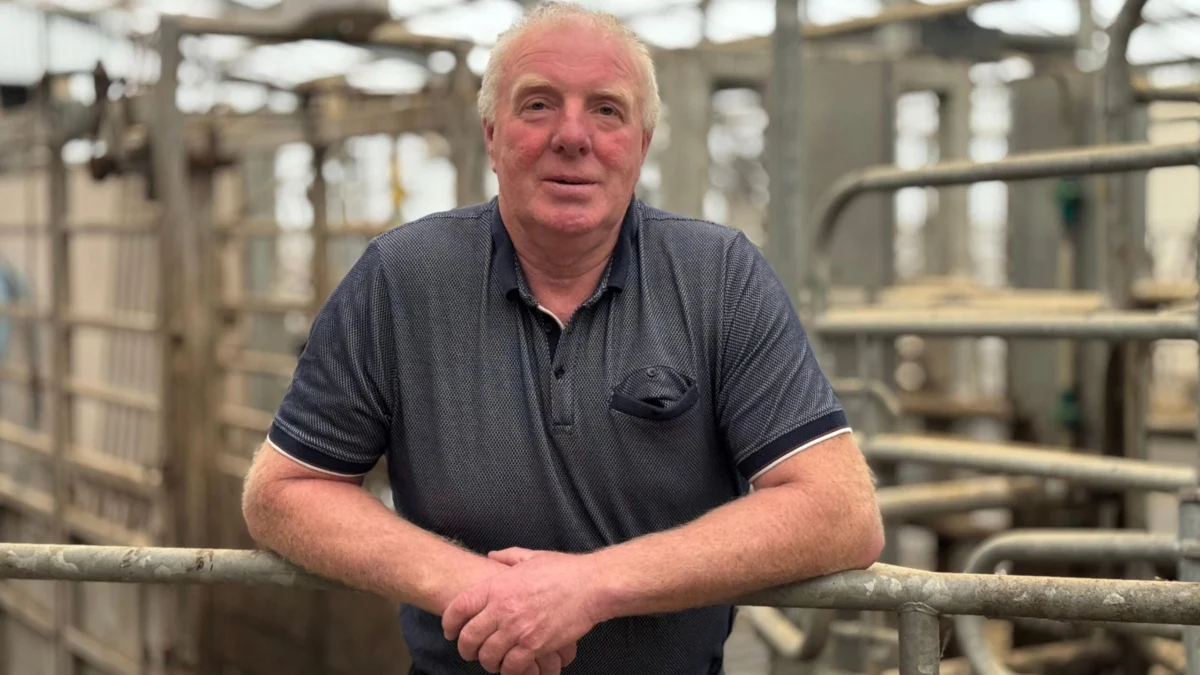
The venerable profession of farming, once rooted deeply in tradition and manual labor, is undergoing a profound transformation, evolving from conventional agriculture into a sophisticated, data-driven "AI-griculture." This paradigm shift is vividly illustrated through the experiences of farmers like George McMaster, whose career began with the intimate, hands-on task of milking eight cows in a traditional byre, where his keen eye was the primary tool for assessing animal health. Today, George oversees a sprawling herd of 300 dairy cattle, yet his monitoring methods are light-years removed from his early days. His vigilance now extends through the lens of an advanced AI-powered camera strategically placed within the milking parlor at his farm near Islandmagee in County Antrim. This cutting-edge device leverages a sophisticated algorithm to assign a unique digital ID to each cow, capturing short video clips of the animal daily. These videos are then rigorously analyzed by the AI, which meticulously flags any subtle changes in gait, behavior, or physical condition—often detecting issues long before they become apparent to the human eye. For George, a third-generation farmer who has witnessed decades of agricultural evolution, this technological leap is nothing short of "absolutely incredible," allowing him to monitor his entire operation remotely, "sitting on the phone, watching what’s happening outside."

This remarkable transition from purely manual observation to intelligent, automated surveillance represents just one facet of how technology is redefining the agricultural landscape. George’s son, Jack, who is poised to inherit and manage the farm, enthusiastically embraced the opportunity to integrate the CattleEye app into their operations when a local developer introduced it. Jack, too, is profoundly impressed by the vast potential unlocked by these innovations. He recounts instances where the AI camera has identified lameness in cows that would have otherwise gone unnoticed during routine human observation. The system’s ability to detect potential health issues much earlier allows for proactive intervention, preventing conditions from worsening and ensuring the cows maintain optimal health. This preventative approach is not only beneficial for animal welfare but also directly impacts productivity. "If cows are in better health, we get more milk and they’re happier," Jack explains, echoing a sentiment that resonates deeply within the industry: "happy cows make happy farmers." The integration of such technology signifies a move towards predictive farming, where data analysis rather than reactive observation dictates management decisions, leading to healthier livestock, higher yields, and ultimately, a more sustainable and profitable enterprise.
Beyond animal welfare and increased milk production, technology is simplifying the intricate business of farm management. Caleb Howard, who manages a herd of 90 Jersey cows on his farm near Coagh in County Tyrone, exemplifies this automation trend. His cows freely filter in and out of a robotic milking machine at their own volition, eliminating the need for strict, scheduled herding. This autonomous system not only reduces labor intensity but also allows for more frequent milking, which can positively affect milk yield and cow comfort. Caleb shares the growing industry consensus that "everything is going down the robotic route" to maximize efficiency. However, the adoption of such advanced systems in historically isolated rural areas, like his farm in Tyrone, faced significant hurdles—primarily a lack of robust digital infrastructure. For Caleb, the arrival of high-speed broadband was a true "game-changer." It enabled him to fully leverage his robotic milking system and, crucially, to diversify his business by opening a farm shop equipped with a modern electronic payment system.

The contrast with the past is stark: "Ten years ago, in our area, phone signal was rubbish, the broadband wasn’t great, it was just like a slightly faster dial-up," Caleb recalls. The unreliable internet made integrating any sophisticated digital tools impractical, if not impossible. The subsequent deployment of high-speed broadband, largely facilitated by initiatives like Project Stratum, has revolutionized connectivity in these remote regions. Colin Hutchinson from Fibrus, the company instrumental in delivering Project Stratum, affirms the "massive" economic impact of this infrastructure upgrade. "Being online and having good broadband access is really crucial now," he states, emphasizing how it empowers businesses like Caleb’s to flourish in rural locales, opening up new avenues for sales, data management, and operational efficiency that were previously unattainable. This foundational digital infrastructure is proving to be as vital to modern farming as fertile soil or reliable machinery.
Another significant stride in agricultural technology is demonstrated by Robert Smyth, who manages a herd of 100 dairy cows near Randalstown in County Antrim. For the past four years, Robert has been utilizing the FarmDrive app to streamline his entire business operations. This digital platform has fundamentally transformed his approach to record-keeping and compliance. "It’s so much handier – beforehand you’re writing things down, bits of paperwork in the cattle house and writing them down in the office, whereas now you just do it at that time," he explains, highlighting the immense time savings and reduction in administrative burden. When inspections loom, all necessary documentation, from medicine logs to meal records, is readily accessible within the app’s compliance section. Robert believes that "the AI really should be looking towards how to manage your farm better and how to reduce your inputs and increase your outputs," a testament to the app’s capacity for strategic decision-making support.

The ingenious mind behind the FarmDrive app is Gareth McDonald, who aptly describes his creation as "Facebook for cows." Each animal within the herd is assigned a comprehensive digital profile, consolidating all relevant records, health history, and even a photo into one easily accessible location. Gareth, himself stemming from a farming background and possessing a robust education in computer science, brings a unique perspective to agricultural technology. While he is deeply passionate about the transformative potential of AI, he firmly believes that it will not, and should not, replace human farmers. Instead, he views technology as an indispensable aid. "It’s allowing us to work a lot more quickly and efficiently, and on the farming side, it’s basically allowing the farmer to see the right information at the right time, where it’s kind of that adviser to the farmer," McDonald clarifies. His philosophy is clear: "We’re very much of the opinion we don’t want the AI making the decision for the farmer." The goal is to empower farmers with timely, accurate data, enhancing their decision-making capabilities rather than supplanting their invaluable experience and intuition.
The current technological revolution in agriculture echoes historical breakthroughs that reshaped the industry. Almost a century ago, County Down-born inventor Harry Ferguson fundamentally transformed farming with his development of the linkage system, a design still integral to modern tractors. Ian Marshall, former president of the Ulster Farmers’ Union, draws a direct parallel, asserting that AI is similarly revolutionary. While farming has always relied on observational data—from weather patterns to crop health—Marshall believes that contemporary technology will fundamentally drive how this information is collected, analyzed, and applied. The confluence of vast datasets and advanced digitalization, he argues, will empower farmers to meet the "three pillars of sustainability: economic, environmental, and social." This means optimizing resource use, minimizing environmental impact, and ensuring the long-term viability of farming communities.

Beyond livestock management, AI and advanced technologies are permeating every aspect of agricultural production. Precision agriculture, for instance, utilizes GPS-guided tractors, drones, and sensor networks to apply fertilizers, pesticides, and water with unparalleled accuracy, reducing waste and environmental runoff. AI-powered image analysis, often from drones or satellite imagery, can detect crop diseases or pest infestations at their earliest stages, allowing for targeted interventions that minimize chemical use. Predictive analytics, fueled by AI, integrates historical data with real-time sensor information and weather forecasts to optimize planting schedules, irrigation, and harvesting, enhancing resilience against climate change. Automated harvesting robots are emerging, capable of selectively picking ripe produce, reducing labor costs, and improving consistency. Even in supply chain management, AI optimizes logistics, tracks produce from farm to fork, and ensures food safety. These innovations, from smart sensors monitoring soil moisture to sophisticated algorithms predicting market demand, underscore a future where farming is increasingly data-driven, efficient, and sustainable. The journey from rudimentary plows to AI-powered fields signifies a profound shift, ensuring that agriculture remains at the forefront of innovation, capable of feeding a growing global population while safeguarding the planet.


 atisusanti

 Roy Suryo

 Nakalama John

 George Anjay