Nana Banana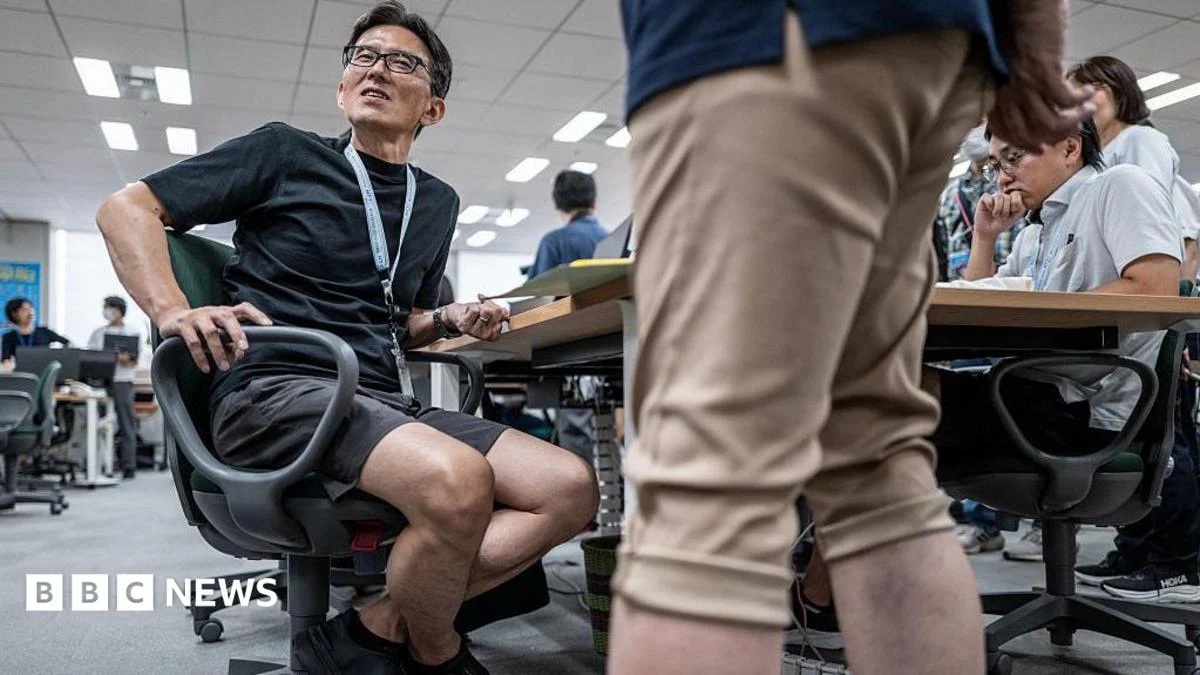
The "Tokyo Cool Biz" campaign, spearheaded by Tokyo Governor Yuriko Koike and launched in April, aims to build upon her well-established "Cool Biz" efforts, which have become an annual summer tradition nationwide. Koike’s vision extends beyond mere comfort; it’s a strategic energy-saving measure designed to reduce reliance on air conditioning during the peak summer months, thereby lowering electricity consumption and mitigating the urban heat island effect. Almost four months into this expanded policy, the introduction of shorts into the professional office environment has ignited a surprisingly fervent debate, garnering a decidedly mixed bag of reactions from the public and within corporate circles.
On one side, many commentators and employees express appreciation for the relaxed dress codes, finding that the ability to wear shorts significantly enhances their comfort and, consequently, their productivity in the often stifling office environments. The mercury frequently climbs to uncomfortable levels, and the idea of working in breathable, less restrictive clothing is a welcome reprieve. However, this newfound freedom for men has inadvertently highlighted existing gender disparities in workplace attire. A significant contingent of critics argues that the policy is inherently unfair to women, who are still largely expected to adhere to more stringent dress codes, often necessitating tights or stockings even when wearing skirts or dresses that expose part of their legs. This perceived imbalance has fueled resentment and a sense of inequity regarding professional appearance standards.
Adding a peculiar, yet culturally telling, layer to this discussion is the emergence of a new social phenomenon: "leg hair harassment," or "sunehara" – a portmanteau coined online from sune (shin/calf) and harassment. This term encapsulates the discomfort some women report experiencing when confronted with their male colleagues’ exposed leg hair in the workplace. It speaks to a subtle, often unspoken, aspect of Japanese social etiquette and aesthetic sensibilities, where body hair, particularly on men’s legs, is not traditionally a common sight in formal or semi-formal public settings. The unaccustomed visual has, for some, become a source of mild distress, underscoring how deeply ingrained cultural norms about personal presentation can clash with evolving workplace policies.
Noboru Watanabe, an environmental official for the Tokyo Metropolitan Government, sought to clarify the administration’s stance to the BBC, stating, "We want to give people more options in the severe heat, not tell them what to wear. There should be no issue as long as the work attire is not offensive to anyone." This statement encapsulates the delicate tightrope the government walks: promoting comfort and energy conservation while attempting to navigate the complex and often unwritten rules of social propriety. The challenge lies in defining what constitutes "offensive" in a society where subtle visual cues and collective harmony often take precedence. The government’s intention is to foster flexibility, yet the implementation reveals how deeply personal comfort is intertwined with social perception and gendered expectations.
A survey conducted in June by Gorilla Clinic, a beauty and grooming clinic, underscored the public’s divided opinion, revealing that 53.5% of respondents opposed wearing shorts to work in the summer, while 46.5% were in favour. This narrow margin highlights the ongoing societal negotiation around this issue. For those who expressed opposition, the primary concern, voiced by both genders, revolved around body shape and, crucially, body hair. The clinic’s findings further indicated that women significantly outnumbered men in their negative responses, suggesting a stronger resistance among women to the sight of a male colleague’s bare legs. This demographic disparity reinforces the notion that "sunehara" is not an isolated complaint but reflects a broader, albeit subtle, discomfort within a segment of the female workforce. The resistance isn’t necessarily about the shorts themselves, but about what the shorts reveal and the perceived lack of adherence to traditional grooming standards.
In recent years, a gradual shift towards more casual attire has been observed in various sectors of Japanese industry, particularly within the dynamic environments of startups and technology companies. These modern enterprises, often influenced by Western corporate cultures, have been quicker to adopt relaxed dress codes, fostering an image of innovation and flexibility. However, the Tokyo government’s explicit recommendation this year has significantly broadened the social acceptability of casual wear, including shorts, extending its reach beyond niche industries into more traditional corporate settings. Despite this official endorsement, many men have reported feeling acutely self-conscious about their leg hair, grappling with a sense of unease about exposing it in a professional context. This internal conflict speaks to the enduring power of societal expectations regarding male grooming and the pressure to conform to an idealized image, even when officially sanctioned to do otherwise.
Akifumi Funatsu, the director of Gorilla Clinic, has observed a tangible manifestation of this societal pressure. He notes a discernible increase in male clients seeking the clinic’s services, not solely for traditional cosmetic reasons, but specifically as a matter of "social etiquette when wearing shorts." Funatsu believes that a prevailing sentiment among women is that "men should have less leg hair," a perception that is directly influencing men to seek laser hair removal. This trend underscores a proactive effort by some men to pre-emptively address potential "sunehara" concerns and align themselves with evolving, albeit unspoken, social standards of professionalism and attractiveness in the new "Cool Biz" landscape. It highlights a fascinating intersection of public policy, social media trends, and personal grooming decisions, all driven by a desire to avoid causing discomfort or appearing unprofessional.
The origins of this summer wardrobe shift trace back to 2005 when Yuriko Koike, then serving as Japan’s environment minister, first introduced the "Cool Biz" campaign. It was a groundbreaking national energy-saving initiative designed to encourage company workers to adopt short-sleeve shirts and forego jackets and ties during the hotter months. The campaign gained significant momentum and public visibility thanks to the active participation of government leaders, most notably then-Prime Minister Junichiro Koizumi, who was frequently photographed in public without a tie or jacket. His visible endorsement played a crucial role in legitimizing the initiative and helping it gain widespread acceptance across the country. A few years later, in the wake of the devastating Tohoku earthquake and tsunami in March 2011, the government expanded the guidelines further with "Super Cool Biz." This enhanced version aimed to further reduce energy consumption not just in workplaces but also in homes, emphasizing national resilience and resource conservation during a period of critical energy shortages and recovery efforts.
As with many other parts of the world, Japan has been grappling with a period of unprecedented heat in recent months. Record-breaking temperatures have become a regular occurrence, exacerbating concerns over public health and placing immense strain on the nation’s energy infrastructure. This environmental challenge is compounded by soaring energy prices, driven by global instability, particularly in the Middle East, which translates into higher electricity bills for both individuals and businesses. Forecasters from the Japan Meteorological Agency have issued dire warnings of an "extreme heat" summer, going so far as to introduce and widely publicize the term "kokusho-bi," meaning "brutally hot day," to raise public awareness when the mercury is expected to exceed a dangerous 40 degrees Celsius. This proactive communication strategy underscores the severity of the climate challenge facing the nation.
The human toll of this intense heat is already significant. The latest weekly data from the Fire and Disaster Management Agency, covering the seven days from July 6th to 12th, reported seven heatstroke-related deaths across Japan, with a staggering 4,580 individuals admitted to hospitals for heat-related illnesses. These statistics serve as a stark reminder of the urgent need for effective heat mitigation strategies and public health awareness campaigns. Beyond the fundamental advice of staying hydrated and judiciously using air conditioning – actions repeatedly encouraged by government officials – residents have turned to an array of innovative products and gadgets to combat the heat.
The market has responded with a surge of popular, often ingenious, items designed to provide relief. Clothes with built-in miniature fans, which circulate air over the body, have become increasingly common. Disposable wet-towels, offering instant cooling relief, are a staple in convenience stores. UV and heat-blocking umbrellas, designed not just for sun protection but also to significantly lower ambient temperature, are widely used. Portable handheld fans, ranging from compact battery-operated models to more powerful USB-rechargeable devices, are ubiquitous sights in crowded urban centres. These products are readily available and widely sold in shops nationwide, reflecting both the severity of the heat and the Japanese penchant for practical, technologically-assisted solutions.
Experts from the Japan Academic Network for Disaster Reduction are emphasizing the critical importance of heat acclimatization. They highlight that it takes several weeks for the human body to effectively adapt to consistently high temperatures, making early preparation crucial. Their advice stresses the need to begin preparing for the intense summer heat and implementing preventative measures against heatstroke during the country’s rainy season, which typically precedes the full onslaught of summer. This proactive approach allows the body to gradually adjust, reducing the risk of heat-related illnesses. Japan also faces the added challenge of high humidity, which further complicates the body’s natural cooling mechanisms. High humidity inhibits the evaporation of sweat, a vital process for dissipating body heat, thereby significantly reducing the body’s ability to regulate its own temperature and increasing the risk of heatstroke. The complex interplay of high temperatures, high humidity, and deeply ingrained social norms continues to shape Japan’s unique response to its increasingly brutal summers, creating a fascinating tension between comfort, energy conservation, and evolving societal expectations in the workplace.


 Roy Suryo
 Nakalama John
 atisusanti
 Ramos Leo