
 Nakalama John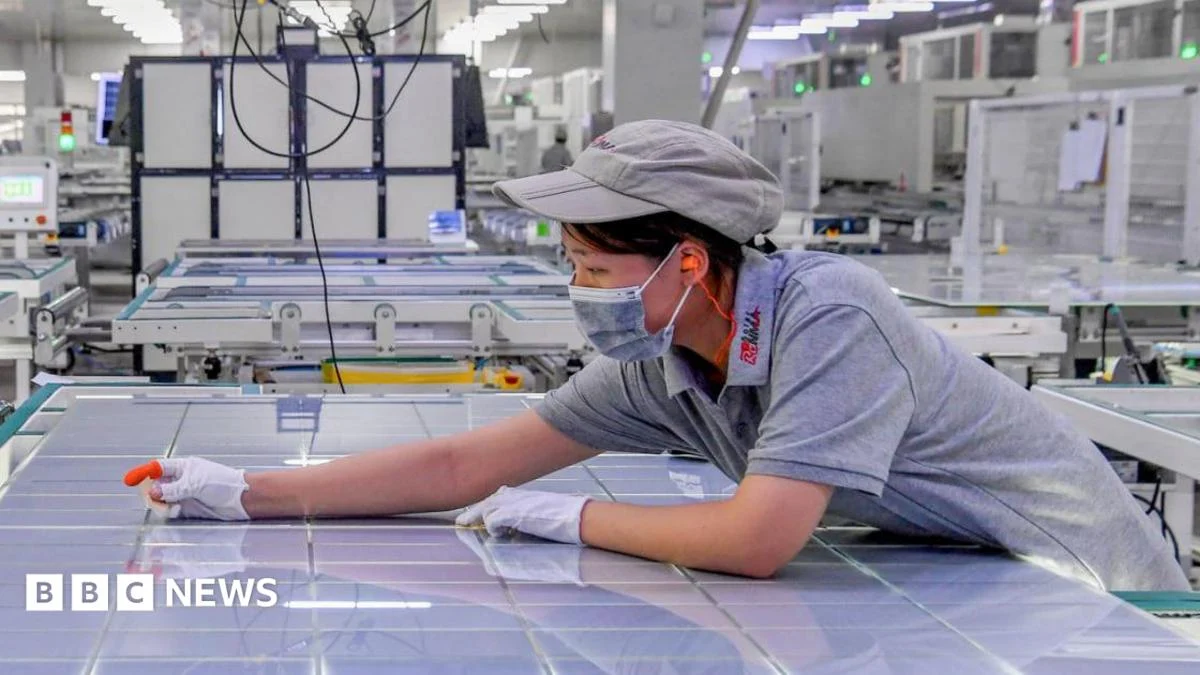
The immediate reaction from Beijing was sharply critical. The Chinese embassy in Washington promptly issued a statement condemning the tariff, asserting that the measure "seriously disrupts" the intricate trade relationship between the two nations. The embassy further declared that Beijing would take resolute action to protect its domestic companies from what it described as Washington’s "abusing state power to go after Chinese businesses," adding a pointed reminder that protectionism, in its view, would ultimately fail to enhance the competitiveness of the United States.
President Trump, a long-standing proponent of tariffs as a tool to protect American industries, jobs, and stimulate the domestic economy, formally articulated his rationale within the executive order. He affirmed that he had accepted the comprehensive recommendations put forth by Secretary of Commerce Howard Lutnick, which advocated for the implementation of both the 15% tariff and the minimum import prices on polysilicon and its associated imports. These sweeping measures are slated to become effective in December, granting industries a short window for adjustment. Beyond the punitive tariffs, the order also outlined a commitment to offering robust incentives aimed at substantially boosting domestic production of polysilicon within the United States, signaling a multi-pronged approach to re-shore critical manufacturing capabilities.
The President’s order painted a stark picture of the decline of American leadership in the polysilicon sector, lamenting that "for decades, the US has allowed foreign firms to weaken United States producers in the polysilicon sector." He underscored the profound strategic importance of polysilicon, highlighting its indispensable role in a vast array of military equipment and advanced electronics. Despite this critical necessity, Trump noted with alarm that imports had contributed to a dramatic erosion of the US’s share of global polysilicon production, plummeting from a commanding 50% in 2005 to a mere fraction, less than 2%, by 2024. This precipitous decline has left the United States vulnerable, particularly given China’s near-monopolistic grip on the global production of this essential material.
The direct beneficiaries of this new tariff regime are expected to be the primary domestic producers of polysilicon in the United States, notably Hemlock Semiconductor and Wacker Chemie. These companies, which have struggled against the tide of cheaper foreign imports, will now likely see a more level playing field, potentially leading to increased production, investment, and job creation within their facilities. The broader context for this tariff imposition is the intense and escalating geopolitical contest between the US and China, particularly the race to dominate artificial intelligence (AI). The production of advanced computer chips, for which polysilicon is a foundational ingredient, is absolutely central to this technological arms race, as these chips power the sophisticated algorithms and immense data processing capabilities required for AI development.
This latest move also marks a definitive end to a period of relative calm in the protracted tit-for-tat tariffs war between Washington and Beijing, a conflict that had been nominally on hold since May 2025. Analysts, as quoted by the influential Chinese state media outlet Global Times, were quick to interpret the new tariff as the latest, and perhaps one of the most significant, escalations in Washington’s concerted efforts to systematically limit China’s influence and role in critical technology supply chains.
The polysilicon tariff is not an isolated incident but rather fits into a broader pattern of US restrictions targeting Chinese technological prowess. It follows a series of other restrictive measures imposed by the US on a range of imported products from China, including drones, advanced humanoid robots, and various other high-tech goods. These actions collectively reflect a strategic push by the US to decouple its critical technology sectors from Chinese supply chains and to prevent China from leveraging its technological advancements for military or economic dominance.
In a reciprocal fashion, China has also been actively responding with its own set of countermeasures and strategic adjustments. Just this week, Beijing announced a range of retaliatory actions, including the implementation of tighter export controls on drones, a move that directly impacts a sector where China holds significant global market share. Furthermore, China launched a national security review into imported printers and copiers, signaling its intent to scrutinize and potentially restrict foreign technology in sensitive areas of its own economy. These actions underscore the deepening mistrust and the ongoing struggle for technological supremacy, where each nation is meticulously examining and protecting its vital technological arteries.
The economic implications of this tariff are multifaceted. For US manufacturers like Hemlock and Wacker Chemie, it promises a much-needed boost, potentially enabling them to expand operations, hire more workers, and invest in research and development, thereby contributing to the resurgence of domestic manufacturing. However, for US industries that rely heavily on polysilicon, such as solar panel manufacturers and semiconductor fabricators, the tariff could translate into higher input costs, which may eventually be passed on to consumers or impact their global competitiveness. For Chinese manufacturers, the tariff effectively raises the barrier to entry into the lucrative US market, forcing them to either absorb the cost, seek alternative markets, or potentially scale back production, which could lead to oversupply issues in other regions.
Globally, these actions contribute to a trend of fragmentation in supply chains and a move towards "decoupling" critical industries. Nations are increasingly prioritizing national security and economic resilience over pure cost efficiency, leading to a potential reshaping of global trade flows and investment patterns. The coming months, leading up to the December implementation, will be crucial as industries on both sides of the Pacific scramble to adjust their supply chains, renegotiate contracts, and brace for the full impact of these new trade barriers. The imposition of this polysilicon tariff is not merely a trade dispute; it is a clear indicator of the deepening technological rivalry between the US and China, a contest with far-reaching implications for global innovation, economic stability, and geopolitical power dynamics. Analysts will be closely watching whether these measures genuinely revive American manufacturing or simply contribute to higher costs and further escalate a trade war that neither side can truly afford to lose. The role of other major semiconductor-producing nations like South Korea, Japan, and Taiwan will also be critical, as they navigate the increasingly complex and politicized landscape of global technology trade.


 atisusanti
 Nana Banana
 George Anjay

 Ramos Leo