
 Roy Suryo
Jodie Cantle, a 34-year-old awaiting a double lung transplant, describes a life on hold, feeling as though the world is moving on without her. Tethered to an oxygen cylinder, she has been offered new lungs on 17 occasions over seven years, only for each operation to be cancelled. This stark reality reflects a broader decline in the UK’s once world-leading transplant system, which now significantly lags behind other Western nations. For three decades, the number of heart and lung transplants performed by the NHS has stagnated, a fact underscored by BBC File on 4 Investigates’ findings of outdated technology, insufficient investment, and a critical exodus of senior surgeons, all while patients grapple with inadequate ongoing care. The government has pledged to compel the NHS to urgently implement recommendations, first outlined in 2024, to modernize transplant services. However, those within the system contend that substantial resources are essential for tangible improvements.
Jodie’s plight is shared by 450 adult patients in the UK currently awaiting a heart or lung transplant. Born with cystic fibrosis, her lung function has dwindled to a mere 9%, making a transplant her sole prospect for a normal life. While she expresses no criticism of her transplant centre, Harefield Hospital in London, the protracted wait has understandably led to profound frustration. One potential transplant was cancelled due to a lack of available theatre time, while on every other occasion, the donated lungs were deemed unsuitable. "You always have to have your phone on hand – if they get a match for lungs, I’ve got to drop everything and leave immediately," Jodie explains, highlighting the constant state of readiness and the emotional toll it exacts. Harefield Hospital maintains that all decisions are complex, with teams carefully considering what is best for each individual.
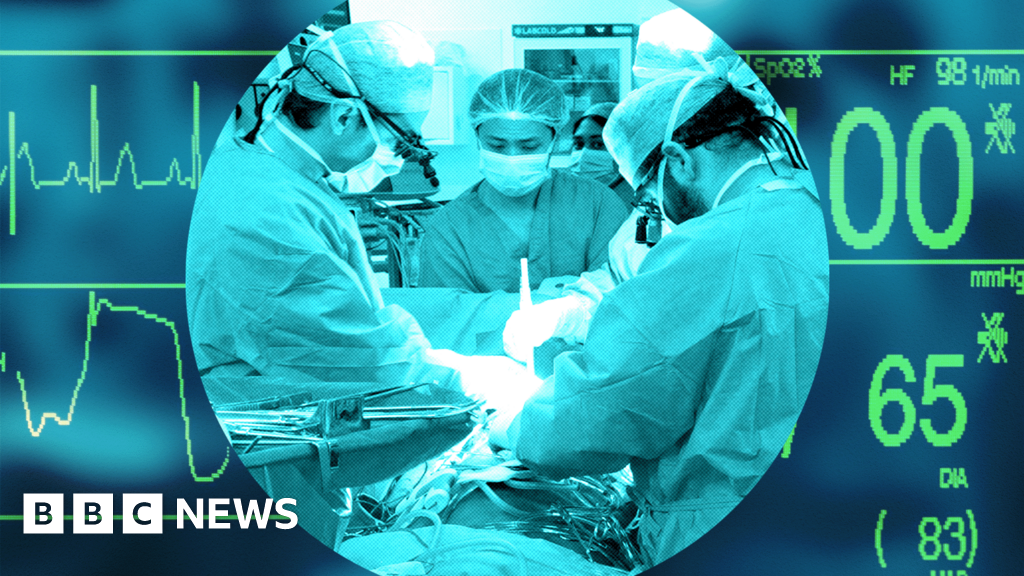
A critical factor contributing to the UK’s diminished performance is the inefficient utilization of donated organs. Despite the UK achieving organ donation rates comparable to, or even exceeding, many European countries per capita, the NHS transplants a significantly lower proportion of available hearts and lungs. Merely one in ten lungs and one in seven hearts are successfully transplanted, a stark contrast to some countries that utilize twice as many. This disparity results in the NHS performing fewer heart transplants and half the number of lung transplants per capita compared to many European counterparts.
A dozen surgeons and experts have revealed to the BBC that outdated equipment is a major impediment. For years, they have advocated for the adoption of new technologies commonly employed abroad, often with little success. For instance, the NHS has not invested in CT coronary angiogram machines, which are crucial for scanning hearts to detect disease. Without this detailed diagnostic information, organs that could be viable may be discarded, and conversely, diseased organs might be transplanted. Furthermore, many organs are still transported in traditional ice boxes, which can lead to hardening and complications. Modern alternatives, which keep hearts beating and oxygenated during transit and also assess viability, are available but are only partially funded by the NHS. In Glasgow, where these advanced devices are used more extensively due to additional financial support from the Scottish government, the transplant centre reports a "substantial" improvement in its capacity to accept donor hearts.
Beyond the transplant itself, the UK system struggles with post-operative care, resulting in five-year survival rates that trail behind global leaders for both heart and lung recipients. Long-term support is paramount, but patients report inconsistent or poorly managed care. Transplant recipients must adhere to lifelong medication to prevent organ rejection, which carries toxic side effects, increasing the risk of skin cancer, kidney failure, and numerous other health issues. Zanib, 34, who received a lung transplant in Manchester in January 2020, experienced kidney failure five years later. She alleges that the trust’s renal specialists repeatedly ignored referrals from her transplant team. It was only when her condition became critical, and she escalated her case to senior hospital management, that she received the necessary attention. Now requiring energy-draining dialysis three times a week, her employment and social life have been significantly impacted. "The system… just doesn’t work for patients like me," she laments, expressing a desire to feel safe and supported rather than anxious and vulnerable. Manchester University NHS Foundation Trust declined to comment on Zanib’s specific case but emphasized that "patient outcomes and safety are at the forefront of our treatment plans." Patient advocate Jess Jones stresses the urgent need for comprehensive wraparound care to manage the increased risk of complications in transplant recipients, arguing, "There’s no point doing incredible life-saving magical operations… and then not investing longer term in what’s really needed to keep these people well." She points to Australia’s "astonishing outcomes," with 20% higher five-year survival rates.
Significant disparities also exist between individual transplant centres. England hosts five heart and lung transplant centres in Newcastle, Manchester, Birmingham, Cambridge, and London, with an additional heart transplant unit in Glasgow. Patients from Wales and Northern Ireland must travel to these centres for surgery. The average wait for a heart transplant in Birmingham exceeds four and a half years, while in Cambridge, it is approximately eight months. Birmingham attributes its longer waiting times to a lack of funding for service expansion, whereas Cambridge’s Royal Papworth Hospital, a pioneer in UK transplantation since its first successful heart transplant in 1979, benefits from being a dedicated transplant centre without the competing demands of A&E or maternity services, and enjoys strong management support for maximizing transplant numbers. Dr. Steve Pettit, Papworth’s clinical lead, states the hospital "bends over backwards to make transplants happen." Papworth also developed the Donation after Circulatory Death (DCD) technique for retrieving hearts from donors after life support is withdrawn, a method now accounting for a quarter of UK heart transplants, though this innovation was funded by the hospital’s charity, not the NHS.
A critical issue contributing to the UK’s decline is a "brain drain" of expert surgeons seeking more appealing and lucrative opportunities abroad. Half of the UK’s six heart and lung transplant centres have lost their lead surgeon in the past two years, with others also departing for international roles. Mr. Jorge Mascaro, Birmingham’s former director of heart and lung transplants, now based in the US, cites frustration with the NHS’s lack of investment and staffing as a primary motivation for his move. He warns that without systemic change, transplantation in the NHS will progressively shrink, potentially leaving only a few centres operational due to staff shortages. As experienced mentors depart, junior surgeons lack guidance and become more "risk averse," limiting their willingness to accept organs beyond the healthiest options. "It’s getting worse," Mascaro states.
Issues in heart and lung transplantation were first detailed in a 2024 report commissioned by the Conservative government. NHS England, tasked with implementing the report’s recommendations, asserts it has made efforts to "improve outcomes for patients." However, surgeons and campaigners contend progress has been alarmingly slow. Robbie Burns, a patient representative and former NHS executive director, criticizes the "lack of focus and a lack of oversight at a national level," deeming improvements "extremely marginal" and insufficient to achieve world-leading status. Sir Magdi Yacoub, an internationally renowned surgeon who contributed to the UK’s former transplant leadership, attributes the current problems to a persistent lack of investment and the deprioritization of these vital services. "We need to have more people, more money, physical resources," he urges, emphasizing that while expertise abounds, its application to patients has faltered.

Responsibility for transplant services is set to transfer to the Department of Health and Social Care (DHSC) following the abolition of NHS England. The minister for transplantation, Dr. Zubir Ahmed, who also practices as a transplant surgeon, initially agreed to an interview but subsequently had the offer retracted by the government’s press team. In a statement, the DHSC acknowledged inheriting a "broken NHS" and recognized "the systemic issues facing cardiothoracic transplantation and the impact this is having on patients." Aaron Ranasinghe, speaking on behalf of NHS Blood and Transplant (NHSBT), stated that NHSBT is aware of the system’s challenges and is "already trying to do better," noting year-on-year increases in transplant numbers. However, he stressed the need for "adequate funding to follow that to allow us to reach potential." Transplant centres across the UK, when contacted, reiterated their commitment to developing services and prioritizing patient safety and outcomes.




 Nakalama John
 atisusanti
 Ramos Leo
