
 George Anjay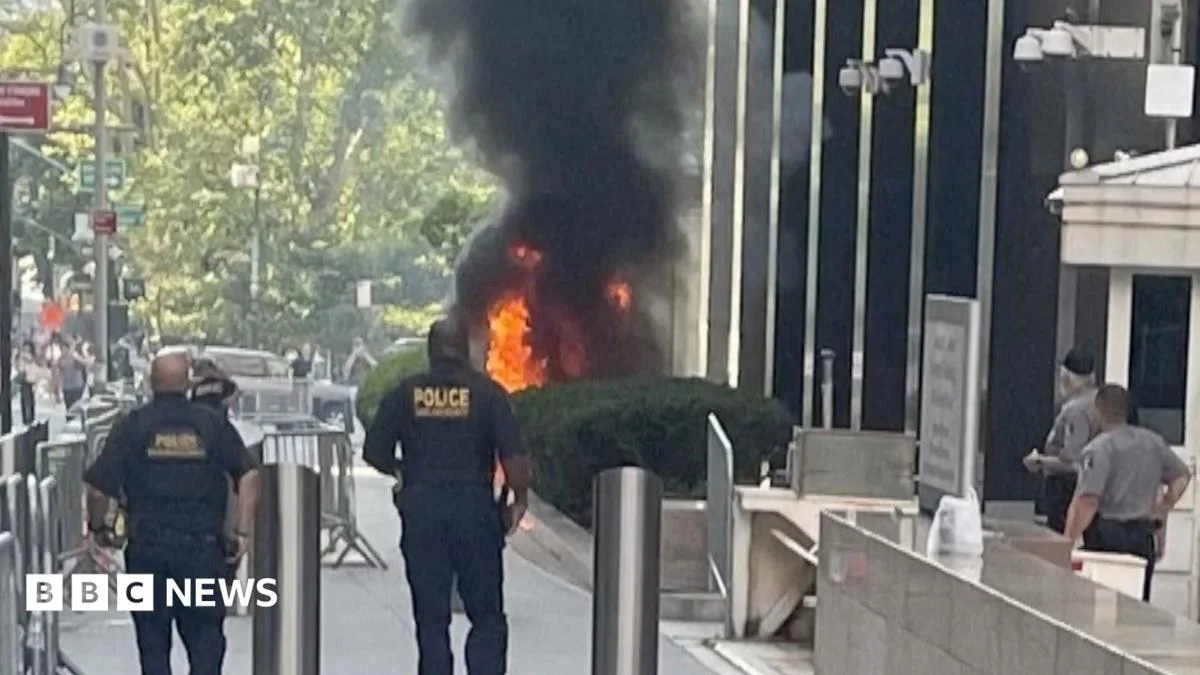
A former U.S. Army soldier, identified as Andrew Arrabaca, 43, was apprehended by federal agents on Monday morning after allegedly setting a fire outside a federal building in Lower Manhattan, a brazen act that also involved the discharge of a pellet gun and the setting off of fireworks. The incident occurred at the imposing structure of 26 Federal Plaza, a significant hub housing offices for the Federal Bureau of Investigation (FBI), Immigration and Customs Enforcement (ICE), and U.S. Citizenship and Immigration Services. The FBI has confirmed Arrabaca’s arrest and detailed the alarming sequence of events that unfolded, painting a picture of a highly volatile situation.
According to federal authorities, Arrabaca arrived at the scene armed with a dangerous arsenal. He was reportedly carrying two axes, a machete, three knives, and a cache of fireworks. In addition to these bladed weapons, he fired approximately five to seven pellets from an airsoft gun in the direction of the building. The situation escalated further when Arrabaca poured an accelerant onto the entrance stairs of the federal building and ignited a fire, creating a significant blaze that required the intervention of the New York City Fire Department to extinguish.
The motivations behind Arrabaca’s actions appear to be rooted in a strong anti-government and anti-Immigration and Customs Enforcement sentiment. The FBI stated that Arrabaca made "several anti-government and anti-ICE statements during the incident." This characterization was echoed by the Department of Homeland Security (DHS), which labeled him an "anti-ICE rioter."
The incident, while ultimately contained, resulted in minor injuries to three individuals. Among those affected was an immigrant who was present at the building to attend a status hearing. The FBI confirmed that two government employees also sustained minor injuries. A DHS spokesperson clarified that a bystander was grazed by something during the chaos, and a security officer who bravely tackled and detained Arrabaca suffered minor injuries in the process.
FBI New York Assistant Director James Barnacle, speaking at a press conference following the arrest, provided further details about the suspect and the incident. He described Arrabaca as an "anti-American, anti-government extremist," underscoring the gravity with which law enforcement viewed his actions. Barnacle also elaborated on the weapons found on Arrabaca, reinforcing the image of a potentially dangerous individual prepared for a confrontation.
Information regarding Arrabaca’s military service was also released. He served in the regular U.S. Army from 2001 to 2004 and subsequently in the Army National Guard-New York from 2004 to 2005. Records indicate that he did not have any deployments during his service and was discharged with the rank of specialist. This background adds a layer of complexity to the narrative, raising questions about how his military experience might have intersected with his current anti-government stance.
The location of the incident, 26 Federal Plaza, has become a focal point for protests against former President Donald Trump’s immigration policies in recent years. This history of activism and dissent at the site adds context to Arrabaca’s alleged motivations and his targeting of an ICE facility. The presence of ICE, an agency tasked with enforcing immigration laws, has often drawn significant opposition from various advocacy groups and individuals.
New York City Mayor Zohran Mamdani addressed the incident on the social media platform X, calling it "deeply disturbing." He reaffirmed his administration’s commitment to ensuring the safety of all New Yorkers and vowed to hold accountable anyone who threatens that security. This statement reflects the broader concern among city officials regarding acts of violence and extremism.
The events at 26 Federal Plaza highlight the persistent tensions surrounding immigration policy in the United States and the potential for such tensions to manifest in acts of defiance or violence. Arrabaca’s alleged actions, fueled by anti-government and anti-ICE sentiments, serve as a stark reminder of the deep divisions that exist within the country. The FBI and DHS are continuing their investigation into the incident, seeking to understand the full scope of Arrabaca’s intentions and any potential connections he may have to extremist groups. The thoroughness of the investigation will be crucial in providing a comprehensive understanding of this alarming event.
The quick response of federal agents and the fire department was critical in preventing the situation from escalating further and potentially causing more severe damage or injuries. The fact that Arrabaca was apprehended at the scene, despite being armed with multiple weapons, speaks to the professionalism and bravery of the law enforcement officers involved. Their swift action not only secured the immediate area but also prevented any further harm to civilians and government personnel.
The incident also brings to the forefront the challenges faced by federal law enforcement agencies in maintaining security amidst heightened political polarization. Buildings housing ICE and other federal agencies have become symbols of government policy, and as such, they can attract both peaceful protesters and individuals with more extreme grievances. The security protocols in place at these facilities are constantly being tested, and events like this underscore the need for continuous vigilance and adaptation.
As the investigation progresses, further details about Andrew Arrabaca’s personal life, his specific grievances, and any potential accomplices may come to light. The legal proceedings that follow his arrest will undoubtedly shed more light on the extent of his alleged premeditation and the specific charges he will face. The FBI’s commitment to a thorough investigation will be paramount in piecing together the full narrative of this disruptive event and ensuring that justice is served. The implications of this incident extend beyond the immediate arrest, serving as a case study in the complex interplay of political dissent, personal grievances, and acts of defiance against government institutions. The involvement of a former military member also raises questions about the pathways individuals may take from service to activism, and in some cases, to alleged acts of extremism. The focus now shifts to the legal process and the ongoing efforts to understand the root causes and consequences of this alarming incident.



 Nakalama John
 atisusanti
 Ramos Leo
 Roy Suryo
 Nana Banana