
 Ramos Leo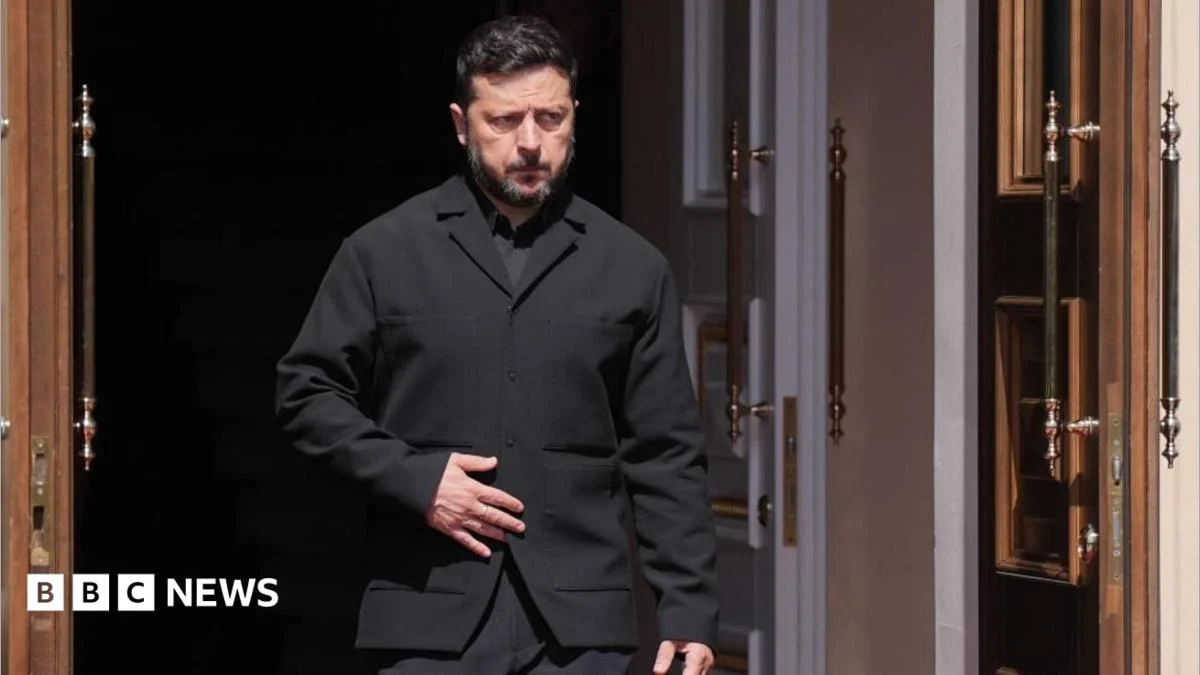
The forthcoming meeting is set to be a pivotal moment for bilateral relations, with a significant announcement expected during their joint visit to a naval base. At this strategic location, Prime Minister Burnham is poised to reveal a groundbreaking initiative: the sharing of intellectual property rights for the UK’s cutting-edge "Stone Cloak" electronic warfare system. This unprecedented move is designed to empower Ukraine to domestically manufacture this vital technology at an industrial scale, dramatically enhancing its capabilities in the ongoing conflict. The "Stone Cloak" system represents a critical advancement in modern warfare, specifically engineered to counter the pervasive threat of drone warfare.
In a statement preceding the visit, Prime Minister Burnham affirmed the UK’s resolute stance: "Britain stands with Ukraine, shoulder to shoulder, and our support remains unwavering. Russia should be in no doubt of our resolve, and we will not back down until we achieve long-lasting and just peace for Ukraine." He further emphasized the innovative nature and battlefield proven efficacy of the "Stone Cloak" system, stating, "Stone Cloak is the best of homegrown British innovation and proven on the frontline, and it will be vital to protecting our security in both our countries." This technology, he elaborated, is crucial not only for Ukraine’s defense but also for the broader security interests of the United Kingdom and its allies.
The "Stone Cloak" electronic jammers are remarkably compact, roughly the size of a tablet computer, making them highly adaptable and easily integrated into various platforms. Their primary function is to actively block the detection of any drone they are fitted to, effectively rendering them invisible to enemy radar and other surveillance systems. This capability provides a critical tactical advantage in environments where drone superiority is often contested. The Ministry of Defence has already supplied thousands of these devices to Ukrainian forces, where they have been instrumental in bolstering drone operations, enhancing their survivability, and improving their effectiveness in reconnaissance and attack missions.
Looking ahead, Downing Street confirmed that the proven success and lessons learned from the "Stone Cloak" deployment in Ukraine will directly inform its integration into the UK’s next generation of long-range weapons. This strategic foresight includes its incorporation into Project Brakestop, a significant government programme dedicated to the development of low-cost cruise missiles. These self-propelled guided weapons, designed to fly like conventional aircraft for a substantial portion of their trajectory, represent a cost-effective yet potent addition to the UK’s defense arsenal. The integration of "Stone Cloak" will ensure these future weapons possess enhanced stealth and survivability, further solidifying the UK’s advanced military capabilities.
Beyond technological collaboration, the Monday visit will also feature a powerful display of military solidarity. The two leaders are scheduled to meet with over 200 Ukrainian military personnel who have recently concluded an intensive three-week maritime exercise conducted in the United Kingdom. This comprehensive training initiative, known as Exercise Sea Breeze, was specifically designed to strengthen warfighting capabilities and improve counter-mine measures, particularly vital for operations in the strategically crucial Black Sea region. Such joint exercises are fundamental to enhancing interoperability between Ukrainian forces and NATO standards, reinforcing collective security, and preparing for complex naval challenges.
Britain’s unwavering backing of Ukraine has been a constant since Russia’s full-scale invasion four years ago. The UK has consistently stood as one of Ukraine’s most steadfast international partners, committing a substantial £25 billion in comprehensive funding to support the country’s defense and resilience efforts. This extensive financial package encompasses a wide array of support, including military aid, humanitarian assistance, economic stabilization, and vital training programmes, underscoring a holistic approach to aiding Ukraine in its existential struggle. Further details regarding the scope and nature of this support can be found in official government publications, such as the UK support to Ukraine factsheet.
In one of his very first acts as Prime Minister last Monday, Andy Burnham promptly engaged with President Zelensky in a direct phone call, extending a personal invitation for him to visit the UK "at the earliest opportunity." This swift diplomatic outreach was a clear signal of continuity and immediate engagement from the new administration. President Zelensky, shortly after the call, took to X (formerly Twitter) to express his profound gratitude, stating, "I truly appreciate that the support for Ukraine and our people will remain steadfast." This public affirmation from the Ukrainian leader highlighted the importance of quick reassurance during a period of political transition.
The continuity of UK support has been a recurring theme, particularly in light of recent political shifts. Prime Minister Burnham’s predecessor, Sir Keir Starmer, had made a significant visit to Kyiv on his final full day as Labour leader, demonstrating cross-party consensus on Ukraine support. During that poignant trip, Sir Keir announced fresh funding worth £255 million (equivalent to €300 million) specifically earmarked for Ukraine’s defense against Russian aggression. In recognition of his consistent advocacy and tangible support, Sir Keir was bestowed with Ukraine’s prestigious Order of Freedom, one of the nation’s highest honors for foreign nationals, symbolizing the depth of gratitude from the Ukrainian people.
President Zelensky himself has openly acknowledged the inherent anxieties associated with changes in international leadership, particularly for a nation embroiled in a protracted conflict. When previously asked about concerns regarding leadership transitions in Britain and impending elections in France next year, he candidly stated, "Of course I’m afraid of changes, of course we are afraid because we are in the war each day." However, he quickly tempered this apprehension by emphasizing the foundational strength of state-to-state relations: "But again the priority is the relation between nations, not just between just people. I’m sure that these relations will not change, or we have to do our best not to lose such very good relations." He articulated a fervent hope, adding, "I hope we will never lose strong relations with the UK during or after the war," to which Sir Keir Starmer unequivocally replied, "You won’t." This exchange underscored the deep personal and institutional bonds that underpin the enduring UK-Ukraine partnership, providing a crucial layer of stability and reassurance amidst the uncertainties of war and international politics.



 Roy Suryo

 Nakalama John
 atisusanti
