
 Nana Banana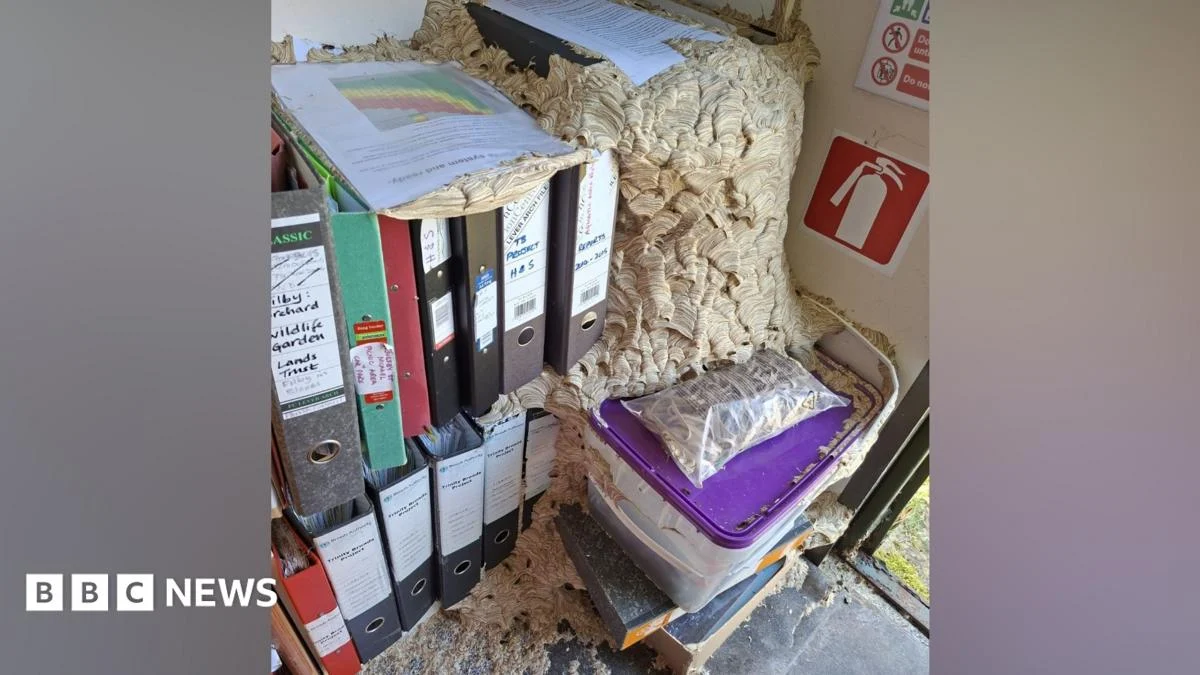
The discovery sent ripples of surprise and a touch of trepidation through the NWT team. Unlike typical nests found outdoors in trees or underground, this impressive edifice had taken root in a highly unconventional, and undoubtedly inconvenient, location. Dr. Sarah Rothney, a senior warden at the Norfolk Wildlife Trust, articulated the organization’s philosophical approach to this unexpected tenancy. She explained that the Trust’s marshes and fens are teeming with diverse wildlife, including livestock such as roaming cattle and sheep, all coexisting. Applying this natural principle to the office environment, she challenged her inner "ungulate," describing her new daily routine as strolling through the office like a "browsing cow" or a "grazing sheep." This unconventional, yet highly effective, strategy involves moving calmly and deliberately, avoiding sudden movements or direct confrontation, mirroring how large herbivores navigate their environment without provoking smaller, potentially defensive, creatures. The aim is to project a sense of benign indifference, thereby minimizing any perceived threat to the thousands of tiny, stinging co-workers.
The decision to allow the nest to remain, rather than calling in pest control, is deeply rooted in the Norfolk Wildlife Trust’s core mission. This bold move underscores their dedication to protecting all forms of nature, even those species often maligned or misunderstood by the public. Dr. Rothney elaborated on the natural progression expected within the coming months. "The intention is just to leave it be, and eventually they will all leave," she affirmed. As autumn deepens and the weather cools, the colony’s natural lifecycle will reach its conclusion. The new generation of female wasps, the future queens, will emerge from the nest to seek suitable hibernation spots, typically in sheltered crevices, under bark, or in soil, where they will overwinter to re-emerge next spring and begin new colonies. All the worker wasps, whose sole purpose is to serve the queen and maintain the nest, along with the old queen, will eventually die off as their biological imperative is fulfilled and food sources diminish. This natural cycle means the "new colleagues" are only temporary residents, a fleeting phenomenon to be observed and understood rather than eradicated.
The Trust’s official communication regarding the incident quickly went viral, sparking widespread interest and amusement. A captivating photograph of the colossal nest was shared on the Norfolk Wildlife Trust’s Facebook page, accompanied by a witty caption that perfectly encapsulated the situation: "Thousands of new colleagues moved in without permission, skipped recruitment entirely and ignored the office hot-desking policy." This humorous approach not only diffused potential panic but also served as an excellent educational tool, inviting the public to engage with the natural world in a light-hearted manner. The social media post garnered thousands of reactions, comments, and shares, drawing attention to the Trust’s work and their unique perspective on wildlife management.
The comments section, as expected, became a lively forum for discussion, reflecting a divided public opinion. Many expressed fascination and admiration for the Trust’s stance, praising their commitment to living harmoniously with nature. "What an amazing opportunity to observe nature up close!" wrote one commenter, while another added, "Bravo NWT, showing true conservation values!" However, a significant number of individuals voiced concerns, fear, and even outright disgust, highlighting the pervasive negative stereotypes associated with wasps. "I couldn’t work there, I’d be terrified!" exclaimed one user, echoing the sentiments of many who associate wasps primarily with painful stings and aggressive behaviour.
Addressing these common fears, Dr. Rothney emphasized that people do not need to be afraid of wasps. Her advice is simple yet profoundly effective: "I would encourage people, if you’ve got wasps that are bothering you, just to keep calm and try and move away. If you keep calm, they will sense that and won’t feel threatened." This guidance stems from a deep understanding of wasp behaviour. Wasps, particularly worker wasps, are primarily focused on foraging for food (nectar, fruit, other insects) or defending their nest. They are not inherently aggressive towards humans unless they feel their nest or their own lives are directly threatened. Panic, flailing arms, or attempts to swat them are perceived as threats, triggering their natural defensive instincts and making a sting more likely. By maintaining composure and slowly backing away, one signals a lack of hostile intent, allowing the wasp to continue its activities undisturbed.
The species most likely responsible for such a large and prominent nest in the UK is the common wasp, Vespula vulgaris, or possibly the German wasp, Vespula germanica. These social wasps build intricate, multi-layered nests from chewed wood pulp mixed with saliva, creating a light yet robust paper-like material. The nests are architectural marvels, designed for efficiency, temperature regulation, and the protection of the developing brood. A mature nest can house thousands, sometimes tens of thousands, of individual wasps, making the NWT office a bustling hub of insect activity. Their lifecycle begins in spring when a single queen emerges from hibernation, selects a suitable site, and begins building a small nest and laying eggs. The first generation of offspring are sterile female workers who then take over the arduous tasks of foraging, nest expansion, and brood care, allowing the queen to focus solely on egg-laying. This division of labour enables the rapid growth of the colony throughout summer, reaching its peak in late summer and early autumn before the cycle culminates with the production of new queens and males.
Beyond their often-feared sting, wasps play a crucial, albeit often unappreciated, role in the ecosystem. During the summer, worker wasps are voracious predators of other insects, including aphids, caterpillars, and flies, effectively acting as natural pest controllers for gardens and agricultural crops. This predatory behaviour is vital for maintaining ecological balance. Later in the season, as their protein needs decrease and they switch to seeking sugary foods, they can become a nuisance around human activities, but they also contribute to pollination, albeit less efficiently than bees. The NWT staff, understanding these ecological services, view the nest not just as an inconvenience, but as a living lesson in biodiversity and the interconnectedness of nature.
The presence of the nest has undoubtedly presented logistical challenges for the NWT. The specific office area housing the nest has been cordoned off, and staff have adapted by hot-desking in other parts of the building or working remotely. Meetings might be punctuated by the gentle hum of thousands of wings, a constant reminder of their unexpected cohabitants. Rather than seeing this as a disruption, many staff members have embraced the unique opportunity to observe a natural phenomenon up close, gaining a deeper appreciation for the complex lives of these often-maligned insects. It has become a focal point for discussion, learning, and a testament to the Trust’s ethos that all creatures, regardless of their perceived threat, deserve respect and a place in the natural world.
The Norfolk Wildlife Trust’s handling of this extraordinary situation serves as a powerful broader conservation message. In an era where human encroachment on natural habitats is ever-increasing, incidents like this highlight the need for greater understanding and tolerance towards wildlife. It encourages the public to re-evaluate their perceptions of insects, to appreciate their ecological roles, and to consider non-lethal solutions when faced with perceived "pests." By choosing coexistence over eradication, the NWT demonstrates a practical, living example of what it means to be a true wildlife trust. As the autumn leaves begin to fall and the wasp colony naturally disperses, the "huge wasp nest in the office" will undoubtedly become a legendary tale within the Norfolk Wildlife Trust, a vivid reminder of their commitment to nature, no matter how close to home it gets. It stands as a testament to the fact that sometimes, the most profound lessons in conservation can be found right within our own walls, courtesy of thousands of uninvited, yet utterly fascinating, colleagues.


 atisusanti
 George Anjay
 Nakalama John

 Ramos Leo