Nana Banana
During the eclipse, a noticeable, albeit not complete, change in both temperature and light levels is expected. While the sky will not plunge into total darkness, the dimming will be profound enough to create a unique atmospheric experience across the city. This guide provides essential information on the eclipse’s timing, crucial safety precautions for viewing, and a curated list of the best vantage points across London to witness this infrequent spectacle.
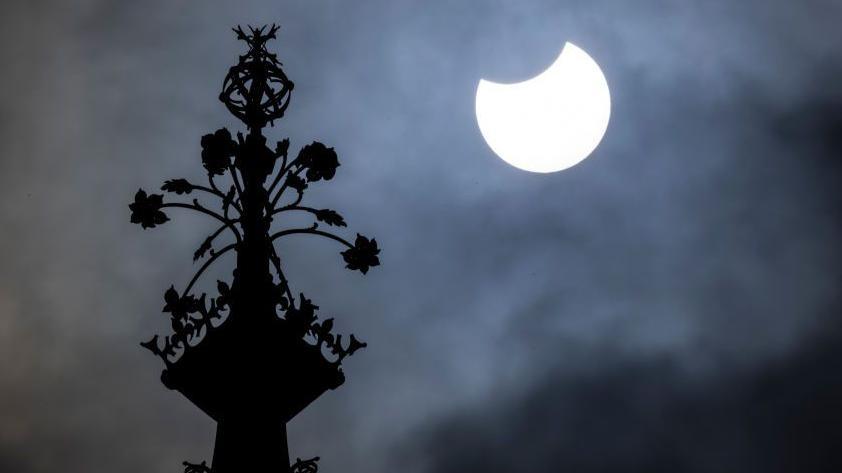
The celestial alignment will commence with "first contact" at 18:17 BST, when the Moon first begins to touch the edge of the Sun. This initial phase marks the start of the Moon’s transit across the solar disc. The eclipse will then progress towards its peak, reaching maximum coverage at approximately 19:12 BST. At this point, the Moon will obscure 90% of the Sun, offering the most dramatic visual impact. The event will gradually conclude, with the Moon fully departing the Sun’s disc around 20:06 BST. The late afternoon and early evening timing of this eclipse presents a unique opportunity, as the Sun will be lower in the sky, potentially enhancing urban viewing against London’s iconic skyline. However, it also means that observers should seek locations with clear, unobstructed views towards the west or west-north-west to fully appreciate the progression before the sun sets.
Understanding the science behind this awe-inspiring event adds another layer to the experience. A solar eclipse is a cosmic coincidence, a result of the Moon’s diameter being approximately 400 times smaller than the Sun’s, yet it is also approximately 400 times closer to Earth. This creates the illusion that both bodies are roughly the same size in the sky. Partial eclipses, like the one expected, occur when the Moon does not perfectly align with the Sun, or when the observer is outside the path of the Moon’s umbra (the darkest part of its shadow). Other types include total solar eclipses, where the Sun is completely obscured; annular eclipses, where a ‘ring of fire’ is visible around the Moon; and hybrid eclipses, which transition between total and annular. The rarity of such significant eclipses from a specific geographical location like London underscores the importance of seizing this opportunity, as the Moon’s orbit is tilted relative to the Earth’s orbit around the Sun, meaning perfect alignment is infrequent. Throughout history, solar eclipses have captivated humanity, inspiring both fear and wonder, and spurring scientific inquiry into the mechanics of our solar system.
Witnessing a solar eclipse, even a partial one, requires strict adherence to safety guidelines to prevent irreversible eye damage. The UK Health Security Agency emphasizes that even when the Sun appears dimmer, looking directly at it can cause serious harm to the retina. Ordinary sunglasses offer no protection against harmful solar radiation and should never be used for eclipse viewing. The only safe way to directly observe the eclipse is through ISO 12312-2 certified eclipse glasses, which are specifically designed to filter out harmful ultraviolet, infrared, and intense visible light. It is crucial to purchase these from reputable vendors and to inspect them for any scratches or damage before use.
For those without certified glasses, indirect viewing methods are equally effective and safe. A simple pinhole projector can be constructed at home using basic materials. By making a small hole in a piece of card and holding it up to the sun, the eclipse’s image can be safely projected onto another surface. A kitchen colander can achieve a similar effect, creating multiple projected images of the crescent sun on the ground when held up. For photographers, while smartphones can capture the event, their lenses should be protected with a solar filter or by placing eclipse glasses over the lens. However, using professional cameras, binoculars, or telescopes without specific, certified solar filters attached to the front of the optical instrument is extremely dangerous and can cause immediate, severe eye damage. Never look through an optical viewfinder at the sun without a proper filter in place. Always supervise children during eclipse viewing to ensure their safety.
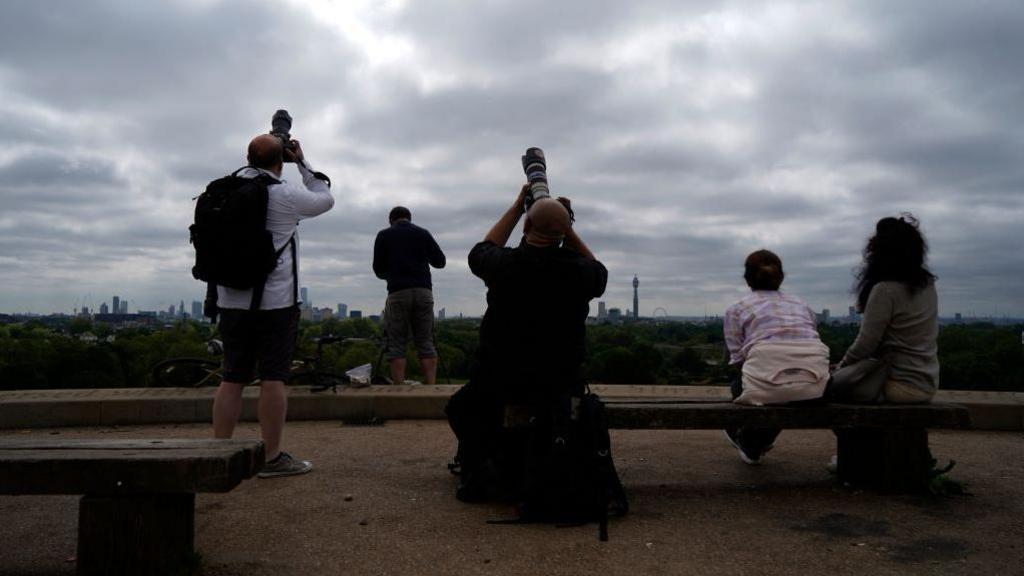
Given the late timing of the eclipse, finding an open space with an uninterrupted view to the west or west-north-west is key. London offers numerous elevated and expansive locations perfect for this celestial event.
- Primrose Hill: Renowned for its panoramic views of the London skyline, Primrose Hill is a classic choice for stargazers and eclipse enthusiasts. Its elevation provides a clear line of sight, and the atmosphere during such events is often communal and vibrant.
- Greenwich Park: Home to the historic Royal Observatory, Greenwich Park offers both a fantastic elevated vantage point and a rich astronomical heritage. The hill near the observatory provides superb views, and the park often hosts informal or organized viewing gatherings, making it an ideal spot for an educational and engaging experience.
- Hampstead Heath: This vast, ancient park boasts some of London’s highest points, particularly Parliament Hill. Its expansive, open spaces minimize obstructions, and the elevation guarantees sweeping views across the city, making it a prime location for capturing the eclipse against an urban backdrop.
- Alexandra Park (Ally Pally): Affectionately known as "Ally Pally," Alexandra Palace and its surrounding parkland offer breathtaking, far-reaching views across London. Its significant elevation makes it an excellent, less crowded alternative for a clear westward perspective.
- Richmond Park: As London’s largest Royal Park, Richmond Park features several elevated areas that provide excellent sightlines. Its natural setting offers a serene environment to observe the eclipse, far from the light pollution and tall buildings of central London.
- Rooftop Bars and Sky Gardens: For a truly unique urban viewing experience, consider London’s growing number of rooftop venues. Locations like the Sky Garden, The Garden at 120, or various hotel rooftop bars offer elevated perspectives over the city. While these spots might require bookings and present challenges with potential obstructions from other buildings, they offer a distinctive way to combine the celestial event with London’s architectural grandeur.
- River Thames Embankments and Bridges: Positioning yourself strategically along the Thames, particularly on bridges like Westminster Bridge, can offer iconic photographic opportunities, with the eclipse framed against landmarks like the Elizabeth Tower (Big Ben) and the Houses of Parliament. Ensure a clear western view is available.
- Local Parks and Open Spaces: Beyond the famous spots, many local parks throughout London offer sufficient open space and clear sightlines to the west. Checking local maps for parks situated on slight inclines or with fewer tall buildings to the west will yield numerous community-friendly viewing options.
Beyond individual viewing, several astronomical societies across London are organizing public viewing events, providing both safe equipment and expert guidance. The Croydon Astronomical Society plans free viewing sessions at Kenley Airfield, Warlingham, and Addiscombe. Similarly, members of the Loughton Astronomical Society will gather at sites in Chingford and Theydon Bois. The SW London Stargazers Meetup group is also arranging an eclipse watch in Tooting Bec. These events are highly recommended for those new to eclipse viewing or seeking a communal experience with knowledgeable enthusiasts. For those who prefer to stay indoors, the Royal Observatory Greenwich will host a live, free online stream of the eclipse from London, ensuring everyone can witness the event safely.
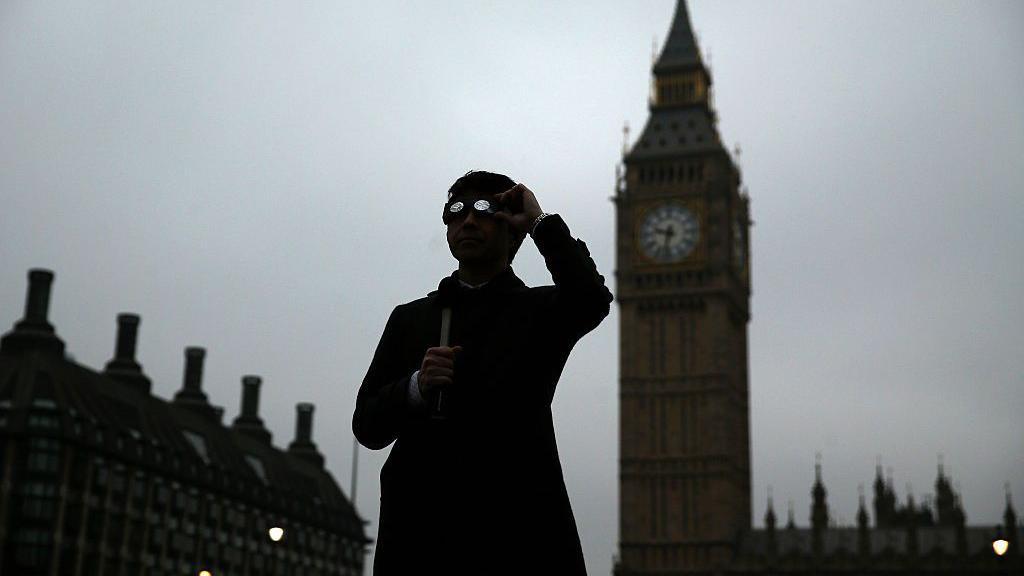
For photographers keen to capture this rare moment, a few advanced tips can enhance results. Beyond using certified solar filters for your lens, a sturdy tripod is essential for stability, especially as light levels change. Employ manual focus and exposure settings to maintain consistency, and consider using a remote shutter release to minimize camera shake. Experiment with composition, aiming to frame the eclipsed sun with a recognizable London landmark, provided the sun is safely filtered. Time-lapse photography can also create a compelling narrative of the Moon’s journey across the Sun. Remember, the paramount rule is safety: never compromise your eyesight for a photograph.
As the Sun dips below the horizon, bringing an end to this rare astronomical display, Londoners will have witnessed an event not to be repeated in its entirety for decades. The next deep partial solar eclipse visible from the UK is scheduled for 2050, and a total solar eclipse remains a distant prospect for 2090. This makes the 12 August event a truly unmissable occasion, offering a chance to connect with the cosmos from the heart of the capital. Beyond the eclipse, London’s astronomical societies and the Royal Observatory Greenwich regularly host events celebrating other celestial phenomena, from meteor showers to planetary conjunctions, encouraging continued engagement with the wonders of the night sky. Share your safely captured photographs and experiences of this unique London eclipse, and continue to look up.




 George Anjay
 Nakalama John
 atisusanti
 Ramos Leo