Nana Banana
While observers in Greenland, Iceland, and parts of northern Spain will be privileged to witness a total eclipse, the view from the UK will nonetheless be extraordinary. This particular event represents the highest level of solar coverage seen from these shores since the memorable total eclipse of 11 August 1999, which captivated millions. What makes Wednesday’s phenomenon even more significant is its calculated rarity; it is set to be the most extensive solar eclipse visible from the UK for the next 54 years. This remarkable fact underscores why experts, such as Imo Bell, a planetarium astronomer at Royal Greenwich Observatory, are calling it "really exciting" and emphasizing, "We’re not going to get one this good for a really long time." Such an astronomical alignment is a stark reminder of the dynamic ballet played out by our celestial neighbours, offering a fleeting glimpse into the vast wonders of the cosmos.
Understanding the Phenomenon: What is a Solar Eclipse?
A solar eclipse occurs when the Moon passes directly between the Sun and Earth, casting a shadow on our planet and either partially or completely blocking the Sun’s light. There are several types of solar eclipses: total, partial, annular, and hybrid. A total solar eclipse happens when the Moon entirely obscures the Sun, revealing the Sun’s ethereal corona. A partial solar eclipse, like the one expected, occurs when the Moon only covers a portion of the Sun, making it appear as if a bite has been taken out of our star. Annular eclipses occur when the Moon is too far from Earth to completely block the Sun, leaving a "ring of fire" visible. Hybrid eclipses transition between total and annular along their path. This week’s event, a deep partial eclipse for the UK, is a testament to the precise orbital mechanics that govern our solar system, where the Moon’s apparent size from Earth is just right to periodically align with the Sun.
What Time Can I See the Partial Eclipse in North-West England?
While the sky will not plunge into total darkness, the significant obscuration of the sun – over 90% for much of North-West England – is expected to make a "noticeable difference" in both temperature and ambient light levels. Observers should prepare for a distinct shift in the atmosphere as the eclipse reaches its maximum.
According to the Royal Greenwich Observatory, timings for the eclipse will vary slightly across the UK, due to the curved surface of the Earth and the precise path of the Moon’s shadow. The initial visible signs of the sun disappearing behind the moon, known as "first contact," will first be visible in Scotland at approximately 18:08 BST. The rest of the UK will follow suit a few minutes later.
For those in North-West England, specifically major cities like Manchester and Liverpool, first contact is expected at approximately 18:13 BST. The event will then progress, with the moon gradually covering more of the sun. The "eclipse maximum," when the largest percentage of the sun is obscured, is anticipated to occur around 19:10 BST across the north-west of England. By this point, residents can expect a significant reduction in daylight, possibly resembling a deep twilight, and a noticeable drop in temperature. The entire eclipse event will then conclude, with the moon fully moving past the sun, by approximately 20:04 BST.
While there will be slightly more coverage the further south-west observers are located in the country, the north-west of England is still set to experience an impressive spectacle, with just over 90% of the sun being obscured. For towns and cities across the region, such as Preston, Lancaster, Chester, and Carlisle, timings will be broadly similar, with only minute differences of a few seconds to a minute or two from the Manchester/Liverpool timings. It is advisable for local enthusiasts to check specific timings for their exact location closer to the date for precise details, though the general window remains consistent across the region.
Where Are the Best Places to See the Eclipse in North-West England?
To fully appreciate this rare astronomical event, choosing the right viewing location is key. The best places to view the eclipse are typically from higher ground or areas that offer an unobstructed, clear view towards the western horizon. This is because the sun will be relatively low in the sky as the eclipse progresses towards its maximum and conclusion. The further east people attempt to watch the eclipse, the less dramatic the coverage might appear, due to the geometry of the event and the Earth’s rotation.
North-West England offers a plethora of fantastic vantage points. For those in urban areas, seeking out open parks, elevated car parks, or even taller buildings with clear westerly views can be beneficial. In Manchester, locations like the higher points of the Pennine hills to the east, or open spaces such as Heaton Park or Wythenshawe Park, could offer good sightlines. Similarly, in Liverpool, the waterfront along the Mersey, or higher ground in areas like Everton Park, could provide excellent panoramic views.
Beyond the major cities, the geographical diversity of the North-West presents stunning opportunities. The fells and valleys of the Lake District in Cumbria, for instance, offer numerous elevated spots with breathtaking vistas. Imagine watching the partial eclipse unfold from a fellside overlooking a serene lake – a truly unique experience. Coastal areas across Lancashire and Cumbria, such as Blackpool promenade or the Morecambe Bay coastline, facing west over the Irish Sea, would also provide an unhindered view of the setting sun and the moon’s gradual transit across its face. Even smaller towns and villages throughout Cheshire, Lancashire, and Cumbria will have local spots, be it a hill, a quiet field, or an elevated village green, from which to observe.
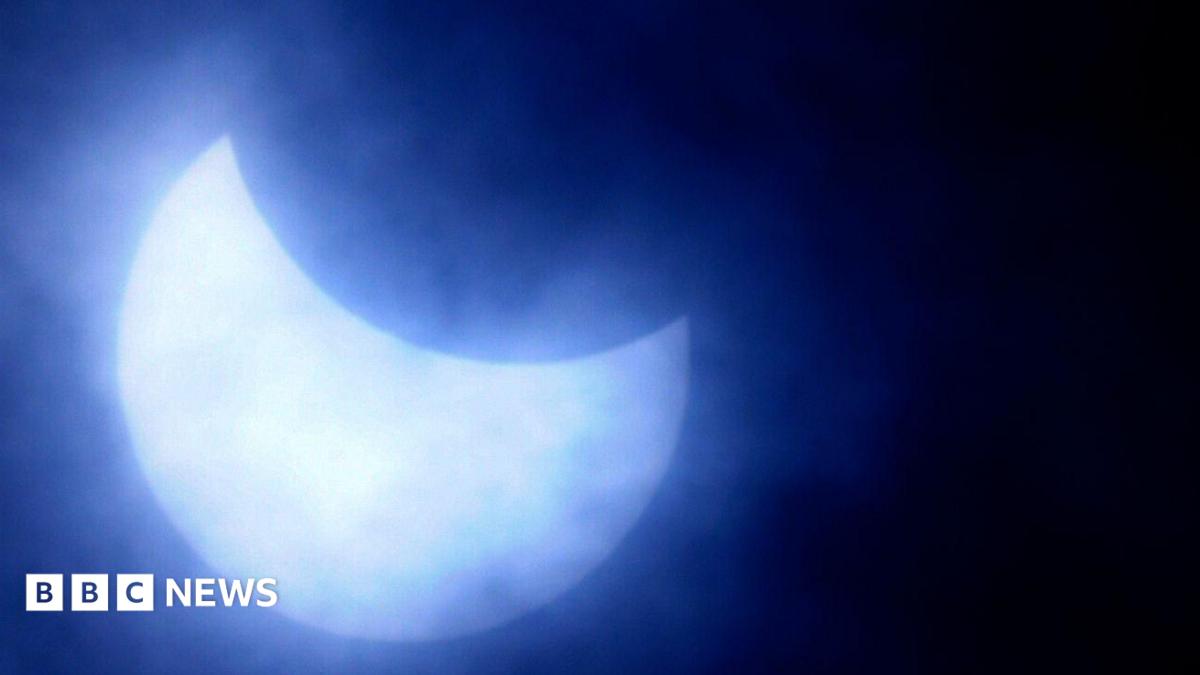
It is, however, crucial to consider the notoriously unpredictable British weather. Cloud cover could significantly impact visibility. While a clear sky is ideal, even scattered clouds could create dramatic effects as the sun dips in and out of view. Many local astronomy clubs and societies across the North-West, such as those in Manchester, Liverpool, Preston, and Carlisle, are likely to be organising public viewing events. These gatherings often provide specialised equipment and expert guidance, enhancing both the viewing experience and safety. Checking their websites or local community boards for details on planned events would be highly recommended.
How Can I Stay Safe While Viewing the Eclipse?
While the excitement for this rare event is palpable, the paramount concern for all observers must be safety. A vital warning from experts is to never look directly at the sun, even when it appears to have dimmed during the eclipse. Looking with the naked eye, even for a brief moment, can cause severe, permanent damage to eyesight.
Mohamed Elalfy, a consultant ophthalmologist and president of the Royal College of Ophthalmologists, issued a crucial warning: "Crucially, the retina has no pain receptors, so people will not feel the damage as it happens." He continued, "Symptoms may only become apparent several hours later and can include blurred vision, a central blind or dark spot, distorted vision, reduced colour perception and increased sensitivity to light." This condition, known as solar retinopathy or eclipse retinopathy, can lead to irreversible vision loss.
It is imperative to understand that standard sunglasses, no matter how dark, offer insufficient protection. They are designed to reduce visible light, not harmful ultraviolet (UV) and infrared (IR) radiation that can silently damage the retina. Therefore, standard sunglasses should never be used to observe an eclipse.
There are several safe methods for observing the eclipse:
- Certified Solar Eclipse Glasses: These are specially designed filters that meet the international safety standard ISO 12312-2. They block almost all harmful UV and IR light, as well as significantly reducing visible light to safe levels. Ensure that any glasses purchased are from reputable vendors and clearly state this ISO certification. Beware of counterfeit products, which can be dangerous.
- Pinhole Projector: This is a simple, safe, and effective way to view the eclipse indirectly. You can make one easily with two pieces of stiff card. Punch a small, clean hole (about 1-2mm) in the centre of one card. With your back to the sun, hold the card with the hole up, allowing the sunlight to pass through it onto the second piece of card, held a foot or two behind it. An inverted image of the eclipsed sun will be projected onto the second card. Do not look through the pinhole directly at the sun.
- Telescopes and Binoculars with Certified Solar Filters: If using optical aid, it is absolutely critical that a professionally made, certified solar filter is securely fitted over the front aperture of the telescope or binoculars. Never use small solar filters that screw into the eyepiece, as these can overheat and crack, allowing concentrated sunlight to burn through the eye. Only use equipment specifically designed and certified for solar observation.
- Live Webcasts: For those without appropriate viewing equipment, or if cloud cover is persistent, many astronomical organisations and observatories worldwide will be streaming the eclipse live online, offering a safe and often enhanced view of the event.
Historical and Scientific Context
Solar eclipses have fascinated humanity for millennia, often interpreted as omens or divine signs in ancient cultures. From Babylonian records to Chinese astronomical observations, the sudden darkening of the sun has always held profound significance. Today, thanks to scientific advancements, we understand the precise celestial mechanics behind these events. Eclipses provide invaluable opportunities for scientists to study the Sun’s corona, the outermost layer of its atmosphere, which is usually obscured by the Sun’s blinding light. They also allow for tests of gravitational theories, as demonstrated by Arthur Eddington’s famous experiment during the 1919 total solar eclipse, which confirmed Einstein’s theory of general relativity.
The rarity of total solar eclipses in any given location (on average, once every 375 years) is due to the small size of the Moon’s shadow on Earth and the specific alignment required. We are incredibly fortunate that the Moon is just the right size and distance from Earth to create such perfect celestial alignments.
Beyond the Eclipse: Continuing the Astronomical Journey
While this partial solar eclipse is a highlight, the night sky consistently offers wonders for those willing to look up. Following this event, observers can look forward to other celestial phenomena, such as meteor showers, planetary conjunctions, and perhaps even comets, in the coming months and years. Astronomy clubs across North-West England are excellent resources for staying informed about these events and learning how to safely observe them.
This Wednesday’s partial solar eclipse is more than just an astronomical event; it’s a shared experience, a moment of collective wonder that connects us to the vastness of the universe. For the residents of North-West England, it presents a truly unique opportunity to witness a significant celestial spectacle that won’t be surpassed for over half a century. Remember to prepare safely, find a good viewing spot, and immerse yourself in this once-in-a-generation cosmic dance.




 George Anjay
 Nakalama John
 atisusanti
 Ramos Leo