George Anjay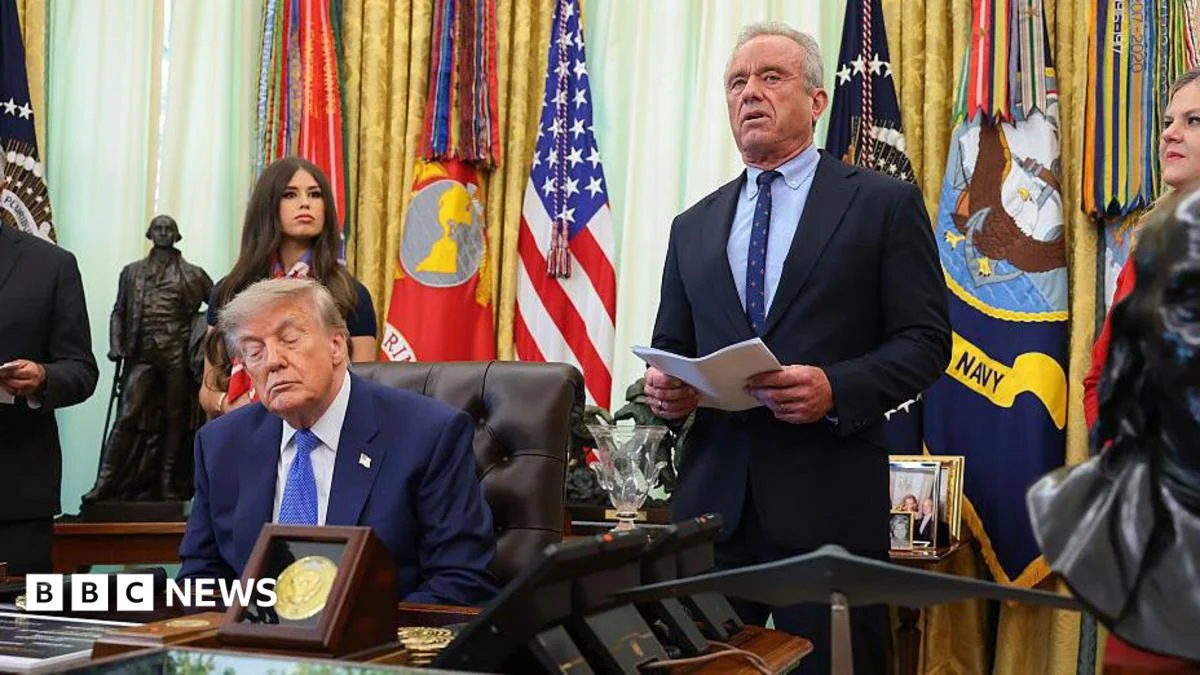
During a press conference, President Trump articulated his rationale, stating, "Decades ago, children received only a small fraction of the vaccines required today. In those times, people were much healthier and of course the high rates of autism now observed did not exist." This assertion directly links current vaccination schedules to an increase in autism rates, a claim that has been widely debunked by extensive scientific research. The president has consistently voiced skepticism regarding the safety of the MMR vaccine, a sentiment that runs counter to the overwhelming consensus within the scientific and medical communities. Numerous peer-reviewed studies conducted over decades have failed to establish any causal relationship between vaccines, including the MMR shot, and the development of autism spectrum disorder.
The executive order recommends a reduction in the number of routine childhood vaccines from the current 18, as advised by the American Academy of Pediatrics (AAP), down to 11. Speaking from the Oval Office, President Trump declared that his administration "is recognizing gold standard childhood vaccine recommendations for only 11 core vaccinations against the most serious and dangerous diseases." The specific immunizations targeted for inclusion in this revised schedule are those for measles, mumps, rubella, diphtheria, tetanus, pertussis, polio, Haemophilus influenzae type B (Hib), pneumococcal disease, human papillomavirus (HPV), and varicella (chickenpox).
Elaborating on the proposed changes, President Trump emphasized a dual approach: "We’re reducing them. It’s not only that you’re doing fewer vaccines, or jabs, as they say, but you’re doing them in a series of visits to the doctor." This suggests a strategy of both decreasing the total number of inoculations and potentially spreading out the administration of remaining vaccines over a longer period. The president further likened the administration of the MMR vaccine in its current combined form to a potentially harmful act, stating that it "could be quite lethal" if administered all at once. He drew an analogy, comparing the concentrated dose to "pouring a bottle of soda into a child’s body," implying a belief that the volume or combination of antigens could overwhelm a child’s system.
However, this recommendation to split the MMR vaccine is in direct opposition to guidance from the Centers for Disease Control and Prevention (CDC). According to the CDC, there is "no published scientific evidence that shows any benefit in separating the combination MMR vaccine into three individual shots." The agency maintains that the MMR vaccine is overwhelmingly safe and effective, with "most people who get MMR vaccine do not have any serious problems with it." Furthermore, the CDC strongly asserts that receiving the vaccine "is much safer than getting measles, mumps, or rubella," highlighting the severe and potentially life-threatening complications associated with these preventable diseases.
Adding another layer of complexity to the directive, the article notes that the federal government does not possess the authority to unilaterally implement these new vaccine recommendations. The administration of required childhood vaccinations for school attendance is a matter determined at the state level, with each state having its own specific mandates and exemptions. This means that any significant alteration to current vaccination schedules would necessitate action and agreement from individual state legislatures and public health departments.
The article also mentions that Robert F. Kennedy Jr., President Trump’s Secretary of Health and Human Services (HHS), stated that the proposed changes were intended to "give parents choice, not prohibit access to childhood vaccines." This framing suggests a focus on parental autonomy in healthcare decisions, a theme often present in discussions surrounding vaccination. However, the practical implications of such a shift, particularly concerning public health and herd immunity, remain a subject of considerable debate.
The implications of President Trump’s order are far-reaching, potentially impacting public health strategies, parental decision-making, and the landscape of vaccine development and recommendation. The scientific community, public health organizations, and medical professionals are likely to scrutinize this executive action closely, given its divergence from established public health protocols and the robust body of evidence supporting current vaccination schedules. The debate over vaccine policy often involves a tension between individual liberty and collective well-being, and this order appears to amplify that tension.
The historical context of vaccine hesitancy, often fueled by misinformation and unverified claims, is critical to understanding the potential impact of such a presidential directive. While President Trump’s statements echo concerns that have been circulating in anti-vaccine circles for years, the scientific consensus remains firmly behind the safety and necessity of the current vaccination schedule. The potential for reduced vaccination rates, should these recommendations gain traction or influence state-level policies, raises significant concerns about the resurgence of preventable infectious diseases. Diseases like measles, which had been nearing elimination in many parts of the world, could see a resurgence if herd immunity is compromised.
The economic and social costs associated with outbreaks of vaccine-preventable diseases are substantial, including increased healthcare expenditures, lost productivity, and significant human suffering. Public health experts emphasize that vaccines are one of the most effective public health interventions ever developed, saving millions of lives annually and significantly reducing the burden of disease globally. Therefore, any move that could undermine vaccination rates is viewed with considerable alarm by those dedicated to protecting public health.
The article’s reference to the CDC’s stance on splitting the MMR vaccine is particularly pertinent. The combination vaccine was developed to reduce the number of injections a child receives, thereby minimizing discomfort and potential anxiety for both the child and parent. Separating these components would necessitate multiple doctor visits for what is currently a single, convenient administration. This logistical change, without any demonstrated medical benefit, could create practical barriers for some families and potentially lead to missed doses, further compromising the effectiveness of immunization efforts.
Furthermore, the mention of HPV vaccination in the proposed 11-vaccine schedule is noteworthy. The HPV vaccine is crucial in preventing certain cancers, including cervical, anal, and throat cancers, caused by the human papillomavirus. Its inclusion, while positive, is juxtaposed with the overall reduction in the number of recommended vaccines, raising questions about the prioritization of certain public health goals over others.
The ultimate impact of President Trump’s executive order will depend on how it is interpreted and implemented by federal agencies and, more importantly, by individual states. Given that state-level mandates are the primary mechanism for ensuring childhood vaccination for school entry, the ball is largely in the court of state legislatures and health departments. Advocacy groups on both sides of the vaccination debate are likely to engage intensely with these state-level decision-makers, further shaping the future of childhood immunization policies in the United States. The ongoing dialogue between scientific evidence, public health imperatives, and political discourse surrounding vaccination remains a critical and evolving aspect of public health policy.




 Nakalama John
 Ramos Leo
 Nana Banana