George Anjay
In a significant development that could reshape the economic landscape of North America, Canada and the United States have announced they are in the final stages of concluding a new trade agreement, a move that has been met with cautious optimism and a significant degree of uncertainty regarding its specific terms. Both President Donald Trump and Prime Minister Mark Carney have publicly lauded the impending deal as a success, with President Trump asserting that it will be highly beneficial for American farmers and manufacturers. Prime Minister Carney echoed this sentiment, stating that the agreement will secure "the best terms" for Canada’s vital strategic sectors and provide much-needed clarity on the future trajectory of US-Canada trade relations.
This breakthrough comes after intense negotiations, with trade representatives from both nations meeting for the third consecutive day. The urgency of these discussions was underscored by President Trump’s decision to temporarily suspend a new wave of tariffs he had previously threatened to impose on a wide array of Canadian goods. However, despite the optimistic pronouncements from both leaders, critical details surrounding the scope of the agreement, the concessions made by each side, and the specific areas still requiring fine-tuning remain conspicuously absent from public discourse, leaving many stakeholders in the dark.
Speaking to reporters on Wednesday following a focused 45-minute meeting with his Canadian counterpart, US Trade Representative Jamieson Greer expressed considerable satisfaction with the progress made during the latest round of discussions. Greer indicated that he would soon be providing a comprehensive briefing to Congress and other key US stakeholders, outlining the finer points of the finalized deal. "We feel confident that we’ve reached an agreement that will not only continue to protect American workers, American jobs, American supply chains, but really strengthen the North American economy," Greer stated, emphasizing the broader economic implications. He further elaborated that the agreement is designed to address and eliminate "some of the irritants" that the United States has previously raised with Canada.
The ramifications of this deal for American agriculture appear to be a key point of emphasis. President Trump indicated that Canada has agreed to remove tariffs that have impacted US farmers, although he did not specify which particular agricultural sectors would receive this benefit. When pressed on the likelihood of the US also reducing some of its existing tariffs on Canadian goods, President Trump offered a somewhat equivocal response, suggesting a reduction would occur "by a little bit."
Prime Minister Mark Carney took to social media platform X to congratulate US Trade Representative Jamieson Greer and Canada-US Trade Minister Dominic LeBlanc on the "significant progress" achieved in the negotiations. Carney’s message highlighted the objective of the agreement: "We are now moving towards an agreement that reinforces that Canadian advantage, including by securing the best terms in each of Canada’s most important strategic sectors and providing greater certainty about our future trading relationship." This statement suggests a strategic approach to safeguarding Canada’s key industries while fostering a more stable trade environment.
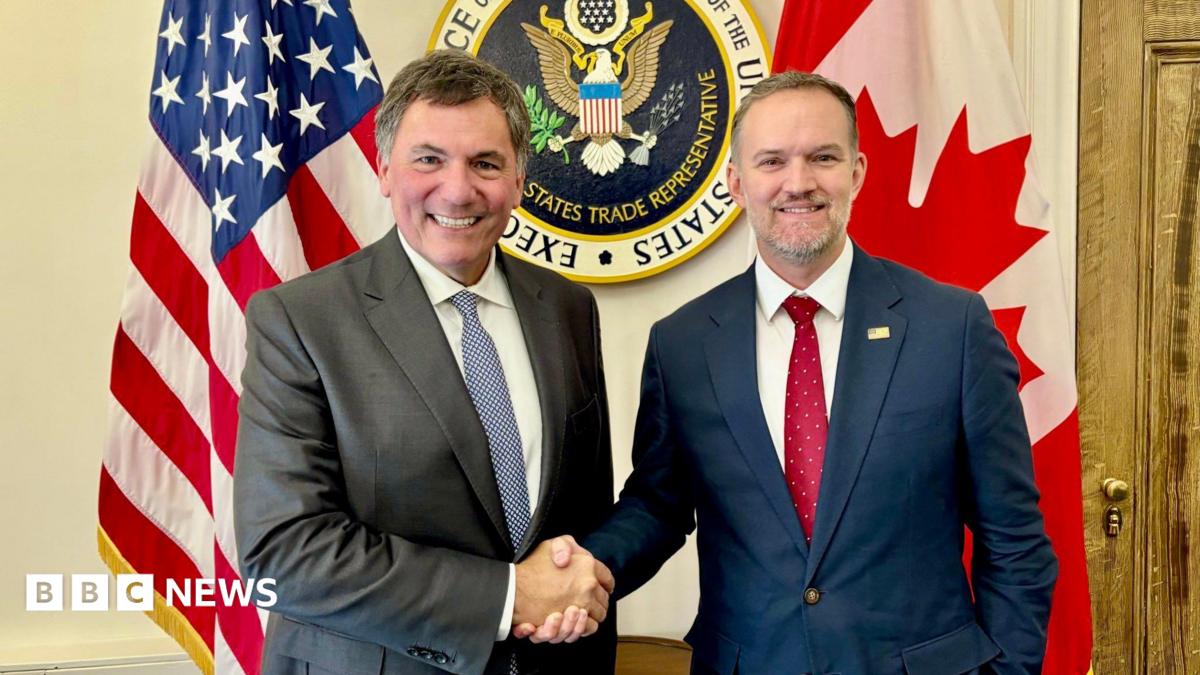
Minister LeBlanc and his negotiating team have been actively engaged in Washington for over a week, working diligently to reach a resolution before the looming deadline for President Trump’s threatened 50% tariffs. The successful pause on these tariffs until the weekend represents a significant diplomatic victory and a testament to the commitment of both sides to finding common ground. Canada has been particularly keen on securing the removal or reduction of US tariffs on its steel, aluminum, automobile, and lumber exports, sectors that have been heavily impacted by previous trade disputes.
On the other side of the negotiating table, the United States has been advocating for a range of concessions from Canada. These demands have included the dismantling of Canada’s remaining retaliatory tariffs on American automobiles and adjustments to its dairy quotas to facilitate greater access for US cheese producers. Furthermore, the US has sought the repeal of the ban on US alcohol sales, a measure implemented last year by most Canadian provinces in response to President Trump’s earlier tariffs.
When questioned about potential significant concessions on the dairy sector in the context of the latest deal, Minister LeBlanc unequivocally stated that Canada’s dairy supply management program – a system that governs production quotas, pricing, and import limits for dairy, eggs, and poultry – would remain "entirely intact." This assurance is particularly significant given the sensitive nature of this sector and its importance to Canadian farmers.
Public opinion within Canada appears to lean towards a firm stance in trade negotiations. Recent polling data from the firm Leger indicates that a majority of Canadians would be dissatisfied with substantial concessions made by the Carney government to the US. Specifically, 56% of those surveyed expressed a preference for Canada to adopt a hardline approach in its dealings with its southern neighbor. This suggests that any agreement must carefully balance the needs of the Canadian economy with the prevailing public sentiment.
Despite the internal divisions and the lingering uncertainties, business organizations on both sides of the Canada-US border have been vociferous in their calls for a swift resolution. These organizations have consistently warned that the imposition of additional tariffs would have detrimental consequences for both economies, underscoring the interconnectedness of their respective markets. The North American trading relationship, valued at hundreds of billions of dollars annually, is a cornerstone of economic prosperity for both nations, and any disruption to this flow carries significant risks.
The negotiations have also highlighted the complex interplay of domestic political considerations and international trade policy. For the Trump administration, securing favorable trade deals has been a central tenet of its economic platform, aimed at protecting American jobs and industries. For Prime Minister Carney, the challenge lies in navigating these demands while safeguarding Canadian economic interests and maintaining public support. The finalization of this deal, whenever it occurs, will undoubtedly be a closely watched event, with its ultimate success or failure to be judged by its tangible impact on businesses, workers, and consumers on both sides of the longest undefended border in the world. The path forward, while appearing to be nearing its end, remains shrouded in a degree of mystery, leaving many to anticipate the full disclosure of the terms that will govern this crucial economic partnership.




 Ramos Leo
 Roy Suryo
 Nana Banana
 Nakalama John