Roy Suryo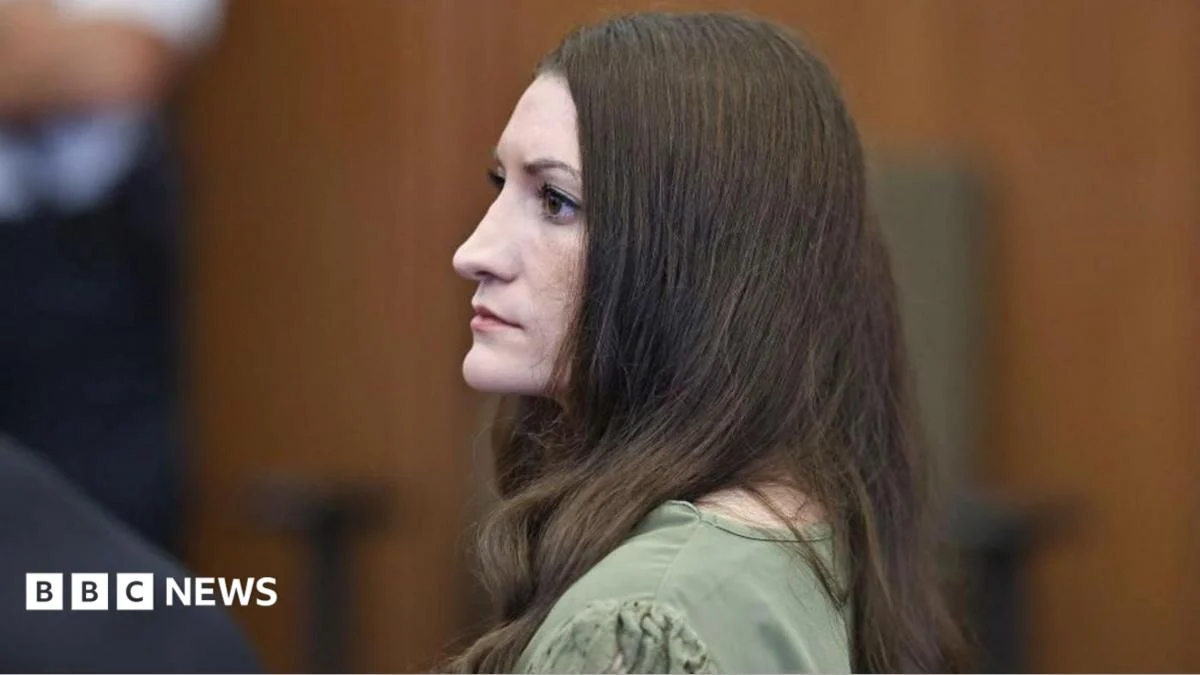
Lindsay Clancy herself has admitted to the killings, but her defense attorneys mounted a case arguing that she was suffering from postpartum psychosis, a severe mental health condition. Conversely, prosecutors contended that the murders were premeditated and calculated acts. The 36-year-old mother was charged with three counts of first-degree murder for strangling her children: Cora, aged five; Dawson, aged three; and Callan, eight months old, at their Massachusetts home before subsequently jumping from a second-floor window. For the jury to find Clancy guilty of first-degree murder, they had to be unanimously convinced, beyond a reasonable doubt, that she intentionally killed her children and that these actions were not a consequence of postpartum psychosis, a rare and serious mental disorder.
During their deliberations, the jury considered a spectrum of legal options, including not guilty by reason of insanity, manslaughter, and first-degree murder. Following the declaration of the mistrial, several jurors revealed that the panel was ultimately divided by an 11-1 vote, with the majority favoring a finding that Clancy was not criminally responsible. Desronvil, however, remained steadfast in his belief that the evidence presented in court demonstrably proved her intent and premeditation. "I didn’t have any doubts," he reiterated in his statement to CBS on Thursday. He further explained his frustration during deliberations, stating, "As I tried to explain different possible theories during deliberation, I kept getting cut off as if I had doubts based on the evidence presented."
Paula Devlin, another juror, shared her perspective with CBS Mornings, detailing the significant efforts made by the panel to persuade Desronvil to alter his stance. "We all worked together to convince ourselves once we got to that point where it was 10 to 2," she remarked. The jury foreperson, a retired fifth-grade teacher, described the inability to reach a verdict as an "awful" and an "emotional rollercoaster." She informed NBC that Desronvil had initially "admitted he had reasonable doubt," but then, as the verdict sheets were being prepared, he apparently stated, "But I’m still not going to say that she’s not guilty by reason of insanity." This sentiment was echoed by another juror who spoke to local CBS station WBZ-TV, indicating that while most of the jurors were "very firm in their stance" from the outset, "the stand-alone juror was not the only one that was unwilling to see things from the other side." However, this juror also expressed concern that because Desronvil would not "follow" his own acknowledged reasonable doubt, nor provide a logical rationale for his position, they felt Clancy had not received a fair trial.
While the identities of all eleven jurors have not been officially released, it is common practice in the United States for jurors to speak publicly about their deliberations once a case has concluded. The father of the children and ex-husband of Lindsay Clancy, Patrick Clancy, is slated to address the case publicly in an upcoming interview with the CBS program 60 Minutes. In this interview, he is expected to delve into his profound grief, share cherished memories of his children, and discuss the proliferation of conspiracy theories that have circulated on social media since the trial commenced. He revealed in a preview of the interview that he continues to speak to his children "all the time," describing it as "a way I stay connected to them."
During the trial, Clancy’s defense team sought to leverage the fact that she had been prescribed over a dozen medications in the period leading up to the killings, as well as her seeking help from a suicide hotline and an emergency room, as evidence of her severe postpartum psychosis. This condition, characterized by hallucinations and delusions, led her lawyers to argue that she was incapable of understanding the nature of her actions or distinguishing between right and wrong. A forensic psychiatrist who testified on behalf of the defense asserted that Clancy experienced a "command hallucination" and a "delusion of influence" during the time of the murders. However, a psychiatrist who testified for the prosecution stated that Clancy did not exhibit any signs of psychosis during their sessions, and another expert noted that postpartum psychosis is not currently recognized as a distinct diagnosis by the American Psychiatric Association.
Under Massachusetts law, the burden of proof rested with the prosecution to demonstrate, beyond a reasonable doubt, that Clancy was criminally responsible for the deaths. The defense was not required to prove her mental illness or lack of criminal responsibility. The mistrial leaves the case in an unresolved state, with prosecutors yet to announce whether they intend to pursue a retrial. Clancy’s attorney, Kevin Reddington, has expressed his hope to reach an agreement with prosecutors to avoid a second trial. He conveyed his disappointment to ABC’s Good Morning America that the lone holdout juror had not acquitted Clancy, asserting that this juror "would not apply the law of reasonable doubt" as instructed by the judge, which he deemed "not right." The next court hearing in this deeply tragic case is scheduled for September 29th at Plymouth Superior Court in Massachusetts, where further decisions regarding the future of the proceedings will likely be made. The profound division among the jurors underscores the complex and deeply emotional nature of the case, highlighting the starkly different interpretations of the evidence and the legal standards applied. The outcome of any potential retrial will undoubtedly continue to be a matter of intense public and legal scrutiny.



 George Anjay
 Nakalama John
 Ramos Leo
 Nana Banana