
 Roy Suryo
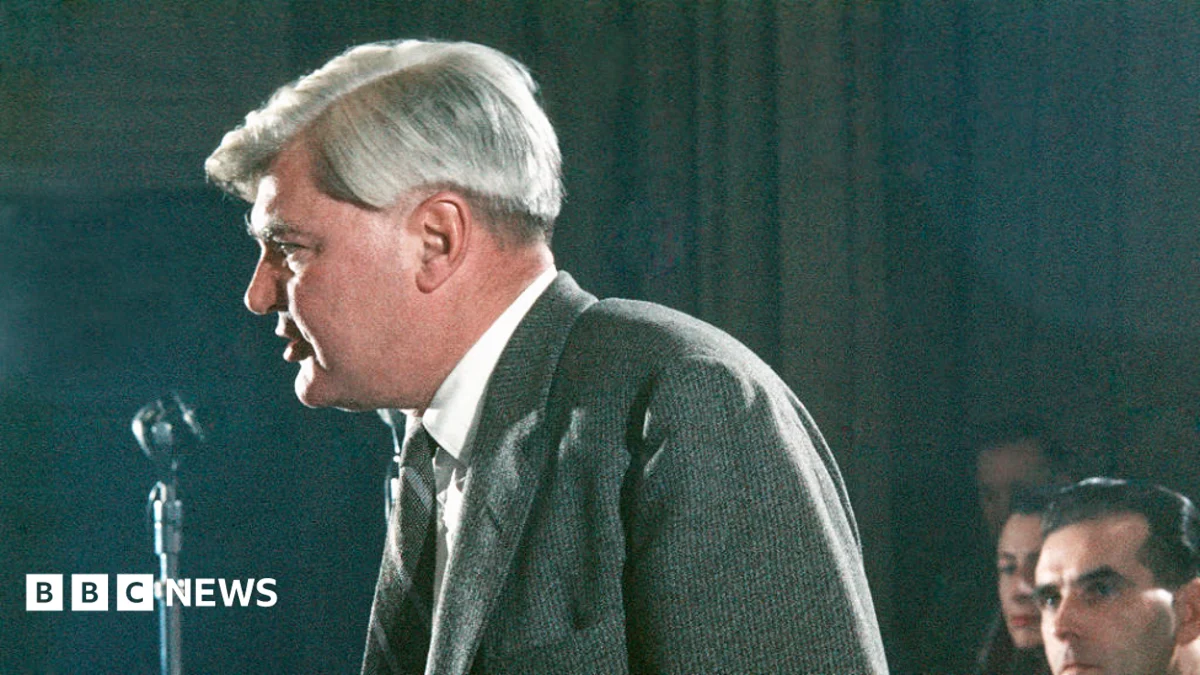
In the 1920s, Tredegar, a town nestled in the heart of South Wales, bore the indelible imprint of industrial might. Private collieries and formidable ironworks exerted an almost absolute dominion over the lives of its working populace. The owners and managers of these enterprises wielded significant influence, their power permeating local institutions, including the town council and the hospital board. It was within this landscape of industrial paternalism and limited individual agency that Aneurin Bevan, the son of a coal miner, grew up. His early experiences, including time spent toiling underground, instilled in him a profound understanding of the constraints faced by ordinary people in shaping their working lives and the conditions of their existence.
The Query Club, an informal but potent intellectual and political collective, emerged as a direct response to this entrenched power structure. As Dr. Nye Davies, a senior lecturer at Cardiff University and a noted Bevan biographer, explains, the club was a crucible for Bevan and his comrades as they grappled with a fundamental question: "How do we actually achieve change here in Tredegar? How do we try to influence things?" The gradual, yet resolute, realization that dawned upon the Query Club was that genuine transformation necessitated a presence within the very loci of power. "I think they decided what we need to do is be on every single committee, every single board, every single institution that has some level of influence in the community and we need to get like-minded socialists on to those boards," Davies elaborates. This strategic imperative, the relentless pursuit of influence and control over decision-making processes, was, according to Davies, the central tenet of the Query Club’s mission.
Among the Query Club’s most influential figures was Walter Conway, a man who stood apart from the predominantly younger membership as the sole individual over the age of thirty. An orphan, Conway’s formative years were spent within the stark confines of the local workhouse. Yet, contrary to the popular perception of neglect and brutality often associated with such institutions, the master of the workhouse fostered in Conway a lifelong love of learning, imparting to him the essential skills of reading and writing. This shared intellectual curiosity formed a significant bond between Conway and Aneurin Bevan.
In 1915, Conway’s burgeoning capabilities and dedication were recognized when he secured the position of secretary for the Tredegar Medical Aid Society, triumphing over fifty other applicants. Similar to initiatives in other industrial towns, the Medical Aid Society was founded by workers who contributed a small portion of their wages to ensure access to medical care when needed. Under Conway’s astute leadership, the society underwent a remarkable expansion. Beginning with a membership of 5,000, it grew to encompass 20,000 individuals by the time of his death in 1933, a figure representing an astonishing 95% of Tredegar’s population. This expansion meant that members gained access to doctors, nurses, dentists, and hospital facilities. Crucially, the society’s inclusivity extended beyond miners to include their wives, children, and even those not employed in the mines, effectively transforming a workers’ health service into a nascent form of universal healthcare, at least within the boundaries of Tredegar.
Simultaneously, another transformative initiative was being spearheaded by the Query Club. They possessed an acute awareness of the established power dynamics within Tredegar. The town’s most significant institutions – the council, the hospital board, the working men’s club, and indeed the Medical Aid Society itself – were largely dominated by board members who were also deeply connected to the dominant economic force, the Tredegar Iron and Coal Company. This inherent affiliation meant that the interests of the company, which were naturally aligned with maintaining the status quo and preserving power within the hands of the affluent, often superseded the needs of the general populace. As committed socialists and active members of the burgeoning Labour Party, the Query Club set their sights on dismantling this entrenched dominance and reorienting power towards the working class.
John Morgan, a local councillor and the great-nephew of one of the original twenty Query Club members, continues to reside in Tredegar and has dedicated himself to researching the town’s rich history. Though the Workman’s Institute, the eventual meeting place for the club following its early gatherings in cafés, is now a relic of the past, the building that once housed the Tredegar Medical Aid Society now serves as the Tredegar Medical Aid Society Heritage Centre. Within its walls, a modest meeting room has been lovingly dedicated to the Query Club, adorned with photographs and informative displays that serve to preserve its memory. "I used to go out walking with my uncle when he was in his 80s and 90s," Morgan recounts. "He died when I was about 12 but if I knew then what I know now I’d have spent hours talking to him about the Query Club because some of the things they got up to – they were radicals." This sentiment underscores the revolutionary spirit that animated the club.
In 1922, the Query Club strategically placed Bevan onto the political stage by nominating him for a seat on the town council. Their efforts bore fruit, and by 1929, the composition of the council reflected their growing influence: out of sixteen members, ten were Labour representatives, and a significant five of these were also members of the Query Club. This marked a crucial step in their quest for broader political power.
Bevan’s ambition, however, extended beyond municipal politics. He recognized the need to ascend to higher levels of authority. His next significant step was his election to the county council in Newport. Yet, as Dr. Davies points out, this still did not satisfy Bevan’s insatiable drive for influence. "Bevan said ‘power is still eluding us, it’s still elsewhere’," Davies explains. This realization propelled him towards what he perceived as the ultimate seat of power: the national Parliament. "And that’s what led him to go to Parliament as the ultimate place where power lay. That quest for power was really what drove the Query Club, what really drove Bevan and inspired him for the rest of his career." In 1929, this vision culminated in his election as the Member of Parliament for Ebbw Vale, marking his entry into Westminster, where he rapidly distinguished himself as a formidable orator.
Dr. Davies attributes a significant portion of Bevan’s development as a compelling public speaker to the formative experiences within the Query Club. "These debates and arguments over ideas were really important in shaping Bevan’s outlook as well," he notes. "One of Bevan’s strengths was his debating skills and his ability to deconstruct arguments." The intellectual rigor and constant engagement with diverse viewpoints fostered within the Query Club provided Bevan with the intellectual armoury and rhetorical prowess that would define his illustrious political career and ultimately shape the landscape of British healthcare.




 George Anjay

 Nakalama John

 atisusanti

 Ramos Leo

 Nana Banana
