
 Nakalama John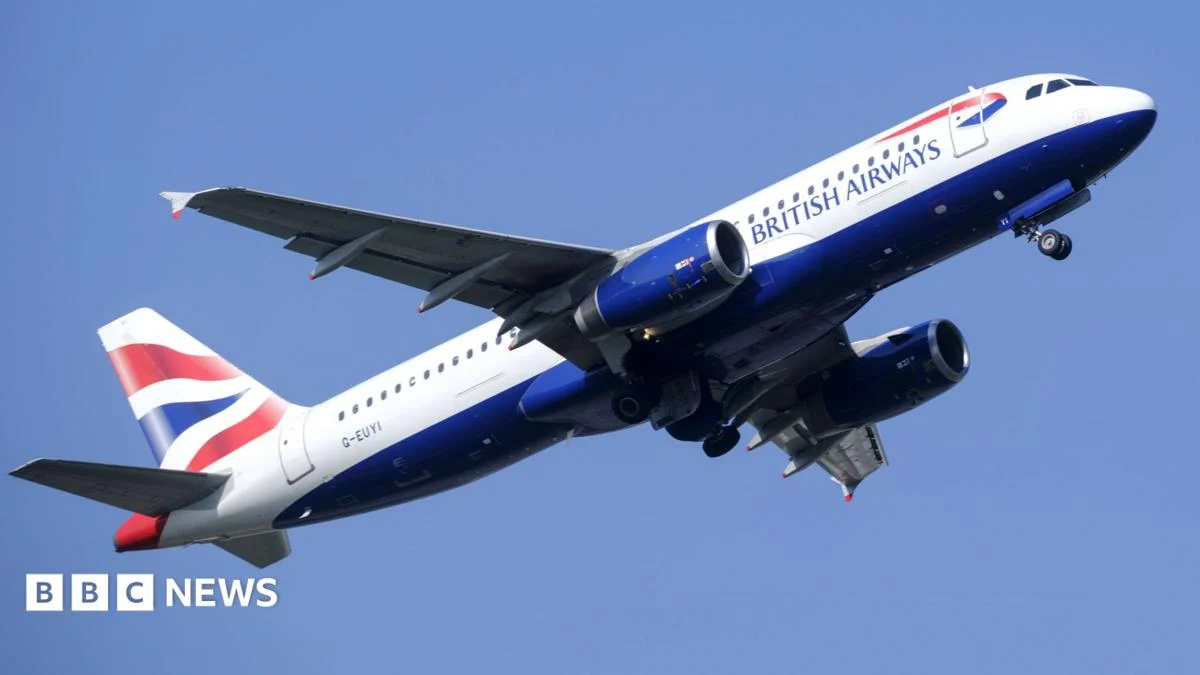
The precise sequence of events leading to the distress call began as the aircraft was making its final descent towards Heathrow. According to the French Air Safety Investigation Authority (BEA), which first brought the incident to light, a data system failure occurred as the plane approached the airport. This failure was significant enough to trigger the first of two stall warnings. A stall warning is an urgent alert indicating that the aircraft’s wings are losing lift, a condition that, if unaddressed, can lead to a loss of control. Modern aircraft are designed with sophisticated systems to prevent stalls, making such warnings rare and highly concerning.
Following the initial data system failure and subsequent stall warning, the flight crew, adhering to standard emergency procedures, transitioned the aircraft into a different operational mode known as "alternate law." Airbus aircraft are equipped with a "fly-by-wire" system that interprets pilot inputs and translates them into control surface movements, often incorporating protective "flight envelope" limits. These limits, part of the "normal law," prevent the aircraft from exceeding safe operational parameters, such as bank angle, pitch, and speed. However, in "alternate law," some of these automated flight protection systems are either degraded or entirely removed. This mode requires greater manual input and awareness from the pilots, placing a higher demand on their skills and judgment in a potentially already stressful situation.
The situation escalated further when, while operating in this "alternate law" mode, a second stall warning occurred. This second warning sounded when the aircraft was at an altitude of approximately 3,000 feet. Aviation experts suggest that at this altitude, the aircraft would have been just a few miles away from Heathrow Airport, placing it firmly within the congested and highly controlled airspace surrounding the busy hub. The recurrence of a critical warning, especially after the flight control system had already degraded, indicated a persistent or worsening issue that presented a clear and present danger to the aircraft and its occupants.
It was at this point, following the second stall warning at 3,000 feet, that the urgency call the crew had previously made was upgraded to a "mayday." An urgency call, known as "PAN-PAN," indicates a serious situation where the aircraft or its occupants are in danger but does not necessarily require immediate assistance. A "mayday" call, on the other hand, is the highest level of distress signal, reserved for situations of "imminent and grave danger" where immediate assistance is required. The decision to upgrade the call signifies that the crew perceived a direct and immediate threat to the safety of the flight, prompting air traffic control to prioritize the aircraft above all other traffic and initiate emergency response protocols.
The United Kingdom’s Air Accidents Investigation Branch (AAIB) has confirmed its involvement, stating it is "investigating a serious incident" concerning the flight on July 6th. A British Airways spokesperson acknowledged the airline was assisting the AAIB with its investigation and, as is standard practice in such ongoing inquiries, was not legally able to comment further at this stage. The BEA website initially attributed its statement to the AAIB, though the AAIB itself would not explicitly confirm the BEA’s detailed account originated directly from them. The AAIB’s official statement merely confirmed: "The AAIB is investigating a serious incident involving a commercial aircraft which occurred on 6 July on approach to Heathrow airport."
Notably, the AAIB indicated that this would be a "correspondence investigation." This term suggests that while the incident is serious, the investigation will primarily involve gathering data and statements remotely, rather than deploying a full field team to the accident site or directly interviewing personnel on location in the immediate aftermath. This type of investigation is often employed when physical evidence is not scattered or immediately accessible at a crash site, or when the initial findings suggest a technical malfunction or procedural issue that can be thoroughly examined through documented evidence, flight data recorders, and cockpit voice recorders. The choice of a correspondence investigation does not diminish the seriousness of the incident but rather reflects the nature of the evidence and the investigative approach deemed most appropriate.
Aviation safety investigator David Gleave provided valuable context regarding distress calls. He explained that there are different forms of mayday calls, and to send an urgency message (PAN-PAN) is "not unusual." Gleave elaborated, stating, "You could have sick passengers on board who need urgent medical attention… so it’s up to the captains’ discretion as to what they call, but it’s very unusual for it to be a significant failure on board the aeroplane." His comments highlight the rarity of a "mayday" call being triggered by a profound technical malfunction, especially in modern, highly automated aircraft like the Airbus A320. While pilots frequently make urgency calls for various non-critical reasons—such as minor medical emergencies, slight technical glitches that don’t pose immediate danger, or even fuel concerns that require priority landing—a "mayday" linked to critical flight control systems is far less common and demands rigorous scrutiny.
The incident underscores the robust safety protocols and extensive training pilots undergo to handle complex emergencies. The ability of the crew to manage a data system failure, revert to an alternate flight control mode, and then navigate a second stall warning while preparing for landing at a busy airport speaks volumes about their professionalism and adherence to emergency procedures. Every pilot is extensively trained to operate aircraft under various degraded conditions, including those where automated protections are reduced, emphasizing manual flying skills and critical decision-making under immense pressure.
Heathrow Airport, being a global aviation hub, operates with extremely tight schedules and complex air traffic control procedures. An emergency declaration like a "mayday" has immediate ramifications, requiring air traffic controllers to clear airspace, divert other incoming or outgoing flights, and prepare emergency services on the ground for a potential incident. The successful landing of the British Airways flight without further complications is a testament to the coordinated efforts of the flight crew, air traffic control, and ground support teams.
The findings of the AAIB and BEA investigations will be crucial in understanding the root cause of the data system failure and the subsequent stall warnings. Such investigations typically delve into the aircraft’s maintenance records, flight data recorder (FDR) and cockpit voice recorder (CVR) information, and the specific software and hardware components involved. The outcome could lead to safety recommendations for Airbus, British Airways, or aviation regulators, potentially influencing software updates, maintenance procedures, or pilot training protocols across the industry to prevent similar occurrences in the future. This incident, while resolved safely, serves as a stark reminder of the continuous vigilance and advanced engineering required to maintain the high safety standards of modern air travel.




 atisusanti
 Nana Banana
 George Anjay

 Ramos Leo