George Anjay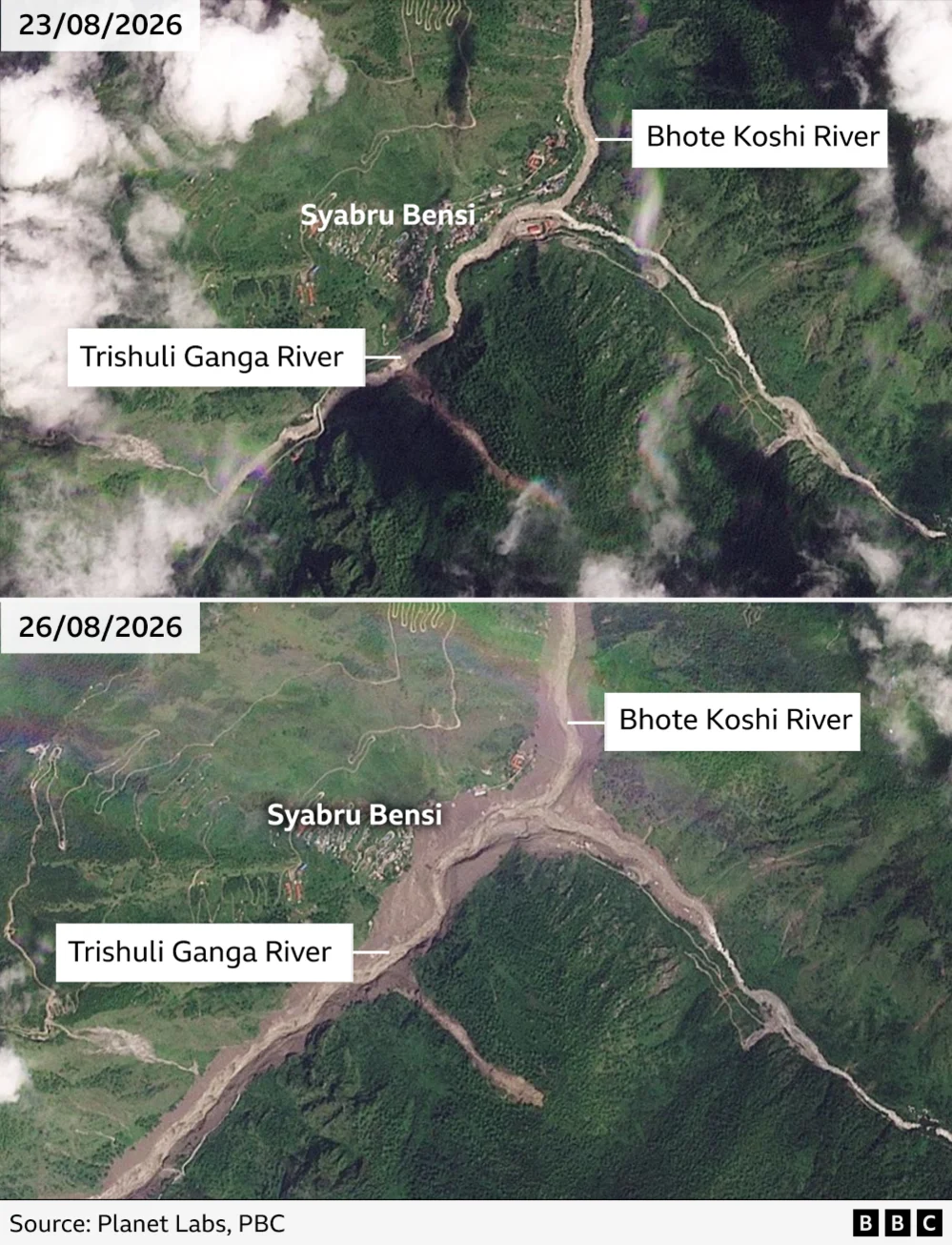
Preliminary investigations have pointed to a collapsed glacier as the probable cause of the catastrophic flash flood that ravaged the Nepal-Tibet border region, underscoring the increasingly urgent issue of rapidly melting Himalayan ice, scientists have revealed to the BBC. Initial reports had widely suggested an earthquake had triggered a landslide, which subsequently led to the devastating flood that has claimed the lives of at least 469 people. However, the U.S. Geological Survey (USGS) later clarified that the disaster was precipitated by a "glacial collapse," a phenomenon where a glacier or a significant portion thereof disintegrates.
The sheer force generated by the collapsed glacier impacting the valley floor was so immense that it registered a magnitude of 5.2 on the Richter scale, according to data from the USGS and analysis by scientists who have meticulously studied the event. Dr. Simon Cook, a leading glacier expert from the University of Dundee, informed the BBC that his team had detected the collapse of the lower section of a glacier situated in Nepal, approximately 15 kilometers (9 miles) west of the flood’s epicenter, near the towering Langtang Lirung peak. He estimates that the glacier disintegrated in a northwesterly direction before cascading westward downstream.
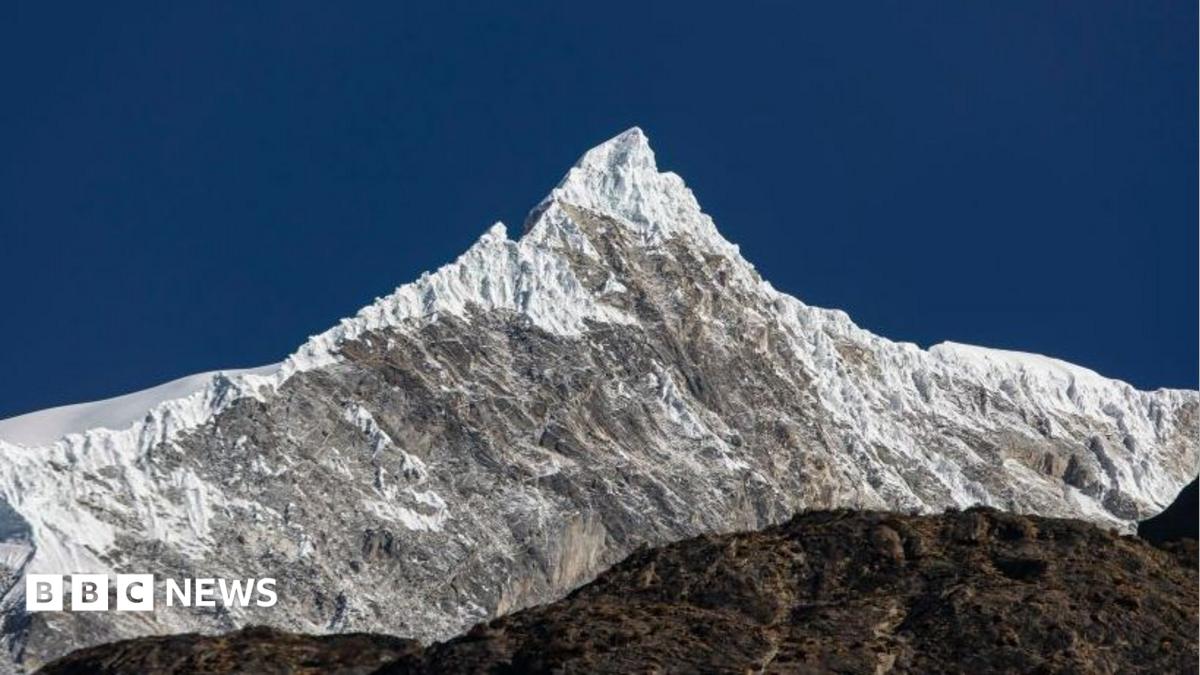
Further analysis conducted by the International Centre for Integrated Mountain Development (ICIMOD), an intergovernmental scientific institution, supports this conclusion. Their findings suggest the event likely involved an "ice-rock avalanche originating from a high-altitude area." This massive surge of ice and rock debris inundated the Lende Khola, a tributary of the Bhote Koshi River. The sheer volume of material entering the river triggered a sudden and violent surge downstream, carrying with it water, sediment, and substantial boulders. According to ICIMOD’s report, water levels in rivers downstream experienced an alarming rise of between seven and nine meters within a mere 30-minute span. The ferocity of the flood was such that several crucial water monitoring stations were either swept away or sustained severe damage.
Professor Mike Searle, a distinguished earth sciences professor at Oxford University, elaborated on the potential sequence of events. He explained that the entire process, from the initial glacial collapse and potential subsequent landslide to the resulting devastating flood, could have unfolded over several hours or even days. "The sheer wave of debris suggests there could have been a landslide first; the water built up, dammed the river, and then it burst in one huge great flood," he stated, emphasizing the catastrophic potential of such events.
The unique topographical features of the region likely exacerbated the flood’s destructive power. Professor Searle highlighted that Langtang Lirung is situated on the crest of the high Himalayas, with "incredibly steep valleys" on either side of the mountain. This dramatic topography would have acted as a natural funnel, channeling the surging floodwaters at significantly higher speeds and with amplified force. Images from the scene starkly illustrate the steep, unforgiving sides of the affected valley, a testament to the powerful forces at play.

The precise trigger for the glacier’s collapse on Wednesday remains under investigation. However, Professor Searle offered a compelling explanation rooted in the complex interplay of geological and climatic factors. He noted that Langtang Lirung, like much of the Himalayas, has been experiencing a gradual uplift due to long-term tectonic movements, where one tectonic plate is pushing another upwards – a process he likened to "putting a jack under the car, and then jacking it up." As the mountain rises, the glacier’s gradient increases, making it more susceptible to gravitational forces. "As the mountain is rising, the glacier gets steeper and steeper, and it’s inevitable that parts of it fall off," he explained.
Typically, such glacial detachments involve smaller chunks that may temporarily dam rivers, but are often easily flushed out. However, the scale of Wednesday’s event, where the "whole glacier seems to have collapsed ‘in one go’," is highly unusual. "These floods happen all the time, but not at this scale," Professor Searle remarked, underscoring the exceptional nature of this disaster. He posited that this catastrophic event was likely the result of "two different processes – tectonics with the Himalayas uplifting, and then climate change with increasingly high temperatures and melting of glaciers." He concluded, "The whole thing is combining to form these catastrophic disasters that we are now seeing at a regular basis."
For years, scientists have sounded the alarm about the accelerating melting of ice and permafrost – centuries-old frozen soil – in the Himalayas, a direct consequence of global climate change. A report released earlier this year by ICIMOD revealed that glaciers in the Hindu Kush Himalaya region are losing ice at double the rate observed since the year 2000. This accelerated melting significantly increases the risk of hazards such as devastating floods.
Dr. Cook pointed to a growing pattern of similar incidents occurring globally. He noted that in recent years, there have been comparable floods and landslides triggered by glacier collapses in countries like India, Switzerland, and Italy. A particularly stark example occurred in 2021 when a massive section of a Himalayan glacier collapsed in the Chamoli valley in northern India. The resulting deluge of debris and water claimed the lives of 200 people. Scientists later estimated the impact of that collapse to be equivalent to that of 15 atomic bombs, highlighting the immense destructive potential of these glacial events.
Even within Nepal, the same region has experienced similar catastrophic floods in the past. Last year, a glacial lake in Tibet burst, unleashing floodwaters that caused significant damage. Mohd Farooq Azam, a specialist at ICIMOD, observed that the increasing frequency of hazards in the cryosphere – the frozen parts of the Earth – "is becoming more visible than ever before. The pace of change is so rapid."
While it remains challenging to definitively attribute any single event solely to climate change, Dr. Cook emphasized the undeniable trend. "When you look at the pattern of these events, you do think climate change could have an impact," he stated. The scientific rationale is clear: as the planet warms, glaciers shrink, and snowmelt intensifies. The permafrost that helps stabilize mountainsides is also warming and thawing, leading to degradation. "So you are going to get more landslides, debris flows, glacial meltwater, lake outbursts, glacier collapses, because climate warming ultimately destabilises these high mountain environments," he concluded, painting a sobering picture of the future challenges facing these fragile ecosystems.




 Roy Suryo

 Nakalama John
 atisusanti
 Ramos Leo