Nana Banana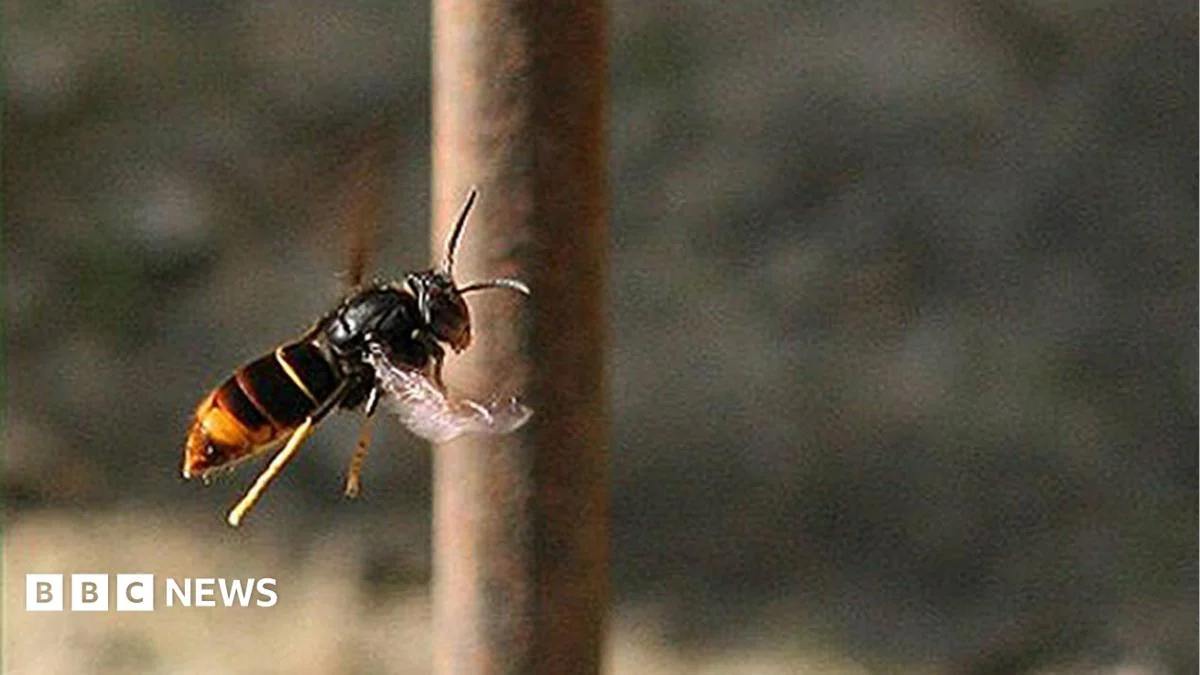
The journey of the Asian hornet into Europe began in 2004, when it reportedly arrived in southern France, having unwittingly hitched a ride within a consignment of pottery imported from Asia. Its subsequent spread across the European mainland was alarmingly swift, a testament to its adaptability and the absence of natural predators in its new environment. By 2017, the species had crossed the Channel, making its initial appearance in Guernsey. Since then, it has become a significant concern for the States of Guernsey, which recognises the hornet’s substantial capacity for ecological disruption.
One of the most alarming aspects of the Asian hornet’s presence is its devastating impact on local insect populations, particularly honeybees. Studies have shown that honeybees constitute, on average, a staggering 39% of the Asian hornet’s diet. This predatory pressure is not merely a nuisance for beekeepers; it represents a profound threat to the island’s agricultural sector, which relies heavily on bee pollination for numerous crops, and to the broader ecosystem, where native wildflowers and plants depend on these vital pollinators. Beyond honeybees, Asian hornets also prey on a wide array of other native insects, including hoverflies, wasps, and other beneficial pollinators, potentially cascading through the food web and altering the very fabric of Guernsey’s biodiversity. The long-term ecological damage could be irreversible, leading to declines in native insect populations, which in turn affect bird species and other wildlife that depend on insects for food.
The States of Guernsey’s overarching aim is not necessarily eradication, which is often an unattainable goal for well-established invasive species, but rather to keep hornet numbers sufficiently low to mitigate their detrimental effects. This objective hinges entirely on early detection and rapid response, which is why public participation in reporting sightings is paramount. By locating and destroying primary nests early in the season, before they can mature and produce thousands of new queens, the island can significantly curb the species’ reproductive capacity and spread.
Central to this strategy is the "Track Don’t Trample" campaign, extensively promoted through the States’ dedicated webpage and public awareness initiatives. This campaign provides clear, actionable advice to islanders. If an Asian hornet is spotted, the immediate inclination might be to swat or kill it. However, the "Track Don’t Trample" message specifically urges against this. Trampling or killing a hornet destroys crucial evidence that could lead to the discovery of its nest. Instead, islanders are asked to observe the hornet carefully, noting its direction of travel. Asian hornets typically fly in a straight line from their foraging area back to their nest, a behaviour known as a "bee-line." Capturing this directional information is invaluable for tracking teams.
Following observation, the next critical step is to take a clear photograph of the hornet. The photo should ideally show its distinguishing features: a largely dark body, yellow legs, a distinct yellow band on the fourth abdominal segment, and an orange face. This visual evidence helps confirm the identification, differentiating it from native European hornets, which are less aggressive and pose less of a threat. Once a photo is secured and the direction of travel noted, this information must be submitted promptly through the designated online portal on the gov.gg website. The speed of reporting is crucial, as nests can expand rapidly, making them harder to manage later in the season.
The effectiveness of this strategy is already evident in the reported figures for the current year. So far, 205 Asian hornet queens have been successfully caught, and nine primary nests have been located and destroyed across Guernsey and its smaller sister island, Herm. These numbers represent significant interventions that prevent a potential explosion in the hornet population. Each queen caught or nest destroyed eliminates the potential for hundreds, if not thousands, of new hornets to emerge and further threaten the ecosystem.
Annelotte Baas-Jehan, the Invasive Non-Native Species Policy & Coordination Officer for the States of Guernsey, has highlighted the indispensable role played by volunteers in these efforts. "Their work is incredibly important," she stated, emphasizing the community-driven nature of the defence against this invasive species. Volunteers are often the first line of defence, engaged in tasks such as monitoring bait stations, identifying suspected hornets, and conducting initial tracking. They undergo training to accurately identify the species and understand the protocols for reporting and initial tracking. This widespread public engagement transforms individual vigilance into a collective protective shield for the island. "With this information," Baas-Jehan added, "we can track hornets back to their nests and ensure that those nests are being treated and removed safely and efficiently."
The States of Guernsey strongly reiterates its warning to islanders against attempting to remove nests themselves. Asian hornet nests can become remarkably large and dangerous, particularly as the season progresses through August and September. During this period, a single nest can rapidly expand to house up to 2,000 hornets. Disturbing an active nest can provoke a highly aggressive swarm defence, leading to multiple painful and potentially dangerous stings. For individuals with allergies, such an encounter could be life-threatening. Professional removal teams are equipped with specialised protective gear and methods to safely neutralise and remove these nests, minimizing risk to the public and ensuring the nest is fully destroyed.
Asian hornet nests can be found in a variety of locations, from natural settings to man-made structures. Common sites include the high branches of tall trees, dense hedges, thick bramble patches, and within buildings such as sheds, attics, outbuildings, and even under eaves. They often build primary nests in sheltered, low-lying spots early in the season, which are then abandoned for larger, secondary nests typically found higher up in trees or other structures as the colony grows.
Given their varied nesting habits, the States urged islanders to exercise caution when undertaking garden maintenance or outdoor activities. "Check carefully for signs of activity before you cut back hedges or vegetation," the advisory stressed. This proactive vigilance can prevent accidental disturbance of a hidden nest, averting a potentially dangerous encounter. Signs of activity include a steady stream of hornets entering and exiting a specific area, or the presence of numerous hornets foraging in a concentrated location.
The ongoing battle against the Asian hornet in Guernsey is a testament to the challenges faced by island communities in protecting their unique environments from invasive species. While the immediate goal is containment and population control, the long-term vision involves continuous monitoring, public education, and rapid response to mitigate the ecological and economic damage. The collaboration between government agencies, dedicated volunteers, and an informed public is the cornerstone of this defence, ensuring that Guernsey’s rich biodiversity and essential pollinator populations remain protected for future generations. The simple act of "tracking not trampling" empowers every resident to play a vital role in this crucial conservation effort.




 Roy Suryo

 Nakalama John
 atisusanti
 Ramos Leo