
 Nana Banana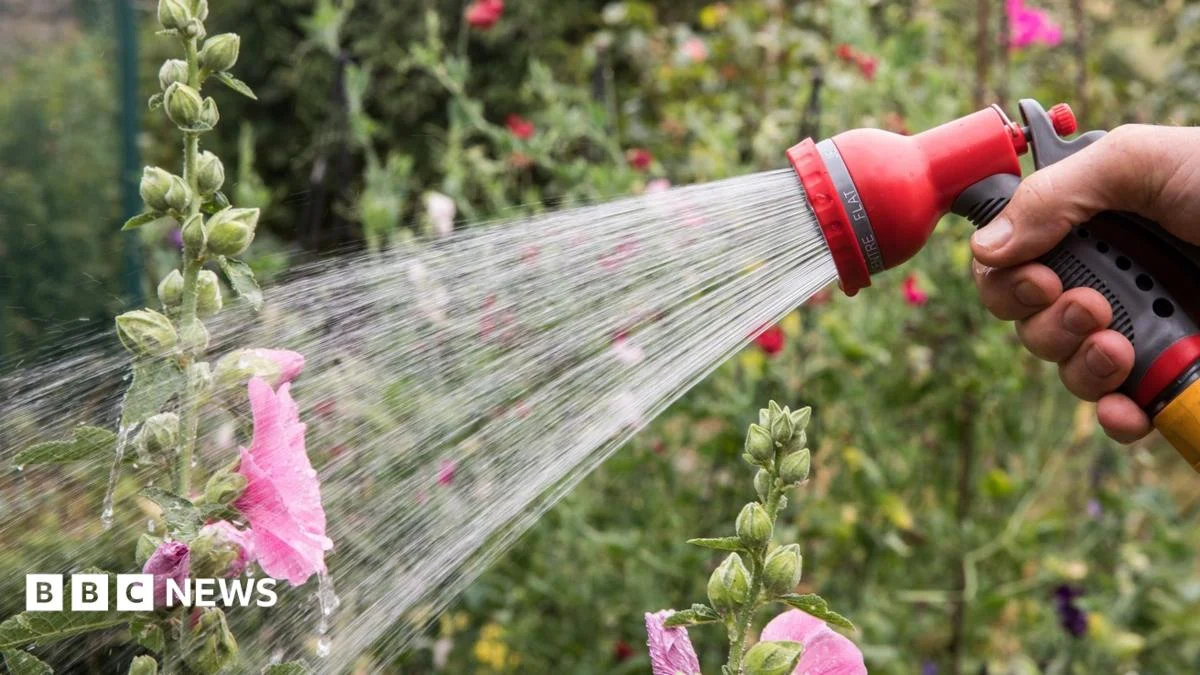
The declaration of a drought across significant parts of the UK has triggered a wave of new hosepipe bans, intensifying concerns over the nation’s water resilience in the face of a changing climate. While there is no singular, universally accepted definition of drought, it is broadly characterised by a prolonged period of significantly reduced rainfall. As the ground progressively dries out, the immediate and visible impact is often seen in the natural environment, with crops struggling, gardens wilting, and wild vegetation becoming parched and brittle. Should these dry conditions persist over an extended duration, the consequences cascade through the water system: rivers experience diminished flows, reservoirs see their levels fall dramatically, and critical groundwater reserves are depleted. This cumulative effect places immense pressure on the available water supplies, threatening both public consumption and environmental health.
In the UK, the authority to declare a drought or water scarcity rests with dedicated environmental bodies in each constituent nation. These organisations, such as the Environment Agency in England, Natural Resources Wales, the Scottish Environment Protection Agency (SEPA), and the Department of Agriculture, Environment and Rural Affairs (DAERA) in Northern Ireland, undertake a rigorous assessment process. They meticulously evaluate current water resources, including rainfall deficits, river flow rates, reservoir storage levels, and groundwater tables, while also integrating sophisticated weather forecasts to anticipate future conditions. This comprehensive approach allows them to make informed decisions about the severity of the situation and the necessary response measures.
Both the declaration of a drought and the assessment of water scarcity can, and frequently do, lead to the imposition of hosepipe bans, if such restrictions are not already in place. It is crucial to distinguish between these two related but distinct concepts. Drought is primarily an environmental phenomenon, driven by prolonged and widespread dry weather patterns that result in a deficit of natural water availability. Water scarcity, on the other hand, occurs when the demand for water from human activities and ecosystems outstrips the available supply, regardless of the immediate weather conditions. This summer, a confluence of factors – most notably record-breaking temperatures and a surge in domestic water usage – has seen restrictions introduced in numerous areas to help manage the unprecedented high demand and safeguard dwindling resources. Several major water companies across England, including Southern Water, South East Water, Welsh Water, and Thames Water, have already implemented or announced plans for hosepipe bans, affecting millions of households and businesses. These bans typically prohibit the use of hosepipes for watering gardens, cleaning cars, filling swimming pools, and other non-essential activities, with fines potentially reaching £1,000 for non-compliance.
The current situation has raised pertinent questions about the UK’s water management strategies and its preparedness for the future. While recent months have seen temperatures regularly exceed 35°C, creating arid conditions, the preceding winter was, perhaps surprisingly, much wetter than usual across many regions. This apparent contradiction – a wet winter followed by an acutely dry summer – has highlighted potential vulnerabilities in how effectively water resources are captured, stored, and distributed. Critics argue that insufficient investment in infrastructure prevents the efficient storage of winter rainfall for use during drier periods, leading to a feast-or-famine cycle that is becoming increasingly unsustainable. Furthermore, there is growing concern about whether the UK is adequately prepared for the drier, hotter summers that are widely expected to become more frequent and intense as a consequence of global climate change.
Droughts are inherently complex phenomena, driven by an intricate interplay of both natural climatic variability and human-induced factors. The Met Office, drawing on climate modelling and projections, anticipates that the UK will, on average, experience drier summers in the future as the world continues to warm, although a clear, consistent trend has not yet been definitively established. However, rising atmospheric temperatures play a more direct and immediate role by significantly increasing the rate at which moisture evaporates from the soil, vegetation, and surface water bodies. This enhanced evaporation exacerbates the drying effect, depleting water reserves more rapidly than would otherwise occur.
Richard Allan, a professor of climate science at the University of Reading, succinctly explains this dynamic: "A warmer atmosphere is thirstier for moisture and this can mean water in the soil, rivers and reservoirs are depleted more effectively, leading to more rapidly onsetting droughts, heatwaves and wildfires." This "thirstier atmosphere" effect means that even if rainfall patterns remain relatively stable, the increased evaporative demand can quickly push regions into drought conditions, creating a feedback loop where dry soils lead to hotter temperatures, further accelerating desiccation and increasing the risk of extreme events like heatwaves and devastating wildfires.
Beyond the direct influence of climate, other critical factors determine whether dry conditions escalate into acute water shortages. Foremost among these is how society uses and manages its water resources. In a landmark review into the water sector of England and Wales, privatised water companies faced severe criticism for what was described as historic underinvestment in crucial water infrastructure. This neglect has manifested in various ways, including ageing pipe networks prone to significant leakage and a lack of substantial new water storage facilities. The review underscored that while individual consumption habits contribute to demand, systemic failures in infrastructure management play a considerable role in exacerbating water stress. Estimates suggest that billions of litres of treated water are lost daily through leaks in England alone, a figure that is widely seen as unacceptable, particularly during periods of scarcity.
In response to these challenges and as part of comprehensive plans to address future water shortages, the government and water companies in England are collectively planning for the construction of nine new reservoirs by 2050. These ambitious projects are designed to significantly increase the nation’s water storage capacity and enhance its resilience against future droughts. This is in addition to one already under construction at Havant Thicket in Hampshire, which, once completed, will provide a vital new water source for the region. However, building new reservoirs is a complex undertaking, involving extensive planning, environmental impact assessments, and substantial financial investment, often facing local opposition due to their scale and potential ecological footprint.
Despite these long-term infrastructure plans, the Environment Agency (EA) has issued stern warnings that more immediate and robust measures to tackle water leaks and control overall water demand – potentially including more widespread and prolonged hosepipe bans – may be urgently needed across England in the coming years. The EA has set ambitious targets for water companies to reduce leakage by 50% by 2050, emphasising that this is a non-negotiable step towards ensuring future water security. Furthermore, beyond just leakage, greater emphasis is being placed on demand management strategies, such as encouraging water metering, promoting water-efficient appliances, and fostering public awareness campaigns to encourage prudent water use in households and businesses.
It is worth noting the differing structures of water provision across the UK. While England and Wales largely operate under a privatised model, water companies in Scotland, Wales, and Northern Ireland are either public bodies or non-profit entities. Despite these structural differences, all have acknowledged the escalating challenges posed by climate change and increasing demand. Scottish Water, Dŵr Cymru Welsh Water (a not-for-profit company), and Northern Ireland Water have each affirmed that they are taking proactive steps to secure future supplies, including investments in network upgrades, leakage detection technology, and long-term resource planning to ensure their respective nations are prepared for the drier conditions and higher demand expected in the decades to come. The current drought declaration serves as a stark reminder that water, often taken for granted, is a finite and increasingly vulnerable resource that requires careful management, significant investment, and collective responsibility to safeguard for future generations.

 Ramos Leo
 Nakalama John
 Roy Suryo
 atisusanti
 George Anjay