
 Nakalama John
The US economy unexpectedly shed jobs last month, indicating a significantly weaker employment market performance over the summer than previously estimated, according to official figures. This marked a stark contrast to analysts’ predictions of continued growth, with a net loss of 23,000 jobs reported, driven primarily by declines in local government education and retail sectors. The Bureau of Labor Statistics (BLS) further exacerbated concerns by revising down job additions in May and June by a substantial 103,000, painting a clearer picture of a sustained slowdown in job creation throughout the crucial summer months.
This unexpected deceleration in the labor market carries significant implications for monetary policy, potentially easing the pressure on the US central bank, the Federal Reserve, to raise interest rates at its upcoming meeting, despite persistent high inflation. Economists quickly highlighted how the latest figures could alter the Fed’s calculus. Nancy Vanden Houten, lead economist at Oxford Economics, noted that expectations of further interest rate hikes had already been "scaled back" since the Fed’s last policy decision, and this new data would likely reinforce that sentiment. Indeed, US stock markets reacted positively to the news, opening higher on Friday, as investors anticipated that weaker economic data might lead to a more dovish stance from the central bank, potentially averting further increases in borrowing costs.
The surprise job loss of 23,000 was a stark reversal from expectations; analysts had broadly forecast an uptick of approximately 80,000 jobs being added to the economy last month. This substantial divergence underscores the unexpected nature of the slowdown. The steepest declines were observed in specific sectors. Local government education roles saw significant cuts, a trend that could reflect post-pandemic adjustments in school staffing, budgetary constraints faced by local municipalities, or shifting demographics impacting student enrollment. The retail sector also experienced considerable contraction, with job losses spanning a range of establishments including wholesale stores, large hypermarkets, gas stations, and general merchandise shops. This weakness in retail employment suggests a cautious consumer environment, intensified competition from e-commerce platforms, or ongoing automation in inventory and checkout processes.
Beyond these primary drivers, the downward revisions to May and June job growth further solidify the narrative of a cooling labor market. The initial estimates, which suggested a more robust employment picture, have now been corrected to reflect a much slower pace of hiring and job creation over the past few months. This pattern of revision often indicates underlying weaknesses that are not immediately apparent, and it signals that the economic momentum was less vibrant than previously believed, potentially extending the period of subdued job growth well into the autumn.
Despite the net shedding of jobs, the Bureau of Labor Statistics reported a puzzling dip in the unemployment rate, falling to 4.1% from 4.2%. This seemingly contradictory movement can be attributed to a slight decline in the labor force participation rate – the number of people actively working or looking for work. When fewer people are seeking employment, even with job losses, the unemployment rate can technically fall. This trend, however, is a cause for concern, as it suggests that some individuals may be discouraged and exiting the job market altogether, rather than finding new opportunities. Neil Birrell, chief investment officer of Premier Miton, pointed out that "labour force participation is back at levels not seen since the days of Covid, meaning jobs just aren’t being created." This indicates a structural challenge where the pool of available workers is shrinking, potentially limiting economic output and future growth capacity.
Wage growth also showed signs of moderation, with average hourly earnings rising by 3.2% in the year to July, falling short of economists’ expectations of 3.5%. The average hourly earnings for all employees on private non-farm payrolls stood at $37.62. While any wage growth is generally positive, this slower pace, particularly when juxtaposed against an annual inflation rate of 3.5%, means that real wages are effectively declining for many workers. This erosion of purchasing power could further dampen consumer spending, a critical engine for the US economy, as households find their budgets stretched by rising costs for essential goods and services.
Birrell underscored the severity of the situation, stating that while payrolls do have a tendency to be softer in July due to seasonal factors, the US jobs market was weaker "by some distance" than typical seasonal fluctuations would suggest. This profound weakness presents a complex challenge for the Federal Reserve. The Fed operates under a dual mandate: to maintain price stability (control inflation) and to achieve maximum sustainable employment. The current environment forces the central bank to navigate a delicate balance where inflation remains elevated, yet the job market, a key pillar of economic health, is faltering.
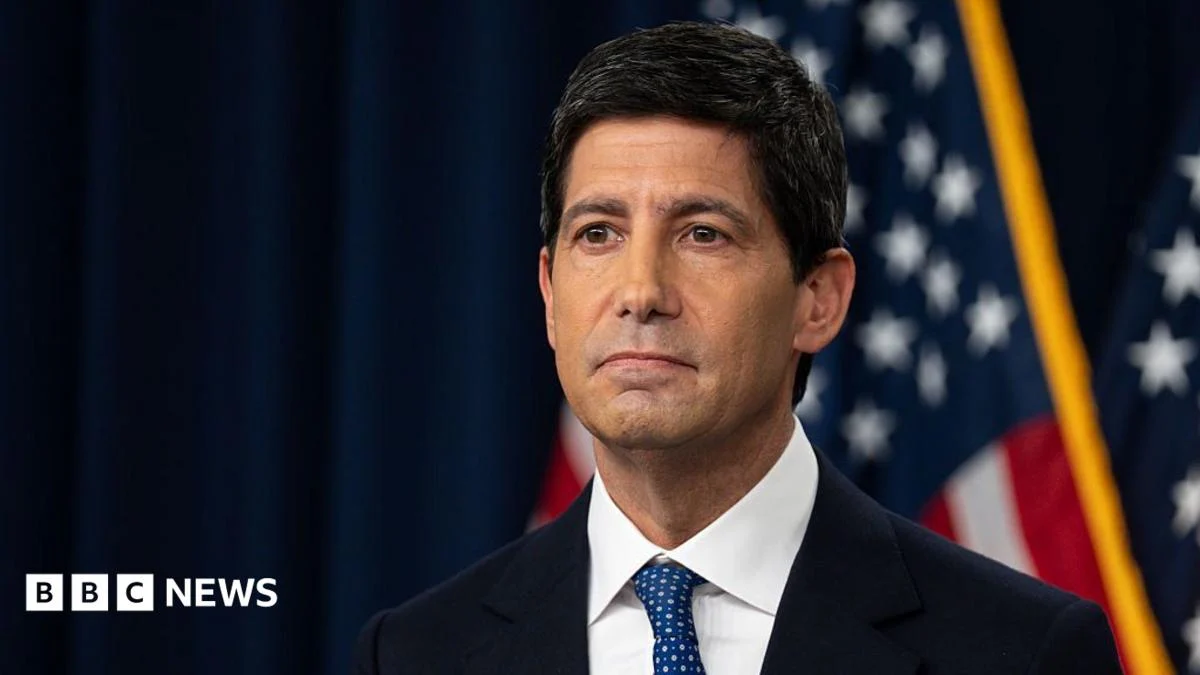
Kevin Warsh, the newly-appointed chair of the Federal Reserve, has offered little forward guidance on the future path of interest rates, marking a notable policy shift from previous leadership. This deliberate ambiguity is intended to provide the Fed with greater flexibility in responding to evolving economic data. Warsh has repeatedly emphasized his commitment to bringing inflation down, which has been running at an annual rate of 3.5%. However, the latest jobs figures complicate this mission. While a weaker job market might naturally cool demand and thus inflation over time, it also risks pushing the economy into a more severe downturn, conflicting with the Fed’s employment mandate.
Interest rates were left unchanged, as broadly expected, between 3.5% and 3.75% last month. However, the persistent upward pressure on consumer prices, exacerbated by global geopolitical tensions, continues to be a major headache for policymakers. The Middle East conflict, in particular, has had a tangible impact on global oil prices, which directly translate into higher energy costs for consumers and businesses alike. Following recent escalations in the region, gasoline prices have once again climbed above $4 on average across the US, according to the AAA, with diesel nearing $5.40 a gallon. These elevated fuel costs ripple through the entire economy, increasing transportation expenses for goods, raising manufacturing costs, and ultimately contributing to broader inflationary pressures that consumers feel in their daily lives.
The interplay between a softening job market, stubbornly high inflation, and rising energy costs creates a precarious economic landscape. For the Federal Reserve, the decision in September will be a "big call," as Birrell put it. Raising interest rates further to combat inflation, while typically effective, could exacerbate the slowdown in employment and potentially tip the economy into a recession. Conversely, holding rates steady or even considering cuts to support the labor market might risk allowing inflation to become entrenched, eroding purchasing power and long-term economic stability. The surprise fall in US jobs last month has not only highlighted the fragility of the post-pandemic recovery but has also intensified the difficult balancing act facing the nation’s central bank.



 atisusanti
 Nana Banana
 George Anjay
 Ramos Leo