Nana Banana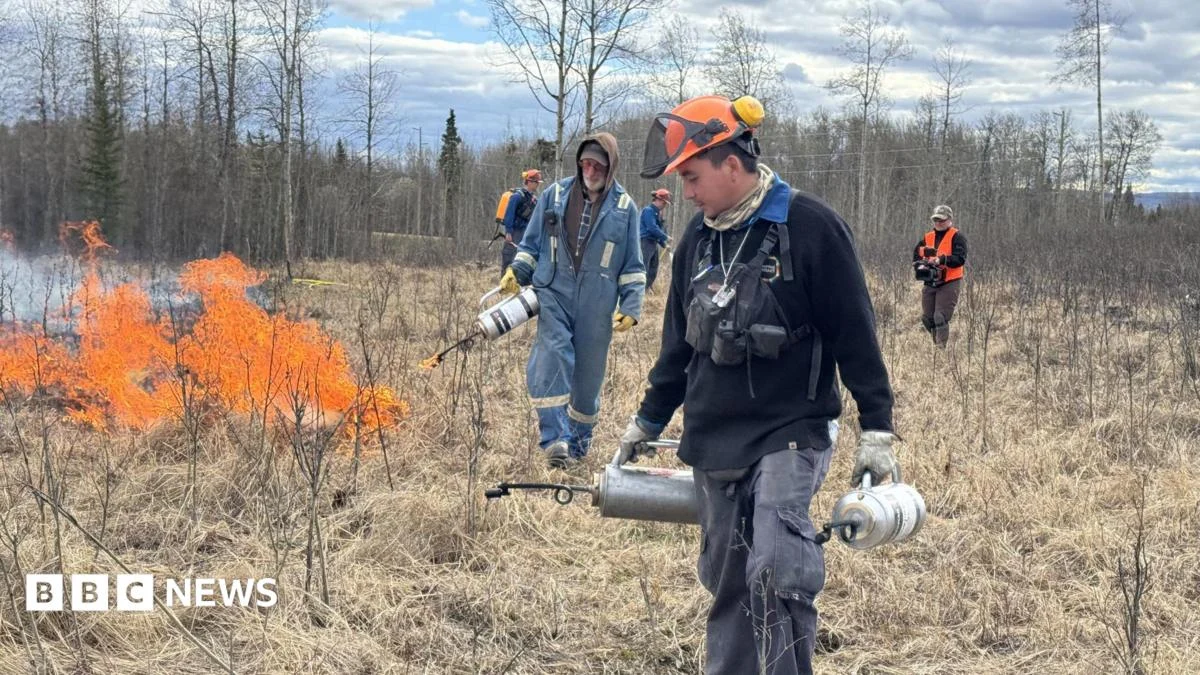
When a devastating wildfire ignited perilously close to his ancestral First Nation community in northern Ontario, Hubert Wigwas made a resolute choice: he would stay. Rather than join the mandatory evacuation, the 58-year-old councillor from Gull Bay First Nation, also known as Kiashke Zaaging Anishinaabek, prepared for a stand. He meticulously installed sprinklers on his roof, a makeshift defense against the relentless hail of embers carried on the wind. He moved through his community, checking on the most vulnerable elders who, like him, had chosen to remain, ensuring their safety and readiness. Down by the lake, he fuelled four boats, each one a potential escape route should the inferno breach their defenses. "This is everything I’ve built in my 58 years," Wigwas confided to the BBC, his voice imbued with a fierce determination. "I’m just not going to run away and let it burn." His decision was not born of recklessness, but a deep-seated connection to his home and a stark realization of the challenges facing remote communities in an era of escalating climate change.
Canada has endured a series of increasingly severe wildfire seasons in recent years, culminating in the most destructive on record in 2023. That year, blazes ravaged an incomprehensible expanse of forest, scorching an area roughly the size of Syria – or more than half the landmass of the United Kingdom. As of August this year, over 750 wildfires continue to burn actively across the country, turning vast tracts of its iconic wilderness into scorched earth. The environmental devastation is profound, impacting biodiversity, air quality, and the delicate balance of the boreal forest.
The ramifications of these infernos have stretched far beyond Canada’s borders. Smoke plumes, dense and acrid, frequently drifted southward, choking the air in major cities across the US Midwest, turning skies an apocalyptic orange and prompting widespread health advisories. Even high-profile political figures have taken notice, with former President Donald Trump famously threatening to impose further tariffs on Canada, citing the "filthy, polluted" air wafting south across the border. These escalating wildfires have ignited a critical national conversation, probing uncomfortable questions about Canada’s preparedness and future resilience: Are there sufficient firefighting resources to confront these increasingly challenging fire seasons? What are the true consequences when these resources are stretched perilously thin? And perhaps most pressingly, how can remote communities, often situated closest to the danger zones due to their proximity to Canada’s vast boreal forest, learn to coexist with this new, fiery reality?
Hubert Wigwas wrestled with these very questions when he made his courageous decision to stay. His defiance, however, came with a price: he faces a fine of approximately C$800 ($570; £425) for contravening mandatory evacuation orders. The leadership of Gull Bay First Nation had been consistently urging residents to evacuate since mid-July, as more than 150 wildfires raged across Ontario’s northwest. On July 29, the Chief penned a fervent letter, pleading with those who remained to leave immediately, emphasizing that provincial firefighters could not safely perform their duties with residents still in their homes. This urgent message echoed similar pleas from officials in British Columbia, where approximately 115 fires were actively burning at the time, underscoring a nationwide challenge of balancing public safety with individual resolve.
Yet, as a wildfire burned just 24 kilometres outside his community in late July, Wigwas recounted a stark reality: he had yet to see any provincial fire personnel arrive to help fireproof properties or assist the elders who had chosen to stay behind. This experience, he said, illuminated a critical gap and crystallized his belief that his First Nation would profoundly benefit from establishing its own dedicated wildfire emergency response system. This system, he envisioned, would empower residents with the knowledge and tools to protect their own homes and community. "Everybody talks about climate change, but nobody is doing something to unite the (First Nations) reserves and have a system like that set up," Wigwas lamented, expressing a common sentiment of feeling isolated and underserved. Dave Bradley, a spokesperson for Ontario’s Ministry of Natural Resources, did not directly address Wigwas’s specific claim but asserted that the province maintains "constant contact" with First Nations leaders. He added that firefighting resources are strategically deployed based on "fire behaviour, weather conditions, and risks to communities," implying a centralized, data-driven approach.
In the west-coast province of British Columbia, long considered the front line of Canada’s wildfire response, communities are already embracing the very proactive, self-reliant model that Wigwas envisions for Gull Bay. Here, significant efforts are underway to train residents of rural and remote communities on how to safely respond to wildfires, often before official out-of-town crews can arrive. Sonja Leverkus, a dedicated wildfire researcher and specialist, has been instrumental in this movement. Over the past three years, she has personally helped train more than 400 individuals in and around her community of Fort Nelson through a pioneering firefighting group she co-founded: the Northeast BC Rural Incident Management Team. Leverkus shared with the BBC that her efforts stem from a profound realization: Canada urgently needs to fundamentally alter its approach to wildfire management, given the increasing frequency and intensity of blazes driven by climate change. "There are not enough human beings in Canada," she stated emphatically, referring to those with the appropriate training, "to fight the fires that we have currently, especially over the last five years."
Leverkus explained that remote communities, where the nearest town might be hundreds of kilometres away, can sometimes find themselves lower on the priority list for BC firefighting crews. This often occurs when more populated areas face immediate threats, leaving isolated settlements feeling vulnerable and exposed. Her crew, predominantly composed of Indigenous members, has taken direct action. They have conducted prescribed burns, also known as hazard reduction burns – a crucial practice involving the setting of planned, controlled blazes to strategically remove accumulated fuels that could otherwise contribute to uncontrollable wildfires. They have also successfully extinguished smaller fires before they could escalate into devastating conflagrations, utilizing specialized fire wagons purchased through community fundraising and grants. Leverkus noted that her team often arrives ahead of provincial fire crews, subsequently working in close tandem with them, demonstrating a powerful synergy between local initiative and provincial support.
The effectiveness of this community-led approach was dramatically demonstrated when a major wildfire tore through Fort Nelson in 2024. Leverkus recounted how she and 40 of her team members chose to stay behind. Their expertise was invaluable; they were subsequently hired by the province to clear flammable materials and actively support broader fire suppression activities, becoming an integral part of the official response. Beyond active firefighting, Leverkus also organized a comprehensive structural protection training course for locals. This course equipped residents with vital skills to shield buildings from wind-borne embers, which can rapidly ignite secondary fires and engulf entire towns. "We have mechanics, we have carpenters, we have real good problem solvers," Leverkus proudly declared, highlighting the diverse skill set within her community. "We’re all not afraid to stay."
Cam Allen, a 70-year-old former helicopter pilot from Fort Nelson with a history of fighting fires from the air, recently participated in Leverkus’s course. He sought to learn ground fire suppression techniques and, more broadly, how to effectively contribute if a blaze were to threaten his town. Allen drew inspiration from the widely publicized story of John Carr, a California man who went viral last year for successfully defending his home with a garden hose during the Palisades fire, even as surrounding properties succumbed to the flames. "It makes you wonder, if 100 people had stayed or 1,000 people had stayed behind and actually did what he did, how much more could have been saved?" Allen pondered, articulating a sentiment shared by many who feel compelled to protect their homes.
However, the "stay and defend" mindset is not without its tragic pitfalls. Not all who defied evacuation orders during the Los Angeles fires were as fortunate as Carr. Those fires claimed a total of 29 lives, with some fatalities occurring among individuals who, like Carr, had chosen to remain to protect their homes, despite urgent pleas from officials for thousands in the area to evacuate. This stark reality underscores the inherent dangers and complexities of such decisions. Leverkus’s group, while effective, is not officially recognized by BC’s government. Their very existence and mission highlight the simmering tensions in fire-prone regions between authorities enforcing mandatory evacuation orders and determined residents who defy them, driven by a deep attachment to their properties and a sense of self-reliance. Just last week, wildfire crews in BC were forced to undertake a perilous rescue mission when a man’s home in the Village of Clinton became engulfed in flames after he had steadfastly refused to evacuate. In a wildfire update on Tuesday, BC’s Minister responsible for emergency management, Kelly Greene, firmly reiterated that all individuals under evacuation orders must leave. "We may not be able to get back to you if an emergency happens," Minister Greene warned, emphasizing that evacuation orders are issued only as "a last resort to keep people and communities safe."
Paul Kovacs, a distinguished researcher at the University of Western Ontario and director of its Catastrophic Loss Reduction Institute, provided an academic perspective. He noted that Canada has historically maintained a lower fatality rate from wildfires, despite their increasing frequency, partly due to its rigorous evacuation approach. The "stay and defend" mindset, he explained, "is aggressively opposed" by the academic community in Canada, a stance that differs significantly from other fire-prone countries like Australia, where it is more commonly accepted under specific conditions. "In the hierarchy of what is it that you do to manage a wildfire, preservation of life is first," Kovacs asserted, underscoring the paramount importance of human safety. He acknowledged that rural and remote communities have a vital role to play in informing officials on the most effective ways to protect their towns and can accomplish substantial work in fireproofing homes and structures. However, he argued that such crucial work "should not be done while the fire is burning."
A spokesperson for BC’s Ministry of Forests informed the BBC that self-organized groups in rural areas can indeed be temporarily hired by the province during an active wildfire incident. This, however, is contingent on a critical condition: only when there are no more available provincial firefighters in the area. The ministry also highlighted its efforts to bolster official capacity, noting that BC Wildfire’s full-time staff has increased by 56% in recent years to better respond to the growing frequency of fires, in addition to its seasonal staff. Leverkus, ever forward-thinking, revealed that she is actively exploring avenues to secure official recognition for her program from BC officials. Her goal is to ensure that those trained through her initiative can contribute to fire suppression efforts without facing penalties for staying behind. She stressed that safety precautions are deeply ingrained in her courses, which include comprehensive training on how to predict complex fire behaviour and how to meticulously map out at least two safe escape routes. Not all of those who undergo her training wish to stay back, she clarified, but those who do receive direct orders from trained crew commanders, including explicit instructions on when it is unequivocally time to leave. "If people want to stay and defend, they need to understand what that means for themselves, what that means for their family," Leverkus emphasized. Her ultimate ambition is for her program to evolve into a replicable blueprint, one that can be adopted by rural and remote communities across Canada, thereby fostering a network of self-reliant, skilled teams that can be relied upon nationwide.
As for Hubert Wigwas, his fight is far from over. He is preparing to challenge his evacuation fine in court, a symbolic stand for his community and his right to protect what he has built. "If the chief and council want to charge me for saving my house, and I end up with nowhere to live," he declared with unwavering resolve, "I might as well be in jail." His personal battle encapsulates the broader struggle of Canadians determined to take wildfire defense into their own hands, navigating a complex landscape of official mandates, community resilience, and the relentless advance of climate change.



 George Anjay
 Nakalama John
 atisusanti
 Ramos Leo