Nana Banana
Meteor showers are a fascinating consequence of Earth’s journey through space. They occur when our planet’s orbit intersects with trails of cosmic debris left behind by comets or asteroids. Comets, often described as "dirty snowballs," are celestial bodies composed of ice, dust, and rock that orbit the Sun. As a comet approaches the Sun, its ice vaporizes, releasing gas and dust particles into space, forming a long, tenuous trail. When Earth passes through one of these ancient debris trails, these tiny particles, known as meteoroids, enter our planet’s atmosphere at incredibly high speeds. The friction generated as they plummet through the air causes them to heat up and burn, creating the brilliant streaks of light we call meteors, or colloquially, "shooting stars."
The Perseids, pronounced ‘Per-see-ids’, are particularly renowned for their brightness and frequency, consistently ranking as one of the best meteor showers of the year. This specific shower is caused by the debris left behind by a colossal comet known as 109P/Swift-Tuttle. Discovered independently by Lewis Swift and Horace Parnell Tuttle in 1862, Comet Swift-Tuttle is an imposing object; its solid nucleus alone measures approximately 16 miles (26km) across, making it significantly larger than the asteroid believed to have led to the extinction of the dinosaurs. Swift-Tuttle follows a highly elliptical orbit, taking a remarkable 133 years to complete a single journey around the Sun. This long orbital period means that some of the dust and rock fragments that ignite in our atmosphere today could have been shed by the comet over a century ago, offering a glimpse into the distant past of our solar system. The meteors are named "Perseids" because, from our perspective on Earth, they appear to radiate from a point within the constellation Perseus, the mythical Greek hero. This radiant point helps observers locate the general area to watch, though meteors can streak across any part of the sky. Dr. Becky Smethurst, a Royal Astronomical Society Research Fellow, enthusiastically calls the Perseids "one of the best nights for astronomy all year," highlighting its consistent reliability and visual spectacle. She further elaborated, "It’s sort of like the Universe’s own cosmic clock in a way," emphasizing the predictable nature of this annual event.
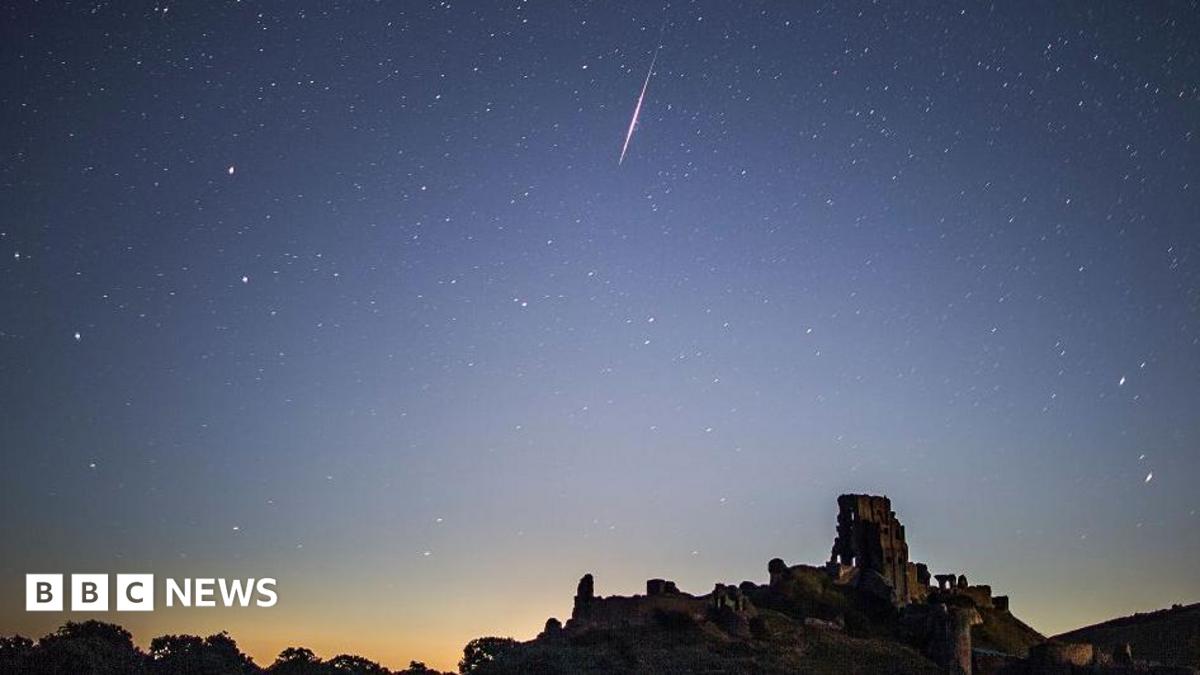
While the Perseid meteor shower is active for an extended period, typically from mid-July to August 23rd each year, the truly spectacular displays occur during its peak. For 2024, the optimal time to witness the Perseids is during the early morning hours between midnight and dawn on August 12th and 13th. It’s during these peak nights that the Earth ploughs through the densest part of Swift-Tuttle’s debris trail, resulting in a dramatic increase in meteor activity. Under ideal viewing conditions – a dark sky free from light pollution – lucky observers could potentially count more than 100 "shooting stars" per hour, a truly breathtaking rate. The meteors can vary in brightness, with some appearing as faint, quick streaks and others exploding into brilliant "fireballs" that leave persistent trails of glowing ionization in their wake.
To maximize your chances of a spectacular viewing experience, location and preparation are key. First and foremost, seek out a viewing spot as far away from cities and artificial light sources as possible. Light pollution is the biggest adversary of stargazers, washing out fainter meteors and leaving only the brightest few visible. Rural areas, national parks, or designated Dark Sky Reserves offer the best conditions. This year presents particularly favourable viewing conditions because the meteor shower’s peak coincides with a new moon. A new moon means there will be no bright moonlight to interfere with the delicate glow of the meteors, allowing even the fainter streaks to be observed. In contrast, years with a full or bright moon significantly diminish the number of visible meteors, making this year’s alignment a special bonus.
Once you’ve found your dark sky sanctuary, give your eyes ample time – around 20 to 30 minutes – to fully adjust to the darkness. Avoid looking at your phone or any bright lights during this period, as it will reset your night vision. Instead of focusing on a single point, gaze towards the widest unobstructed area of sky possible. While the meteors appear to originate from Perseus, they can appear anywhere in the sky, so a broad field of view is best. Dress warmly, even on a summer night, as temperatures can drop, and bring a comfortable chair or blanket to lie down on, as patience is a virtue when meteor watching. Binoculars or telescopes are not necessary, as the meteors are fast-moving and best enjoyed with the naked eye.
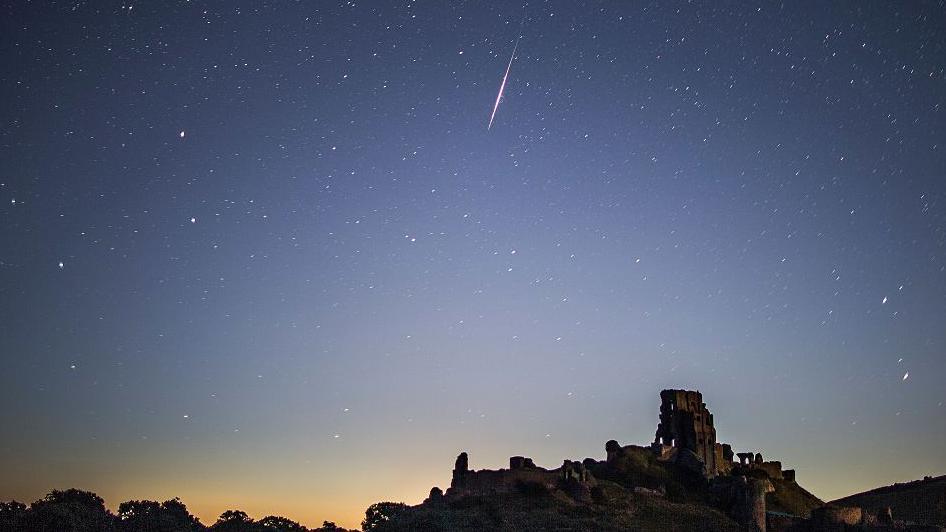
Beyond the meteor shower, the early evening of Wednesday will also feature a deep partial solar eclipse visible from the UK. During a partial solar eclipse, the Moon passes between the Sun and Earth, but only partially covers the Sun’s disk, making it appear as if a bite has been taken out of the Sun. While this is an intriguing astronomical event in its own right, it’s crucial to remember the paramount importance of eye safety. Looking directly at the Sun, even when partially eclipsed, can cause severe and permanent eye damage, including blindness. Always use certified solar eclipse glasses or viewers that meet the ISO 12312-2 international safety standard. Regular sunglasses, no matter how dark, are not safe for direct solar viewing. The partial eclipse will occur before sunset, and only those in regions experiencing a total solar eclipse – such as parts of Spain in a hypothetical scenario – would experience sufficient sky darkening to potentially spot a meteor during the daytime. In the UK, with only a partial eclipse, the sky will not become dark enough for meteor visibility. Dr. Smethurst cautioned, "you would have to get very, very lucky to see a shooting star during the total eclipse," emphasizing the extreme unlikelihood during a partial one.
For those planning to stay up late and witness the Perseids, the night-sky forecast for Wednesday across the UK offers a mixed but generally promising picture. According to the latest predictions, stargazers across most of England and Wales can anticipate largely clear skies throughout the night, with only a minimal chance of isolated mist patches forming. This bodes well for excellent viewing conditions in these regions. However, if your plans take you to the very far north of England, Northern Ireland, or much of Scotland, a little more patience might be required. While periods of clear sky and cloud breaks are expected, there will also be significant areas of cloud cover at times, and even the risk of one or two passing showers. For those situated in north-west Scotland, unfortunately, the forecast is less favourable, suggesting that an early night might be a more realistic option due to persistent cloud and rain. It is always advisable to keep a close eye on the latest local weather updates, as forecasts can change rapidly. The BBC Weather service is a reliable resource for real-time adjustments to sky conditions.
Beyond the sheer spectacle, the Perseids offer a wonderful opportunity to connect with the cosmos and appreciate the dynamic nature of our solar system. Consider bringing a camera with a wide-angle lens and a tripod if you’re interested in astrophotography; long exposure shots can capture multiple meteor trails. Many local astronomy clubs or observatories might host public viewing events, offering guided observations and a shared experience. Whether you’re a seasoned astronomer or a casual observer, the Perseid meteor shower, especially with the added bonus of a partial solar eclipse, promises to be a memorable event. So, find your dark spot, prepare for the cool night air, and look up to witness the universe’s own spectacular fireworks display. Get our flagship newsletter with all the headlines you need to start the day. Sign up here.




 George Anjay
 Nakalama John
 Ramos Leo