Nana Banana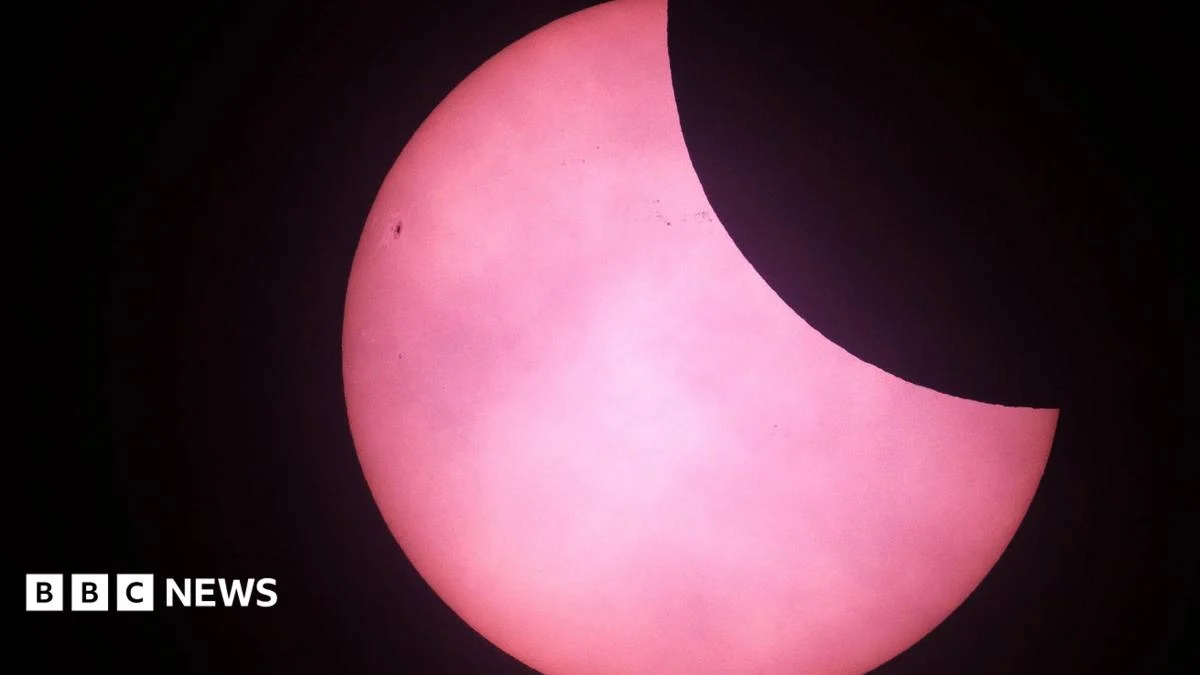
The South West of England and the Channel Islands are gearing up for a celestial spectacle, offering prime viewing opportunities for a rare and significant partial solar eclipse. This extraordinary astronomical event, where the moon partially obscures the sun, promises to captivate residents and visitors alike, with several dedicated events and expert advice ensuring safe and memorable observation. The deep partiality of this eclipse, nearing totality in its visual impact, marks it as a truly uncommon occurrence, generating considerable excitement among stargazers and the wider community.
Across Devon and Cornwall, the partial eclipse is set to commence at approximately 18:18 BST, reaching its maximum obscuration at 19:15, before drawing to a close around 20:10. This extended viewing window provides ample time for enthusiasts to witness the moon’s gradual journey across the sun’s disc. Further south, in the Channel Islands of Guernsey and Jersey, the timings will be marginally later, with the eclipse beginning around 18:21, peaking at 19:17, and concluding by 20:10. These precise timings are crucial for planning observation, especially as the event unfolds during the late afternoon and early evening, coinciding with sunset in some locations.
The rarity of such an event cannot be overstated, as emphasized by experts like Payne, who described it as "a really big deal." He noted, "These kind of eclipses don’t happen very often and one almost this deep, almost near to totality is pretty rare." This sentiment underscores the importance of seizing this unique opportunity to observe a celestial phenomenon that will not grace our skies with such prominence for many years to come. The anticipation is palpable, encouraging communities to gather and share in this astronomical wonder.
One of the most unique viewing experiences will be found on the remote Isles of Scilly, where the Cosmos Community Observatory is orchestrating a free event. Situated on the picturesque lawns of the Karma Hotel on St Martin’s, the observatory will host its gathering between 18:00 and 20:00. This exclusive event offers a truly immersive experience, providing access to specialised telescopes fitted with solar filters and a supply of certified eclipse glasses. Due to its unique location and to ensure an intimate and manageable viewing experience, participation in this Scilly event is thoughtfully limited to those who either reside on St Martin’s or are currently holidaying there, creating a special sense of community engagement with the cosmos.
On the mainland, Cornwall is buzzing with activity for the eclipse. Kernow Astronomers, a passionate local club, has meticulously prepared for the occasion, stocking an impressive 420 pairs of certified eclipse glasses. These will be distributed free of charge at their public viewing event, strategically located at the National Trust car park at Carnewas, home to the iconic Bedruthan Steps near Newquay on the county’s dramatic north coast. Frank Johns, a representative from the club, highlighted the prime viewing conditions: "We really have got a good view to the west and you can see right towards the ocean." This unobstructed westerly panorama will be ideal for observing the sun as it descends, creating a breathtaking backdrop for the eclipse. The generous provision of glasses by Kernow Astronomers ensures that a significant number of people can safely participate in this communal viewing experience, fostering a shared sense of wonder.
Further along Cornwall’s stunning south coast, near the charming fishing town of Looe, The Smugglers Rest in Talland Bay is hosting a more exclusive, ticketed event. The establishment’s bosses have announced a commendable initiative: proceeds from ticket sales will be channelled towards funding an essential access ramp at the venue. This blends the excitement of astronomical observation with local community benefit, creating a meaningful experience for attendees. For those considering this or any other paid-for eclipse event, organisers have strongly advised checking for ticket availability well in advance of travelling, as spaces are likely to be limited given the popularity and rarity of the occasion.
In the Channel Islands, expert guidance is paramount for safe enjoyment. In Guernsey, Dr Jean Dean from La Société Guernesiaise’s astronomy section has offered crucial advice, recommending that people head to the island’s west coast. This strategic location will provide the most unobstructed views of the setting sun and the partial eclipse, maximising the visual impact of the event. Dr Dean stressed the absolute necessity of using proper eye protection, specifically certified eclipse glasses, or employing the safe projection method where one’s back is turned to the sun and its image is cast onto a piece of card. Emphasising community spirit and safety, eclipse glasses have been thoughtfully distributed at Les Bourgs Hospice charity shops in St Martins and St Sampsons, making essential protection readily available to the public. Dr Dean issued a stark and unequivocal warning: directly looking at the sun, even for a fleeting moment, without proper protection, will "burn your retina in your eye and you will be permanently blind." She further clarified that while eclipse glasses can be worn over regular spectacles, they must never be used in conjunction with other optical equipment such as binoculars or telescopes, as this can concentrate the sun’s rays and cause severe damage.
Over in Jersey, the Jersey Astronomy Club is similarly dedicated to facilitating safe and engaging public observation. The club plans to set up several specialised solar telescopes by the slip at Le Braye on St Ouens Bay, a popular coastal spot known for its expansive views. In addition to the telescopes, the club will have a supply of solar glasses readily available for attendees. Mirroring Guernsey’s warnings, the Jersey Astronomy Club issued a strong caution against attempting to view the eclipse through binoculars or telescopes that lack proper solar filters. Such devices, they explained, can intensify the sun’s light to levels far beyond what the human eye can safely withstand, leading to immediate and irreversible blindness. The club reiterated that, without proper solar filters, "the only safe way to observe an eclipse is to use the telescope or binoculars to project an image, not into your eye but onto a piece of white paper or card." They further advised a critical safety step: removing or taping over the front of the finder scope on any telescope being used for projection, to prevent accidental viewing and ensure utmost safety.
For anyone planning to observe this rare partial solar eclipse, whether at an organised event or independently, understanding and adhering to safety guidelines is paramount. The sun’s intense light, even when partially obscured, can cause severe and permanent eye damage, including blindness, if viewed directly without appropriate protection. Only use certified solar eclipse glasses that meet the ISO 12312-2 international safety standard. Regular sunglasses, no matter how dark, are entirely insufficient and unsafe. The projection method, using a pinhole projector or binoculars/telescopes to cast the sun’s image onto a surface, offers a completely safe alternative for indirect viewing. Never attempt to look through an unfiltered camera, telescope, or binoculars directly at the sun. This rare celestial event is a wonderful opportunity for shared awe and scientific curiosity, but it must always be approached with extreme caution and the correct safety equipment.
As the South West and Channel Islands prepare for this captivating astronomical display, the message is clear: enjoy the spectacle, embrace the communal spirit, and most importantly, protect your eyes. This deep partial eclipse, a truly uncommon event, promises to be a memorable occasion for all who witness it safely.
For further updates and to share your experiences, follow BBC Cornwall on X, Facebook, and Instagram. Follow BBC Devon on X, Facebook, and Instagram. Send your South West story ideas to [email protected]. For the Channel Islands, follow BBC Guernsey on X and Facebook, and BBC Jersey on X and Facebook. Send your Channel Island story ideas to [email protected].




 George Anjay
 Nakalama John
 atisusanti
 Ramos Leo